

Products


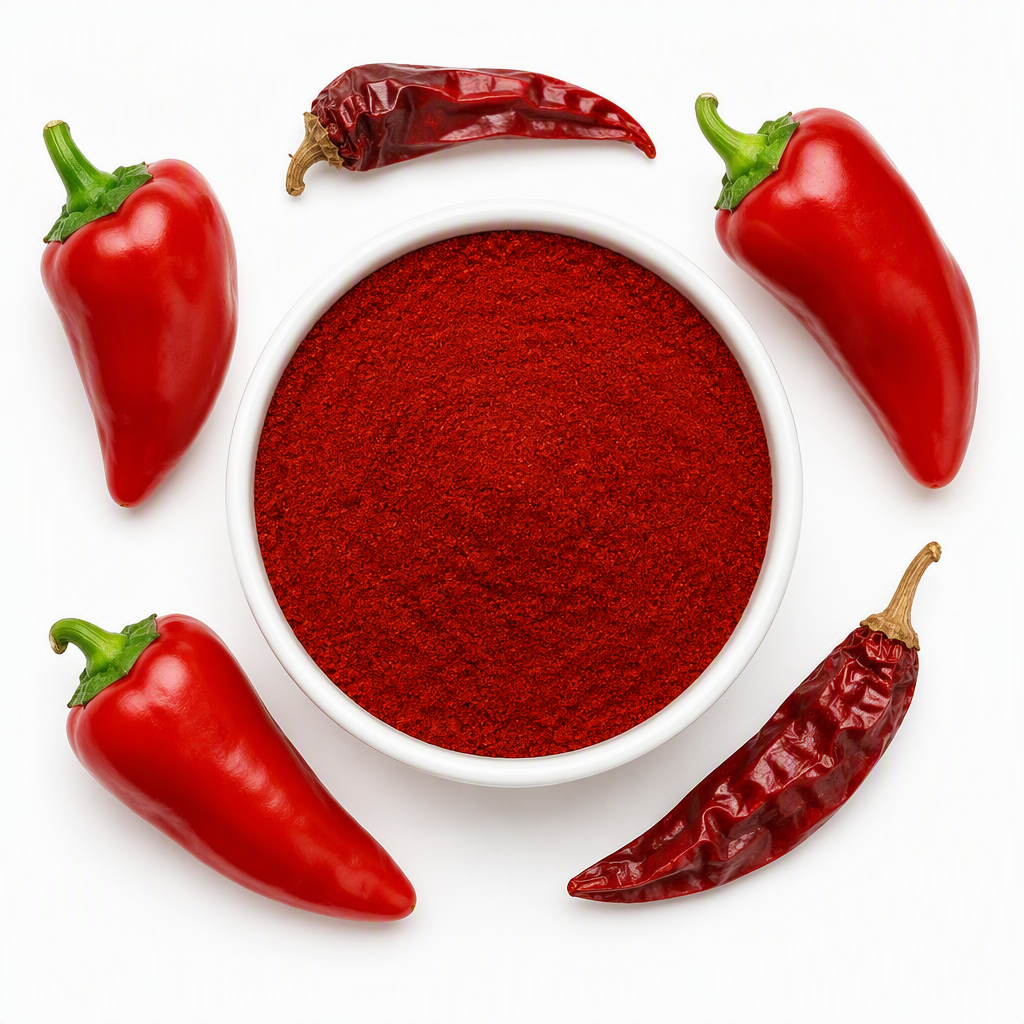
Paprika Extract Capsanthin 95% Powder E160c CAS 465-42-9 Natural Red Pigment for Food Coloring
Capsanthin Powder 95%
Color is the first language of food. And as the world’s food giants said goodbye to petroleum-based reds — the FDA revoked Red No. 3 authorization in 2025 with mandatory removal by January 15, 2027, and California’s AB 418 follows on January 1, 2027 — formulators turned to the red that nature perfected over millennia: capsanthin, the principal red carotenoid of the paprika fruit (Capsicum annuum L.). This product is a high-purity grade standardized to ≥ 95% capsanthin by HPLC (CAS 465-42-9, EU colorant E160c). Every gram carries measurable coloring power — a color value of ≥ 180 CU — so a little goes a long way in food, beverage, cosmetic, and feed formulations. Clean-label compliant, heat- and light-stable, pH-insensitive: the natural red that is ready to replace synthetic dyes.
CAS 465-42-9
E160c Approved
Color Value ≥ 180 CU
Specifications
| Item | Specification |
| Product Name | Capsanthin Powder (Paprika Extract) |
| CAS Number | 465-42-9 |
| E Number | E160c (EU food colorant designation) |
| Molecular Formula | C40H56O3 |
| Molecular Weight | 584.87 g/mol |
| Capsanthin Content | ≥ 95% (HPLC) |
| Color Value | ≥ 180 CU (spectrophotometric) |
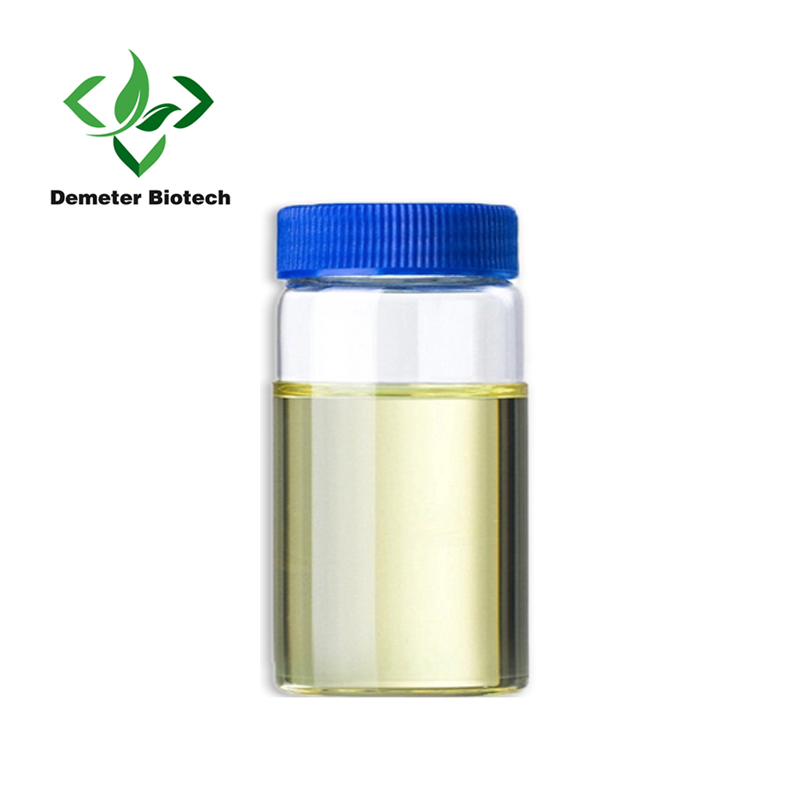
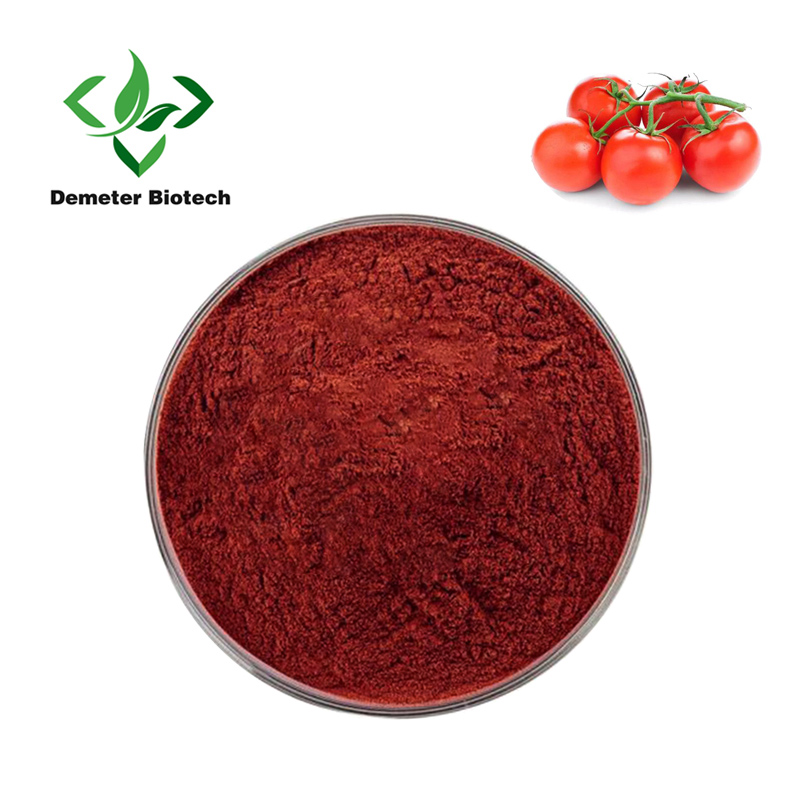
| Appearance | Dark Red to Reddish-Brown Fine Powder |
| Solubility | Soluble in oils and organic solvents; water-dispersible in carrier form |
| Loss on Drying | ≤ 5.0% |
| Heavy Metals (Pb) / Arsenic (As) | Pb ≤ 5 ppm / As ≤ 2 ppm |
| Total Plate Count | ≤ 1,000 cfu/g |
| Botanical Source | Paprika fruit (Capsicum annuum L.) |
| Grade | Food Grade |
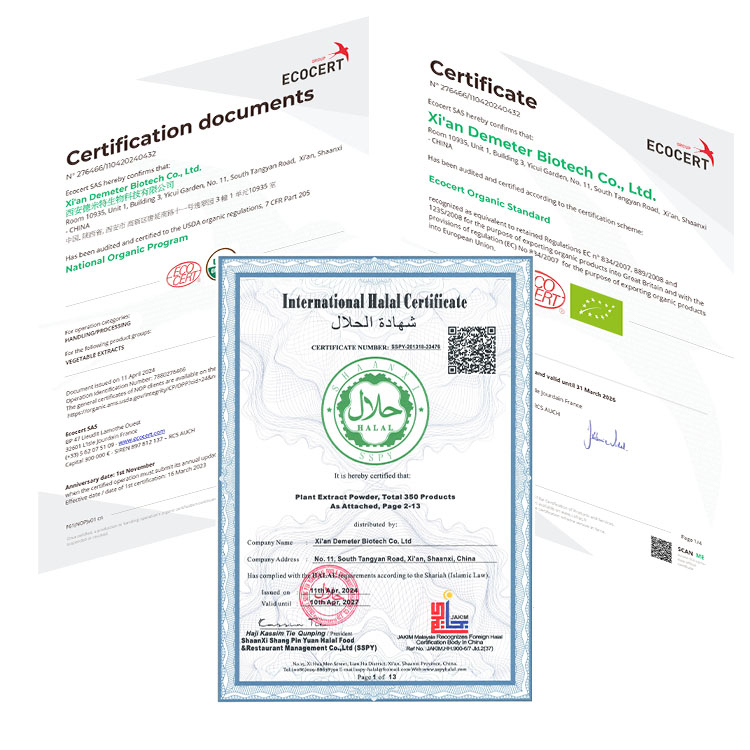
| Certificates / Shelf Life | HALAL, KOSHER, ISO 9001, ISO 22000, COA, MSDS / 24 Months |
Color Value & Specification Guide
In the paprika color world, purity is not the whole story — color value is the language buyers actually speak. The same capsanthin content can be delivered at very different coloring strengths, which is why every serious spec sheet quotes a color value in CU (Color Units). Here is how to read it — and how to use it when comparing suppliers.
What Does “CU” Mean?
Color value is measured spectrophotometrically: the absorbance of a standardized dilution at the pigment’s absorption maximum, corrected for dilution factor and sample weight. The result is expressed in color units (CU). The higher the CU, the more coloring power per gram of powder.
How Color Value Works
Coloring strength and inclusion rate are inversely related: a 180 CU grade reaches the target shade with a fraction of the dose a 100 CU grade would need. For processors, higher CU means lower usage cost, smaller warehousing footprint, and more predictable batch-to-batch shade control.
The Grade Spectrum
Commercial paprika pigments are standardized across a spectrum — from E100 and E150 oil-soluble grades to high-color-value export grades at ≥ 180 CU. Oleoresin-type products are typically standardized to 7% total carotenoids. Matching the grade to the matrix (oil, water, or emulsion) is the key formulation decision.
Market Note — High-Color-Value Grades in Demand
As synthetic red phase-outs accelerate, demand for high-color-value paprika grades is surging: China supplies approximately 61% of global output, and export-grade (≥ 180 CU) material has been quoted around US$48/kg — up about 12% versus 2025 — on tightened EU regulation and the approaching Red No. 3 deadlines.
Product Highlights
Purity You Can Measure
HPLC-standardized to ≥ 95% capsanthin as a single defined compound (CAS 465-42-9) — not a whole-oleoresin mixture. Predictable coloring performance, batch after batch.
Color Value (CU)
High coloring strength per gram: reach the target red with less raw material, lower usage cost, and tighter shade control across production runs.
Regulatory Ready
Carries the EU food colorant designation E160c, recognized internationally as a natural color additive — the approved route when reformulating away from Red 40 and Red 3.
Market Momentum
The global paprika extract market is estimated at roughly US$1.47B in 2026 (YoY +14.8%), with China supplying about 61% of world output — supply security built into the sourcing chain.
Certificate of Analysis (COA)
| Product Name | Capsanthin Powder 95% | Batch No. | DM20260817 |
| CAS No. | 465-42-9 | Test Date | 2026-08-17 |
| MFG Date | 2026-08-10 | Expiry Date | 2028-08-09 |
| Items | Specification | Methods | Results |
| Assay (HPLC) | ≥ 95% | HPLC | 95.6% |
| Color Value | ≥ 180 CU | Spectrophotometry | 182 CU |
| Appearance | Dark Red to Reddish-Brown Fine Powder | Visual | Conforms |
| Loss on Drying | ≤ 5.0% | Gravimetric | 3.4% |
| Heavy Metals (Pb) | ≤ 5 ppm | ICP-MS | Conforms |
| Arsenic (As) | ≤ 2 ppm | ICP-MS | Conforms |
| Total Plate Count | ≤ 1,000 cfu/g | Plate Count | Conforms |
| E. coli / Salmonella | Negative / 25g | USP <62> | Conforms |
| Storage | Store in a cool, dry, dark, and sealed container below 25 Deg C. Protect from light. | ||
| Shelf Life | 24 months from manufacturing date under recommended storage conditions. | ||
Function & Market Benefits
The Red No. 3 Replacement
The FDA revoked Red No. 3 in 2025, with mandatory removal by January 15, 2027, and California’s AB 418 takes effect January 1, 2027. Capsanthin is the leading natural red stepping into that role — the same warm red shades consumers already know, without the petroleum chemistry.
Built for Processing
Heat-stable and light-stable across typical food processing conditions, and insensitive to pH shifts in the ranges used by most formulations — reliable shade performance in baked goods, sauces, beverages, and processed meats.
Clean-Label Compliant
Derived from paprika fruit with no synthetic intermediates — supports “no artificial colors” labeling as synthetic dyes are phased out, aligning with the clean-label movement now driving the global natural color market toward US$2.5B.
Concentrated Color Power
At ≥ 95% purity and ≥ 180 CU, this grade delivers intense red at low inclusion rates — less raw material per batch, smaller inventory, and stronger antioxidant contribution from the carotenoid fraction in the same ingredient.
Applications
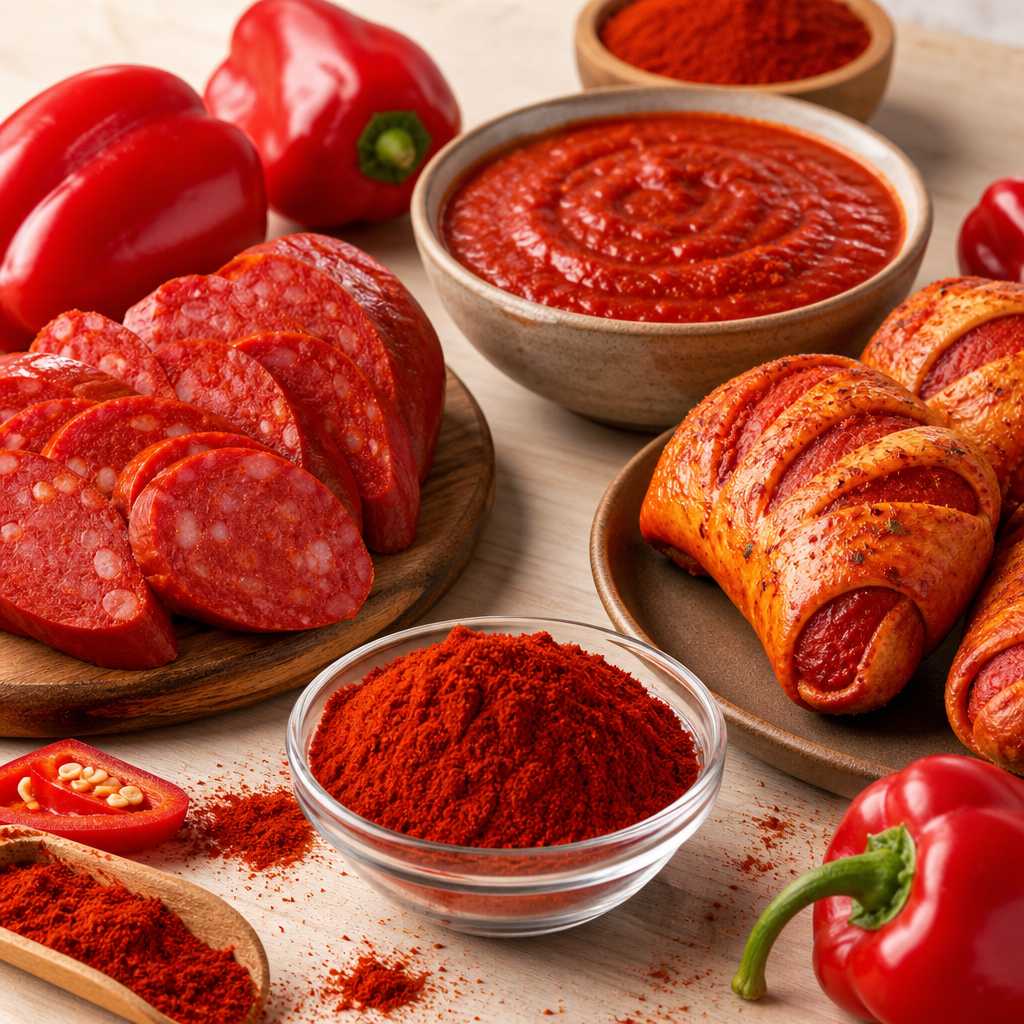
Food & Beverage (> 60% of demand)
The core market: seasonings, meat products, savory snacks, hotpot base, beverages, and bakery. As the leading natural red, it is the primary replacement for Red 40 and Red 3 across reformulated product lines.
Cosmetics & Personal Care (fastest-growing)
The fastest-growing segment at roughly 15.6% CAGR: lipsticks, blushes, and skincare benefit from the natural red hue plus validated antioxidant and anti-inflammatory functions of capsanthin.
Feed Pigmentation
Red coloration for poultry egg yolk and aquaculture applications — a plant-derived answer to synthetic pigment bans in feed markets.
Natural Color Blending
Combined with beta-carotene and other natural pigments to build custom shade ranges from warm red to orange — one supplier, one shade system, full color portfolio.