



Products


Natural Plant-Derived Liposomal Spermidine Powder 50% 70% from Wheat Germ Clean Label
Liposomal Spermidine
A single grain of wheat holds a quiet secret — inside the germ lies spermidine, a polyamine found across the kingdoms of life. Our liposomal spermidine powder pairs nature-identical spermidine with plant-derived phospholipids, presented as a clean powder at 50% or 70% active strength. An ingredient that bridges ancestral dietary wisdom and modern liposomal science for cellular wellness formulations.
50% & 70% Loading
Plant-Source Phospholipid
Clean Label Ready
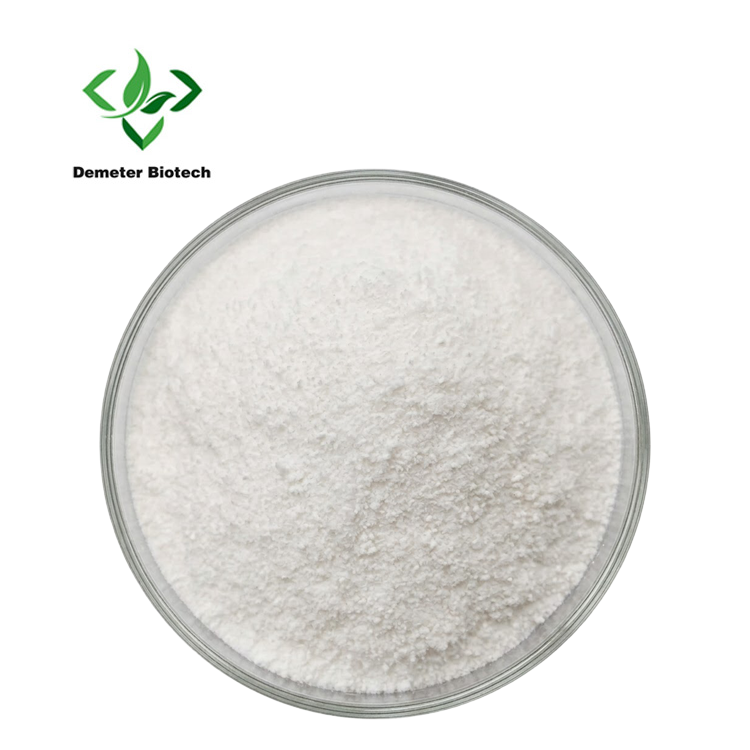
| Product Name | Liposomal Spermidine Powder |
| Active Ingredient | Spermidine (CAS 124-20-9) |
| Chemical Name | N-(3-Aminopropyl)butane-1,4-diamine |
| Botanical Origin | Triticum aestivum (Wheat Germ), Glycine max (Soybean) |
| Active Loading Capacity | 50% Standard Grade | 70% High-Potency Grade |
| Encapsulation Efficiency (EE%) | ≥ 80% (Typical) |
| Particle Size | 80nm – 300nm (Rehydrated) |
| PDI | ≤ 0.35 |
| Appearance | White to Off-White Powder |
| Solubility | Dispersible in water (stable liposomal suspension) |
| Phospholipid Source | Plant-Derived (Non-GMO) |
| Loss on Drying | ≤ 5.0% |
| Heavy Metals (as Pb) | ≤ 10 ppm |
| Storage | Cool, dry environment; sealed container protected from light |
| Shelf Life | Refer to batch-specific COA |
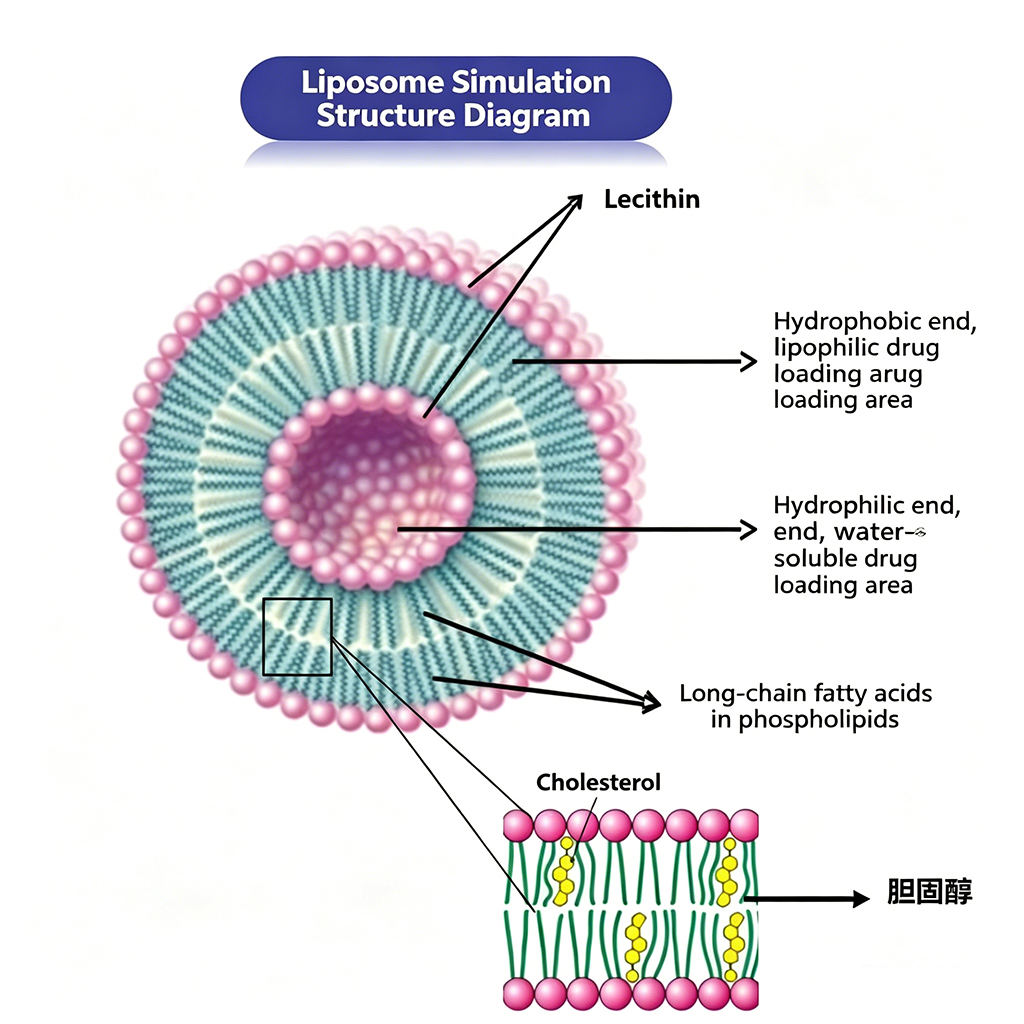
Premium Liposomal Spermidine Powder Sourced naturally from nutrient-rich wheat germ, Spermidine is highly valued for cellular health but natively challenged by high hygroscopicity and oxidation. Our advanced liposomal encapsulation coats the polyamine within a protective phospholipid bilayer shield. This cellular-matching structure prevents moisture absorption, locks in ambient stability, and significantly optimizes ingredient dispersion and bioavailability in advanced supplement formulations.
1. Wheat Germ’s Hidden Treasure
Spermidine is one of wheat germ’s most notable bioactive compounds — a polyamine cells use for fundamental maintenance and renewal. Our liposomal format preserves this identity while addressing hygroscopicity and oxidative sensitivity — the same polyamine nature concentrated in wheat germ, designed for reliable storage stability.
2. Full Botanical Integrity
Unlike liposomal ingredients using animal-derived lecithin, our phospholipid carrier comes from plant lipids — keeping the entire delivery system aligned with vegan values and clean-label positioning. From the polyamine core to the lipid shell, every component has a plant origin story.
3. Clean-Label Simplicity
Two components, nothing hidden: nature-identical spermidine + plant-derived phospholipids. No synthetic modifiers, no solvent residues, no controversial processing aids. This minimalist composition translates to transparent Supplement Facts panels and authentic brand storytelling.
4. Two Strengths, One Philosophy
The 50% grade serves accessible everyday cellular wellness formulations; the 70% grade powers premium high-potency products. Both share the same plant-derived liposomal platform — brands can position across multiple price points while maintaining a consistent ingredient story.
| Items | Specification | Methods | Results |
| Assay (Spermidine) | 50% / 70% | HPLC | 50.2% / 70.1% |
| Encapsulation Efficiency | ≥ 80% | Centrifugation-UV | 83.0% |
| Particle Size (DLS) | 80–300nm | DLS | 195nm |
| PDI | ≤ 0.35 | DLS | 0.27 |
| Appearance | White to Off-White Powder | Visual | Conformity |
| Loss on Drying | ≤ 5.0% | Gravimetric | 3.5% |
| Heavy Metals (as Pb) | ≤ 10 ppm | ICP-MS | Conformity |
| Arsenic (As) | ≤ 1 ppm | ICP-MS | Conformity |
| Cadmium (Cd) | ≤ 1 ppm | ICP-MS | Conformity |
| Mercury (Hg) | ≤ 0.1 ppm | ICP-MS | Conformity |
| TPC | ≤ 1,000 CFU/g | Plate Count | Conformity |
| Yeast & Mold | ≤ 100 CFU/g | Plate Count | Conformity |
| E. coli | Negative / 25g | USP <62> | Conformity |
| Salmonella | Negative / 25g | USP <62> | Conformity |
| Shelf Life | Refer to batch-specific COA for exact expiry date. | ||
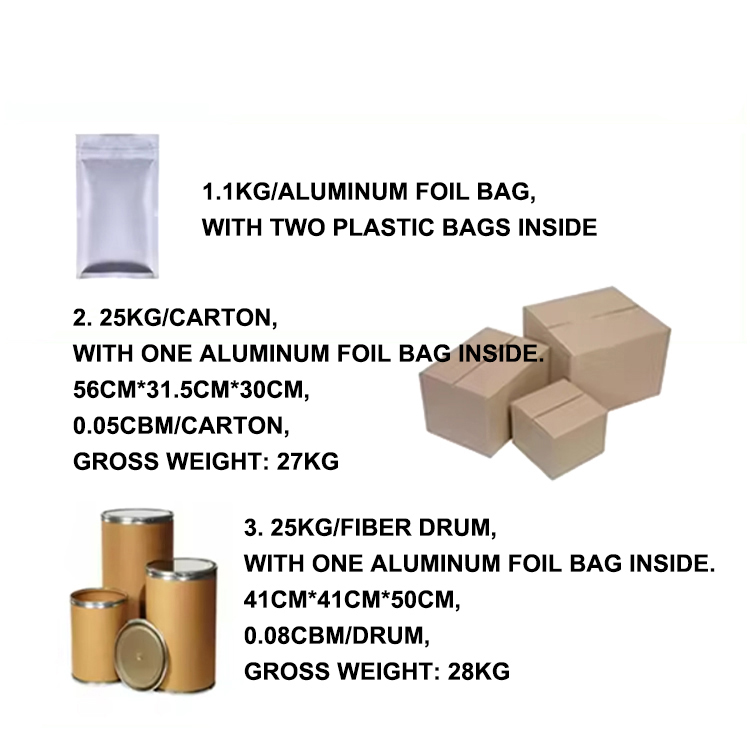
| Package & Storage | 1kg/foil bag or 25kg/drum. Store cool, dry, dark, sealed below 25°C. | ||
Sourcing with Care
Standardized with HPLC-verified Spermidine ($\ge 98\%$ purity) and premium non-GMO plant phospholipids. Every raw material lot undergoes strict identity testing prior to production.
Gentle Co-Dissolution & Emulsification
Spermidine and phospholipids are co-dissolved under active low-temperature controls, followed by precision high-shear emulsification to drive the self-assembly of uniform bilayer vesicles.
Careful Spray-Drying
The liquid emulsion is spray-dried under optimized, mild temperature profiles. This process effectively removes water while preserving lipid vesicle integrity and maximizing core ingredient entrapment.
Verification Before Release
Every batch undergoes complete QA screening: HPLC assay, DLS particle sizing, Entrapment Efficiency (EE%) analysis, heavy metal limits, and microbial testing. Standardized COAs are issued per batch.
*These statements have not been evaluated by the FDA. This product is not intended to diagnose, treat, cure, or prevent any disease.
1. A Whole-Food Polyamine
Spermidine is found richly in wheat germ — one of the most nutrient-dense components of the wheat kernel. As a dietary ingredient, it connects modern supplement formulations to the nutritional heritage of whole-grain foods.
2. Cellular Housekeeping Support
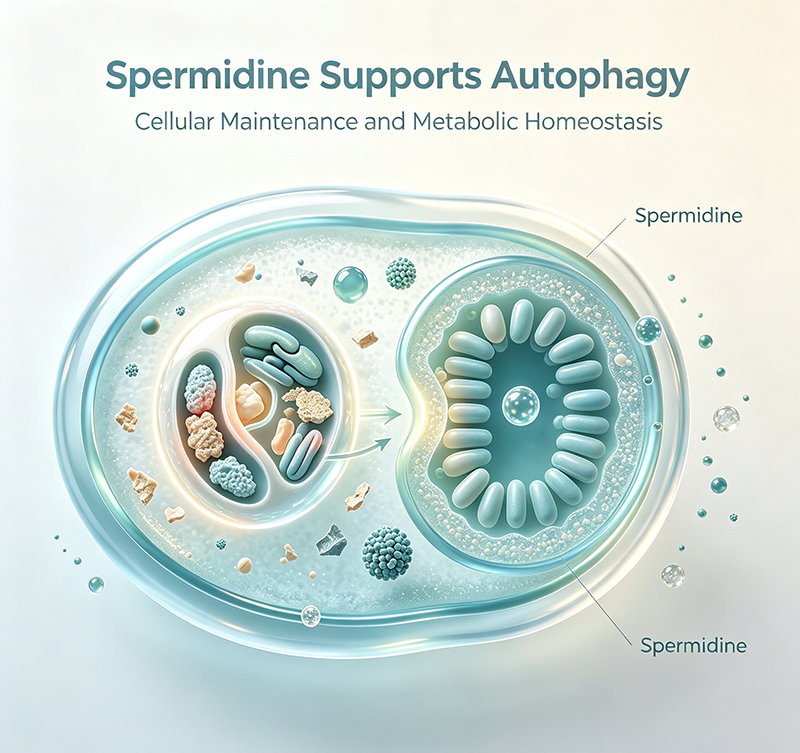
Studied for its role in autophagy — the body’s natural process of clearing damaged cellular components. Supports formulations positioned around cellular renewal and metabolic maintenance.
3. The Wheat Germ Connection
Spermidine’s abundance in wheat germ provides a compelling, recognizable origin story. For plant-forward brands, this connection to a familiar pantry ingredient creates authentic consumer resonance.
4. The Polyamine Family in Nature
Spermidine appears alongside other polyamines and a rich matrix of nutrients in whole foods. In complex formulas, it serves as a foundational polyamine alongside CoQ10 and plant polyphenols.
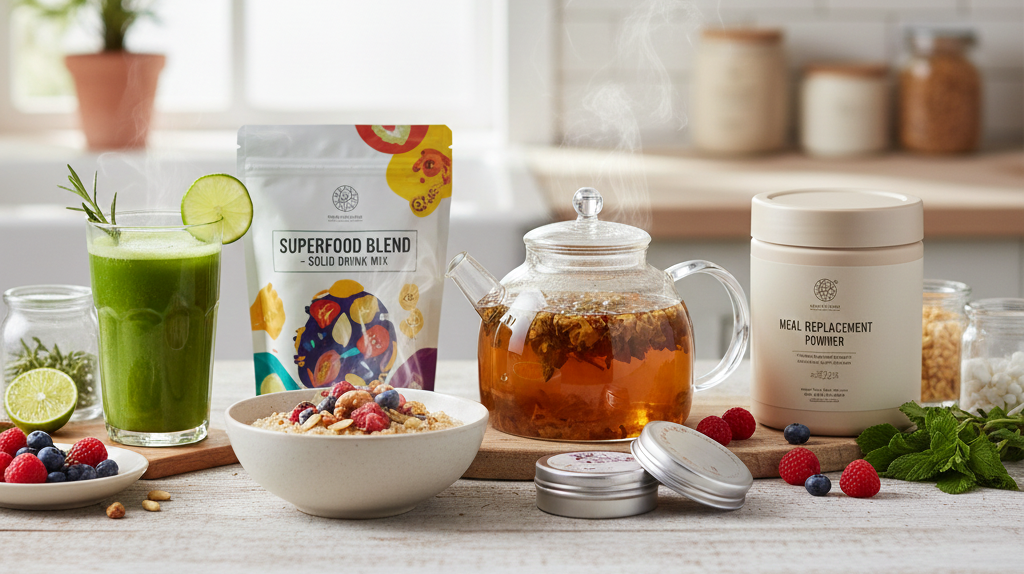
1. Wheat Germ-Inspired Cellular Capsules
Standalone spermidine (50mg–150mg) with a brand story rooted in wheat germ’s nutritional heritage. The wheat germ origin connects supplements to a whole food consumers recognize.
2. Cellular Wellness Complexes
Pair with CoQ10, PQQ, NAD+ precursors, and plant polyphenols — each bringing a different nutritional story for a multi-layered brand narrative around cellular vitality.
3. Plant-Forward Daily Wellness Powders
Combine with wheatgrass, spirulina, chlorella, and adaptogenic mushrooms. Spermidine’s wheat germ origin provides a natural anchor for the formula’s grain-and-plant identity.
4. Vegan Anti-Oxidative Capsules
The plant-derived phospholipid story makes spermidine a natural fit for vegan formulations — where botanical origins drive premium positioning and brand differentiation.

Q1: Is the spermidine in this product natural or synthetic?
The spermidine used is nature-identical — chemically identical to the spermidine naturally found in wheat germ (Triticum aestivum), soybeans, mushrooms, and aged cheese. The phospholipid carrier is sourced from plant-derived lipids. Together, they form a product compatible with vegan, clean-label, and whole-food-inspired botanical formulations.
Q2: Why use a liposomal format for spermidine?
Spermidine is hygroscopic and sensitive to ambient oxidation — challenges that affect storage stability and blend homogeneity. Liposomal encapsulation wraps spermidine within a phospholipid bilayer, creating a protective microenvironment that shields it from oxygen and moderates its release profile. It’s a biomimetic approach — using nature’s own membrane structure to protect a naturally occurring polyamine.
Q3: Which loading should I choose — 50% or 70%?
Both share the same liposomal platform and plant-derived phospholipid carrier. The 50% grade suits mainstream everyday cellular wellness positioning. The 70% grade targets premium high-potency products. Using both grades enables tiered product positioning while maintaining a consistent ingredient story.


