



Products


Food Grade Fumaric Acid Powder Acidity Regulator E297 CAS 110-17-8
High-Performance Acidulants
FUMARIC
ACID FOOD GRADE (E297)
Fumaric Acid (E297) is a dicarboxylic organic acid that stands apart from other common food acidulants through three distinctive physical properties: the highest acid strength per unit weight among food-grade organic acids (approximately 1.5 times that of citric acid), extremely low hygroscopicity, and very limited cold-water solubility combined with excellent thermal stability. These characteristics make Fumaric Acid the acidulant of choice for applications where other acids fail — specifically in dry powder blends that must resist moisture absorption during storage, in baked goods where the acid must survive oven temperatures without decomposing, and in tortilla and flatbread production where a slow, controlled acid release during cooking is essential for proper dough conditioning. Supplied as a white crystalline powder with high purity, it delivers maximum souring power with minimal addition rates.
Non-Hygroscopic
Stable to ~287°C
TECHNICAL SPECIFICATIONS
EVIDENCE & CERTIFICATES
1. Maleic Acid Residual Control (≤ 0.1%)
Maleic acid is the critical purity marker for food-grade fumaric acid. Our catalytic isomerization process achieves ≤ 0.1% residual, verified by HPLC per batch, meeting FCC, USP, and EU E297 standards simultaneously.
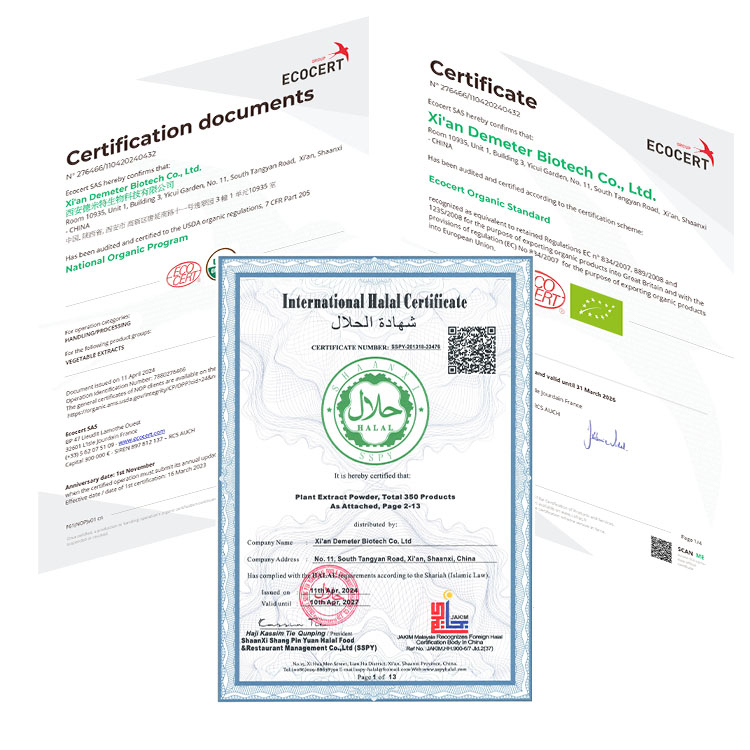
2. ISO 22000, HALAL Certification
Produced in ISO 9001 and ISO 22000 certified facilities, with full HALAL and KOSHER certification for unrestricted global food market access.
3. Heavy Metal & Purity Compliance
Every shipment is accompanied by a batch-specific COA with verified Heavy Metal limits (Pb ≤ 5 ppm, As ≤ 2 ppm) and 99.5%–100.5% assay, with 36-month shelf life documentation.
PRODUCT HIGHLIGHTS
Highest Acid Strength per Kilogram
On a weight-for-weight basis, fumaric acid provides approximately 1.5 times the souring power of citric acid and 1.8 times that of malic acid. This translates to lower addition rates and reduced raw material costs — a particularly significant advantage in high-volume applications such as tortilla production and baking powder formulations.
Exceptional Non-Hygroscopicity
Fumaric acid exhibits virtually no moisture absorption from ambient air, a property unmatched by citric, malic, or tartaric acid. This makes it the superior choice for powdered drink mixes, dessert gel powders, and dry bakery premixes where caking during shelf storage is a critical quality concern.
High Thermal Stability (∼287°C)
With a melting/sublimation point of approximately 287°C, fumaric acid remains chemically intact through baking, frying, and other high-temperature food processing operations that would decompose or volatilize most organic acids, enabling its use as the acid component in baking powder and as a slow-release acidulant in baked goods.
Controlled Solubility Profile
The very low cold-water solubility (∼0.5 g/100mL) is not a limitation but a functional advantage. In tortilla and flatbread production, fumaric acid dissolves gradually during heating, providing a delayed acid release that optimizes dough conditioning, improves pliability, and extends microbial shelf life without the premature souring associated with rapidly dissolving acids.
FUNCTIONAL ROLES
1. High-Efficiency Acidulation
Provides maximum pH reduction with minimal addition quantity, reducing overall ingredient costs.
2. Leavening Acid Component
Functions as the acid partner to sodium bicarbonate in chemical leavening systems, releasing CO2 only upon heating.
3. Microbial Stability Support
Contributes to a low-pH environment that supports product preservation in baked goods and processed foods.
4. Dough Conditioning
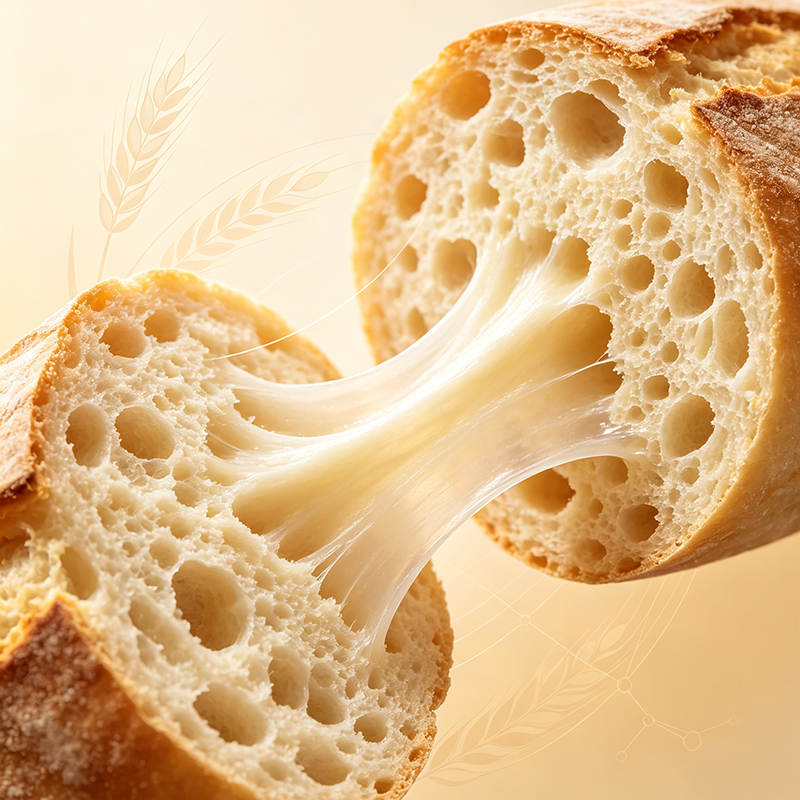
Improves the extensibility and pliability of wheat-flour doughs, particularly in tortilla and flatbread applications.
INDUSTRIAL APPLICATIONS
1. Tortillas & Flatbreads
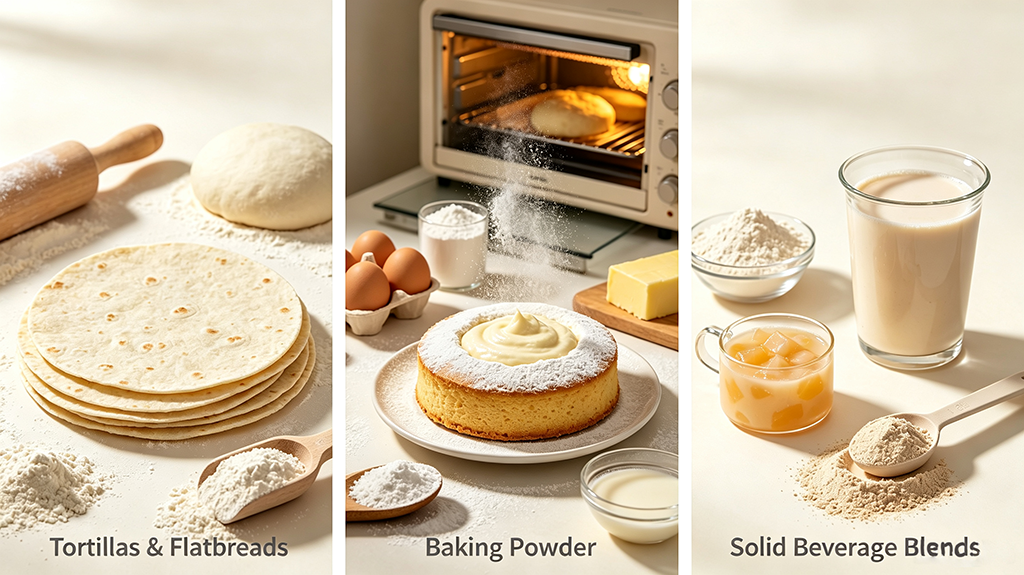
The signature application for fumaric acid. Added to flour tortilla formulations to improve dough machinability, enhance flexibility, and extend ambient shelf life through pH control.
2. Baking Powder & Dough Systems
Used as the slow-acting acid in double-acting baking powders for heat-triggered secondary rise, and in refrigerated dough products where delayed acid reaction prevents premature CO2 release.
3. Dry Beverage Mixes & Dessert Powders
Valued for its non-hygroscopic character, which prevents premature activation and clumping in powdered drink and gelatin dessert formulations.
4. Confectionery & Fruit Snacks
Applied in gelled candies and fruit snacks for a clean, persistent sourness that does not fade during shelf storage.
OEM & PACKING

TECHNICAL FAQ
Q1: Why does Fumaric Acid have stronger acidity than Citric Acid?
A: Acidity strength is determined by the number of ionizable protons per unit weight and their dissociation constants. Fumaric acid has a lower molecular weight (116 g/mol vs. 192 g/mol for anhydrous citric acid) with two carboxyl groups, giving it a higher molar density of acidic protons. This means the same weight of fumaric acid delivers approximately 1.5 times the acid equivalence of citric acid.
Q2: If the cold-water solubility is so low, how can it be used in beverages?
A: For beverage applications requiring rapid dissolution, citric or malic acid are generally preferred. Fumaric acid is specifically engineered for dry-mix applications and baked goods where its slow dissolution is a functional advantage, not a defect. In powdered drink mixes, the fine particle size and hot-water reconstitution by the end consumer enable dissolution at the point of use.
Q3: How does Fumaric Acid compare to phosphates in tortilla production?
A: Fumaric acid serves a similar dough-conditioning function — improving tortilla pliability and shelf life — through acidification rather than phosphate-based sequestration. It offers a clean-label advantage in markets where phosphate reduction is a consumer preference, though formulation pH adjustments are required when switching between the two systems.
-
Feed Grade High Purity L-Lysine 99% CAS 56-87-1
-

High Quality Malic Acid DL-Malic Acid Powder CA...
-
Factory Supply CAS NO 3081-61-6 L-theanine Powder
-

Food Grade High Purity NAD NAD+ Powder CAS 53-8...
-
Raw Material CAS 68-26-8 Vitamin A Retinol Powder
-
Bulk Food Grade Vitamin Ascorbic Acid Vitamin C...


