

Products


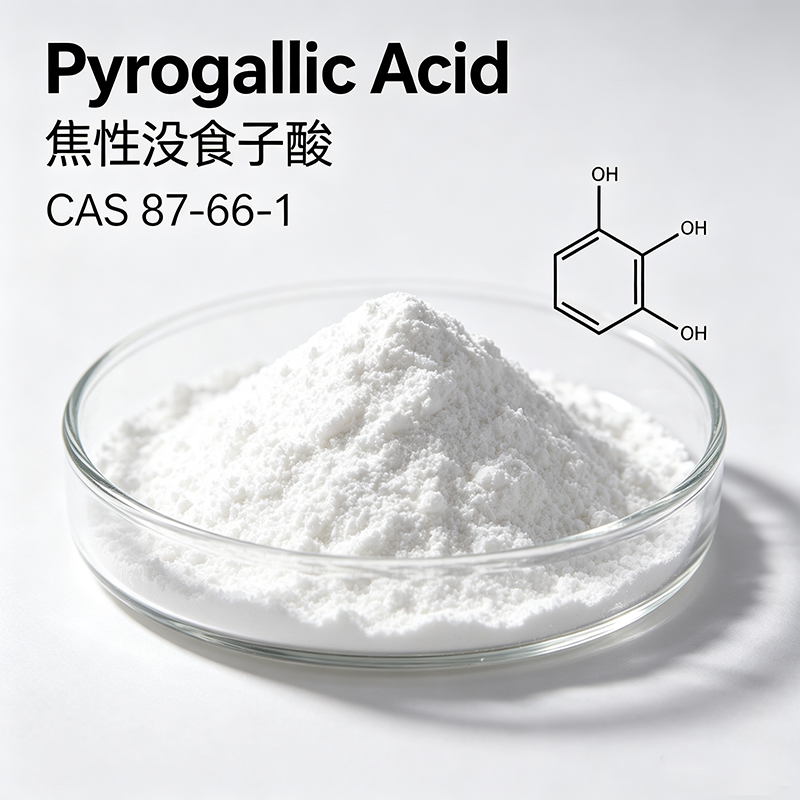
Industrial Grade Pyrogallol Powder CAS 87-66-1 Pyrogallic Acid Powder
Industrial Organic Chemicals
PYROGALL
ACID (PYROGALLOL) 99%
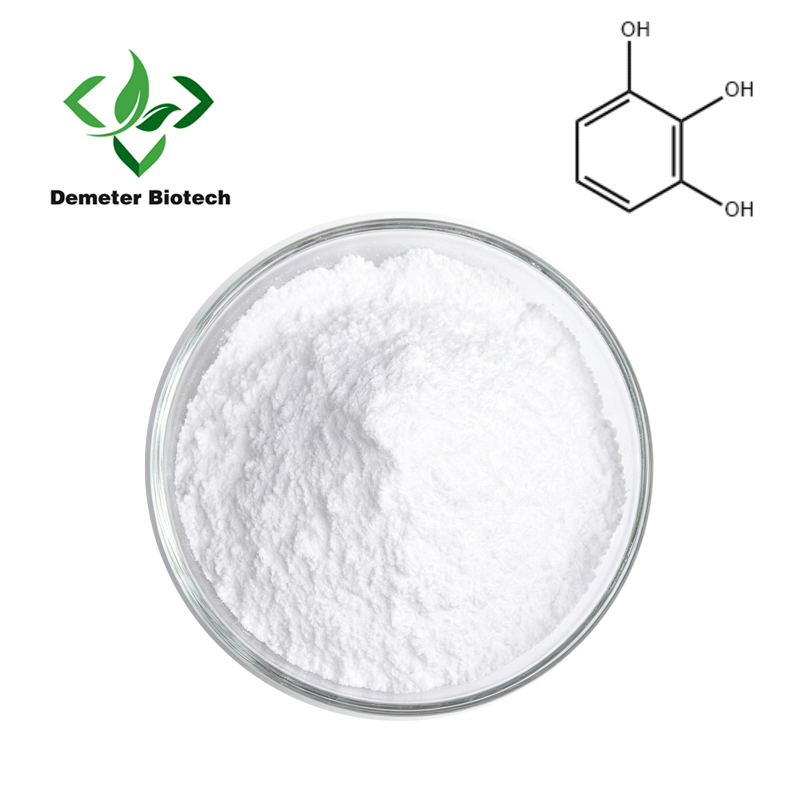
Pyrogallic Acid (also known as Pyrogallol or 1,2,3-Trihydroxybenzene) is a high-purity industrial organic compound, typically appearing as a white to grayish-white crystalline powder. Derived from the decarboxylation of gallic acid, it exhibits strong reducing properties and is notably reactive with oxygen, particularly in alkaline environments. Due to these characteristics, this compound is widely utilized as a photographic developing agent, an oxygen absorbent in gas analysis, a key intermediate in dye synthesis, and a precursor for specialty metal treatment formulations.
Strong Reducing Agent
Industrial Grade
TECHNICAL SPECIFICATIONS
EVIDENCE & CERTIFICATES
1. Batch-Specific Purity Certification
Every batch is tested by HPLC to verify ≥ 99.0% assay, with a complete Certificate of Analysis (COA) documenting all specification parameters.
2. Oxidation Stability Monitoring
In-process controls verify consistent melting point (131°C-135°C) as an indicator of molecular integrity and resistance to premature oxidation.
3. Global Industrial Documentation
Full MSDS, technical data sheets, and impurity profiling reports provided to support procurement audits and international regulatory filings.
PHYSICOCHEMICAL CHARACTERISTICS
Strong Reducing Capability
Pyrogallol is a potent reducing agent. In alkaline solutions, it rapidly absorbs oxygen, exploited in gas analysis as a quantitative oxygen scavenger.
Light & Air Sensitivity
Upon exposure to ambient air and light, the white powder gradually oxidizes to a gray or brownish hue. This does not necessarily indicate a loss of chemical potency.
Broad Solubility Profile
Readily soluble in water, ethanol, and diethyl ether, facilitating integration into diverse aqueous and solvent-based industrial processes.
Consistent 99% Assay
Standardized to ≥ 99.0% purity, ensuring reliable performance in critical applications such as dye intermediate synthesis and metal ion reduction.
FUNCTIONAL CHARACTERISTICS
1. Reducing Agent
Effectively reduces metal ions to lower oxidation states in solution for precision chemical processes.
2. Oxygen Scavenger
Quantitatively absorbs molecular oxygen in controlled analytical environments such as Orsat gas analyzers.
3. Aromatic Intermediate
Serves as a precursor for synthesizing azo dyes and other complex aromatic compounds.
INDUSTRIAL APPLICATION FIELDS
1. Photographic Industry
Used as a developing agent in black-and-white photographic processing for precise image formation.
2. Gas Analysis & Lab Reagents
Applied in Orsat gas analyzers and similar apparatus to absorb oxygen from gas mixtures.
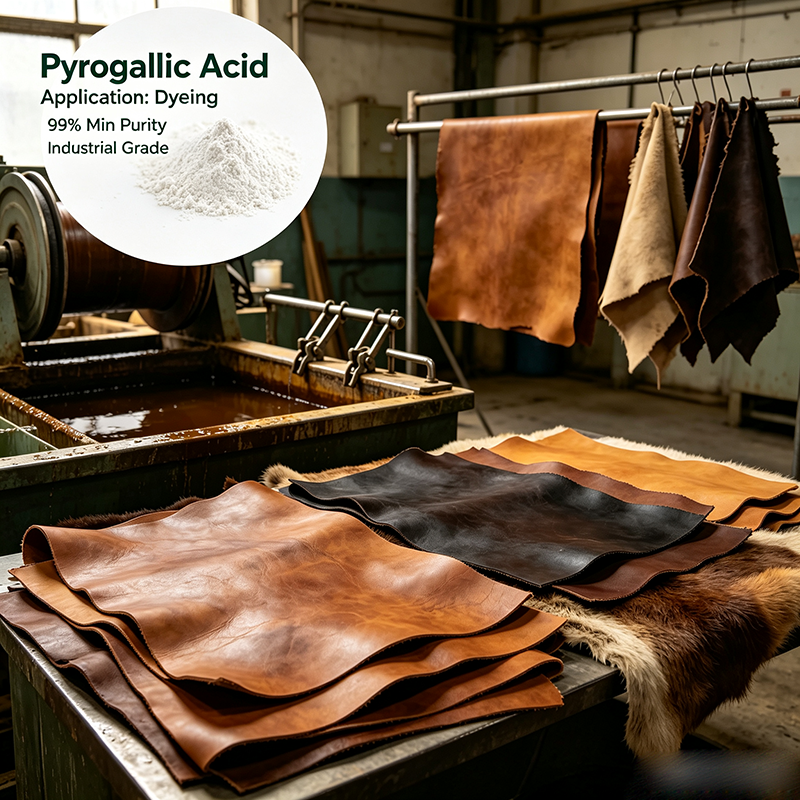
3. Dye & Pigment Manufacturing
Functions as a key intermediate in the industrial synthesis of azo and sulfur dyes.
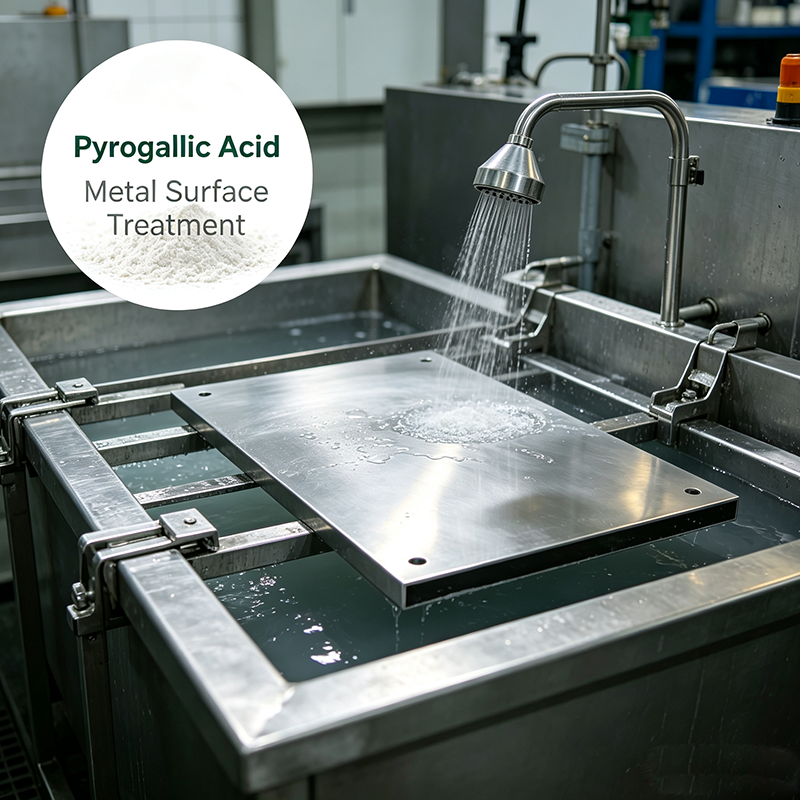
4. Metal Surface Treatment
Utilized in specialty formulations for industrial metal cleaning and surface preparation processes.
TECHNICAL FAQ
Q1: Why does the powder turn gray over time during storage?
A: Pyrogallol is inherently reactive with atmospheric oxygen. The gradual color shift from white to gray is the result of surface oxidation. Store in airtight containers away from direct light and moisture to mitigate this.
Q2: What is the difference between Pyrogallic Acid and Gallic Acid?
A: Gallic Acid (CAS 149-91-7) contains both hydroxyl groups and a carboxyl group. Pyrogallic Acid is produced by thermal removal of that carboxyl group, resulting in significantly stronger reducing power.
Q3: Is this product food or cosmetic grade?
A: No. This product is sold strictly as an Industrial / Technical Grade organic chemical for use in chemical synthesis, gas analysis, and related industrial processes.