


Products


Cosmetic Grade Liposomal Urolithin A 50% Powder Advanced Encapsulation Clean Label Wellness CAS 1143-70-0
LIPOSOMAL UROLITHIN A
Urolithin A is a specific, well-characterized metabolite with a fascinating origin story. Produced when gut bacteria convert ellagic acid (from pomegranates, berries, and walnuts), UA activates cellular pathways for mitochondrial quality control — a process called mitophagy that identifies and recycles damaged mitochondria. However, UA’s molecular structure creates real formulation challenges: extremely low water solubility and oxidative sensitivity at its phenolic hydroxyl groups. Liposomal encapsulation embeds UA (CAS 1143-70-0) within the hydrophobic core of phospholipid bilayer vesicles — addressing solubility, protecting the molecule from oxidation, and creating a dispersible powder engineered for real-world manufacturing. Available at 50% and 70% loading.
50% & 70% Loading
Liposomal Delivery
Clean Label Ready
Urolithin A — A Metabolite with a Unique Origin
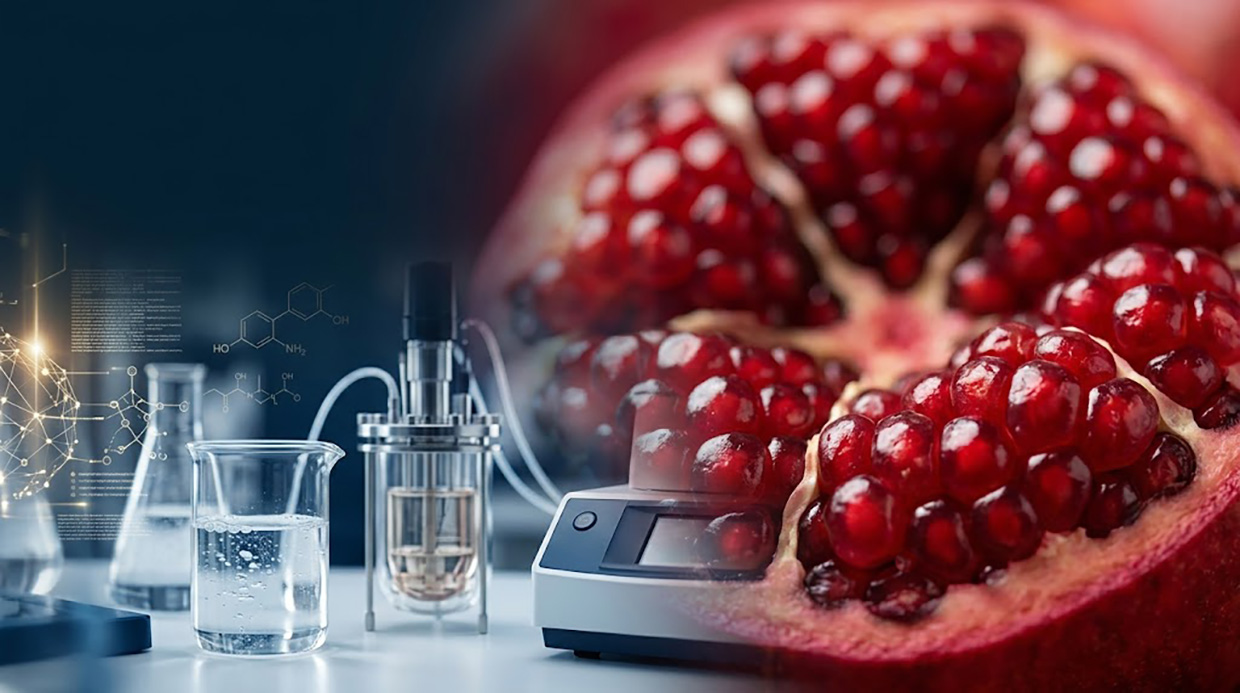
Urolithin A is a dibenzopyranone — a planar aromatic molecule with hydroxyl groups at positions 3 and 8. It is not directly present in any food; it is produced inside the human body when specific gut bacteria metabolize ellagic acid, a polyphenol abundant in pomegranates, berries, and walnuts. This transformation — from dietary polyphenol to bioactive metabolite — yields a molecule known to activate mitophagy, the cellular pathway responsible for identifying and recycling damaged mitochondria.
The Formulation Challenge — Solubility and Stability
Urolithin A’s molecular structure creates two practical obstacles for supplement manufacturing. First, its flat aromatic core makes it extremely hydrophobic — native UA powder has negligible water solubility, limiting its use in liquid and beverage formats. Second, the phenolic hydroxyl groups are susceptible to oxidation, leading to gradual dimerization or degradation that reduces active content during storage.
The Solution — Liposomal Encapsulation
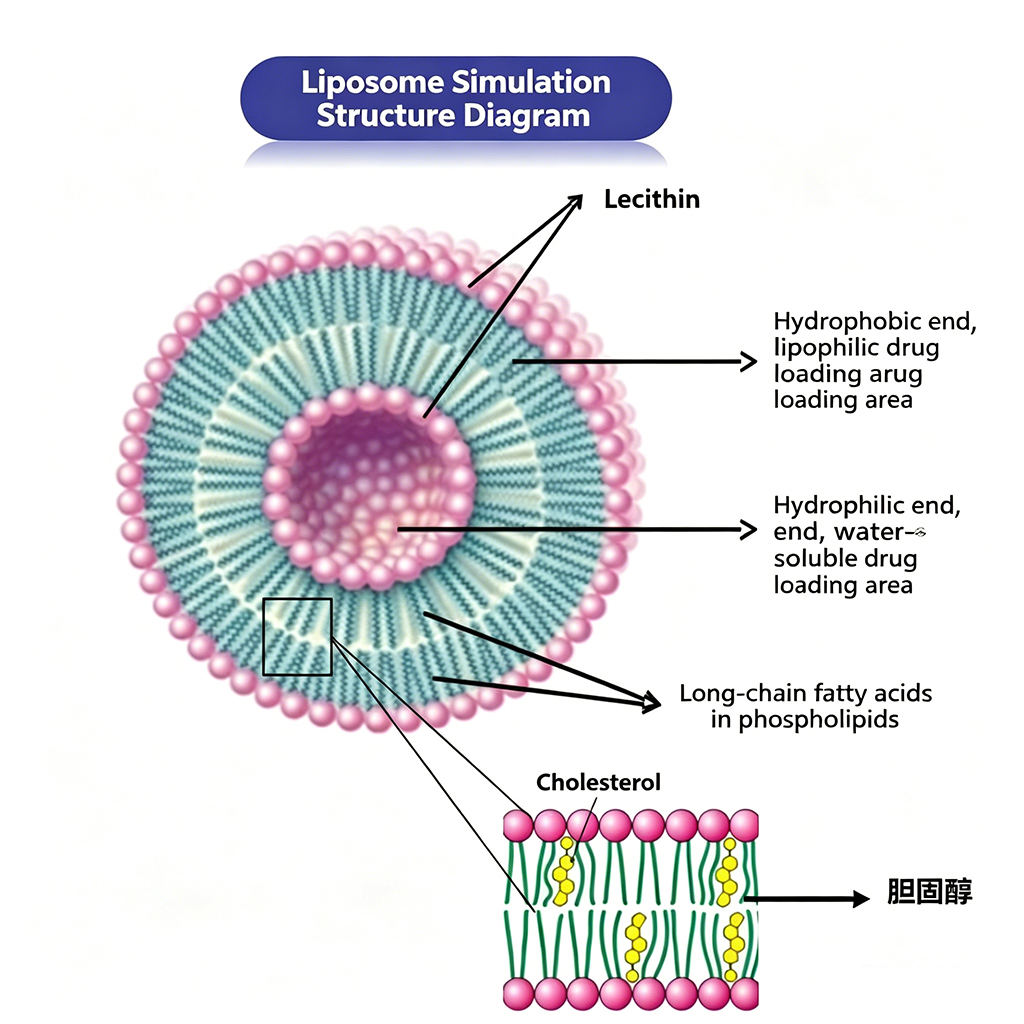
(1) Solubility Bypass. Instead of trying to dissolve UA in water, the liposomal vesicle embeds it within its hydrophobic lipid interior — the same principle that makes biological membranes effective at handling lipophilic compounds. Upon rehydration, vesicles disperse as a stable colloidal suspension without organic co-solvents.
(2) Oxidation Protection. The phospholipid bilayer acts as a physical barrier between encapsulated UA and environmental oxygen, reducing oxidative degradation at the phenolic hydroxyl positions — the primary degradation pathway for UA during blending and shelf storage.
(3) QC-Verified Quality. EE% ≥ 80% (dialysis/HPLC) confirms genuine encapsulation — distinguishing liposomal UA from simple physical blends with phospholipids. DLS sizing verifies 80–300 nm vesicles per batch. These are routine QC data on every CoA, not marketing claims.
1. Solubility Without Synthetic Surfactants
Native Urolithin A is virtually water-insoluble — a bottleneck for liquid capsules and beverage powders. Liposomal encapsulation embeds UA in phospholipid vesicles, creating a dispersible powder that forms stable suspensions upon rehydration — all without organic co-solvents or synthetic surfactants that complicate clean-label positioning.
2. Two Loading Grades — Tailored Strategy
50% suits multi-ingredient mitochondrial blends, pomegranate complexes, and CoQ10 / PQQ combinations. 70% enables compact high-potency capsules with fewer pills per serving. Both grades share identical QC: same EE% thresholds, same DLS ranges, same screening protocols.
3. Verified Encapsulation — EE% on Every CoA
EE% ≥ 80% (dialysis/HPLC) distinguishes genuine liposomal UA from simple phospholipid blends. DLS sizing confirms consistent nano-scale vesicles batch to batch. This analytical rigor separates liposomal UA from unverified phospholipid-UA dry blends entering the market.
4. Clean Label Profile
Phospholipids from non-GMO plant sources (sunflower or soy). UA chemically identical to the human gut metabolite. No synthetic surfactants or organic solvent residues above pharmacopeia limits. Compatible with clean-label, non-GMO brand positioning.
1. HPLC Active Assay
Full HPLC quantification confirms exact 50% or 70% UA loading for every production batch. CoA issued with shipment-specific results.
2. EE% by Dialysis/HPLC
Encapsulation Efficiency ≥ 80% confirms genuine liposomal encapsulation — the analytical distinction between a liposomal product and a UA-phospholipid blend.
3. DLS Particle Sizing
Dynamic Light Scattering verifies uniform 80–300 nm vesicle dimensions across production lots. Consistent particle size is essential for reproducible dissolution and content uniformity.
4. Heavy Metals & Microbial Panel
Heavy metals ≤ 10 ppm (as Pb), USP microbial screening. Third-party ISO 17025 accredited laboratory testing available upon request.
These statements use structure/function language to describe established nutritional roles of Urolithin A. Not evaluated by regulatory authorities. Not intended to diagnose, treat, cure, or prevent any disease.
1. Mitochondrial Quality Control (Mitophagy)
Urolithin A activates cellular pathways that govern mitophagy — the selective removal and recycling of damaged mitochondria. This is part of normal cellular maintenance and essential for sustaining mitochondrial population quality over time.
2. Cellular Energy Metabolism
Mitochondria are the cell’s primary ATP-generating organelles. By supporting mitochondrial quality control, UA contributes to the cellular environment that enables efficient energy metabolism.
3. Muscle Cell Mitochondrial Health
Skeletal muscle is one of the most mitochondrially-dense tissues. UA’s role in mitophagy is of interest for formulations targeting muscle health, physical performance support, and active lifestyle categories.
4. Co-Formulation Synergy
UA is commonly formulated alongside CoQ10 / ubiquinol, PQQ, and B vitamins. The liposomal format protects all co-formulated actives from mutual oxidative interactions during blending and storage.
1. Mitochondrial Health Formulations
UA combined with CoQ10 / ubiquinol and PQQ for comprehensive mitochondrial support. Liposomal encapsulation addresses UA’s solubility limitation, ensuring uniform distribution in multi-component blends.
2. Cellular Wellness & Healthy Aging
UA’s mitophagy-activation role positions it for premium cellular health products. The 70% grade enables compact capsule dimensions for single-active SKUs.
3. Muscle & Active Lifestyle Support
UA formulated with creatine, amino acids, and electrolytes for muscle health products. Free-flowing liposomal powder ensures homogeneous dry-blend distribution.
4. Pomegranate Botanical Complexes
UA combined with pomegranate extract and ellagic acid creates a coherent botanical-to-metabolite narrative. UA is the compound researchers believe mediates many of pomegranate’s documented effects.
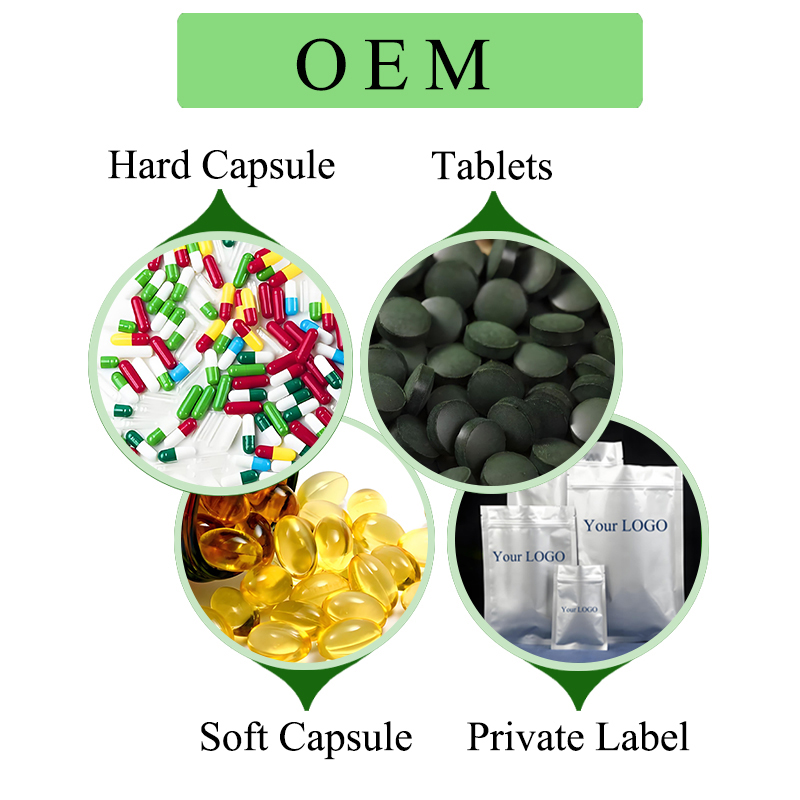
OEM & CUSTOM FORMULATION
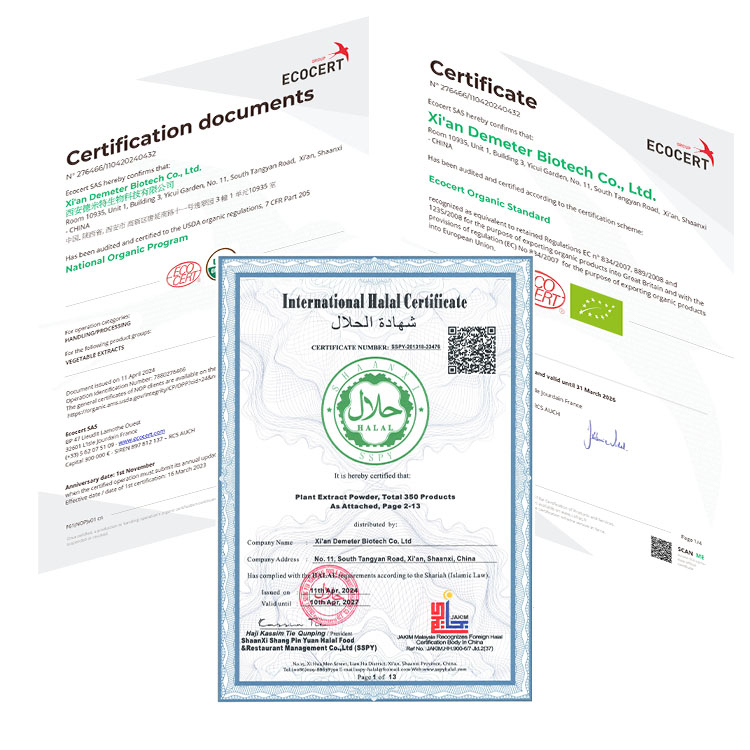
CERTIFICATIONS

TRANSPORTATION
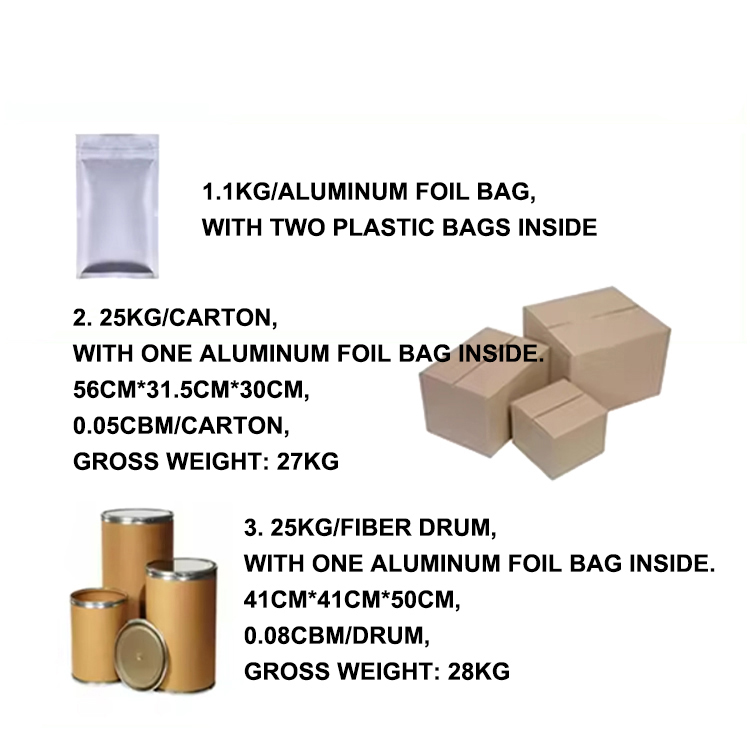
PACKAGING
-

Food Grade Liposomal PQQ Pyrroloquinoline Quino...
-

Natural Plant-Derived Liposomal Apigenin Powder...
-

High Absorption Liposomal Spermidine Powder Pur...
-

High Purity Liposomal Coenzyme Q10 Powder CoQ10...
-

High Absorption Liposomal Pterostilbene Powder ...
-

High Absorption Liposomal Pterostilbene Powder ...


