

Products


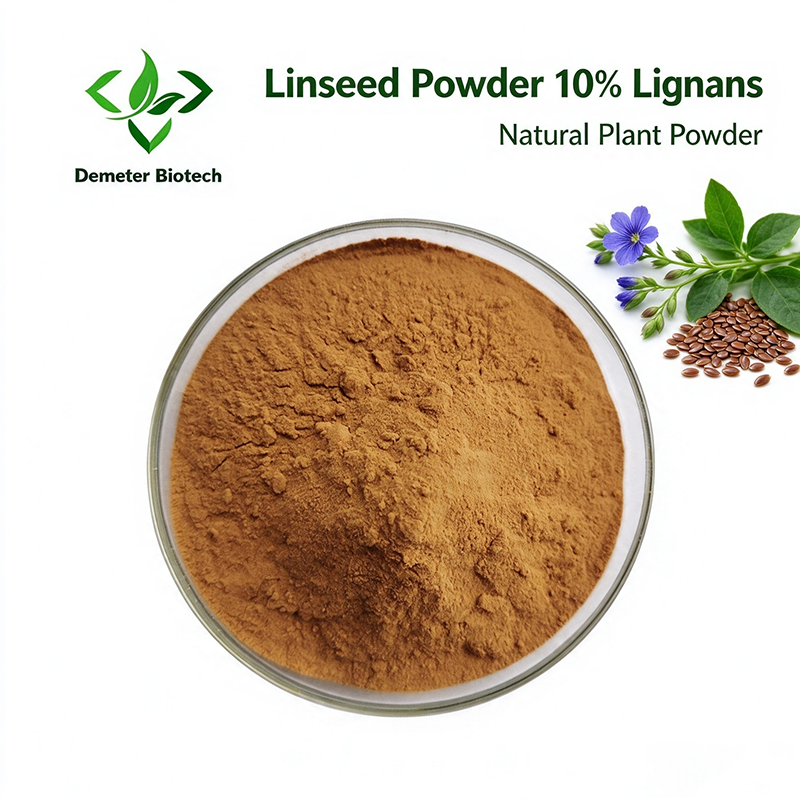
Wholesale Food Grade Flaxseed Powder 10% Lignans Linseed Powder Natural Linseed Bulk Raw Material
Plant-Sourced Lignans
Natural Flaxseed Powder 10% Lignans
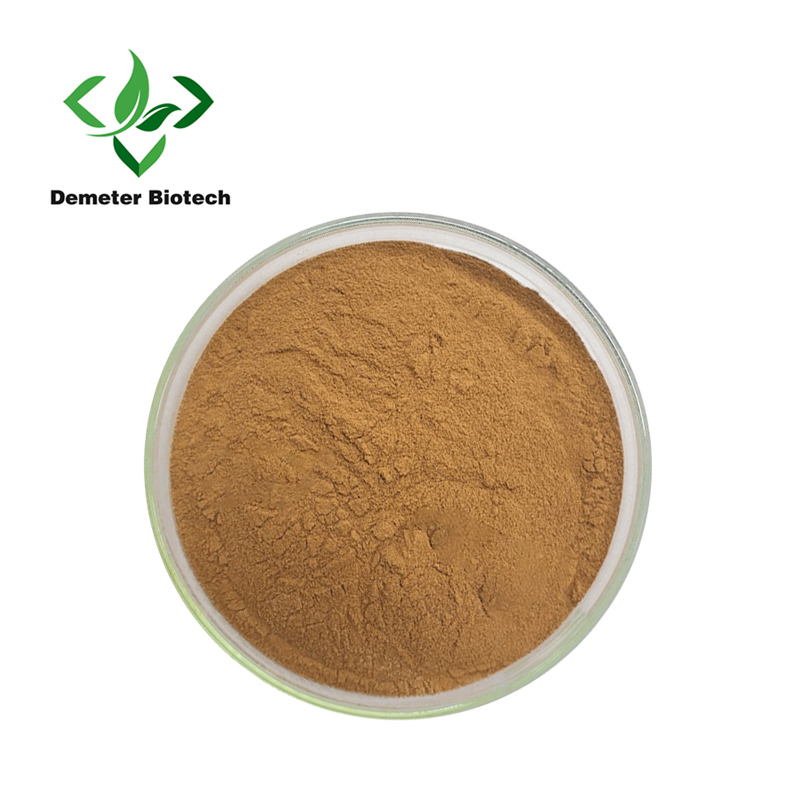
Linum usitatissimum seed brings a whole family of lignans, and secoisolariciresinol diglucoside is the one that anchors this grade. We hold it at 10% and confirm the load by HPLC, giving formulators a fixed figure to build a formula around. The powder is pale, fine and free-flowing, wets out readily in water-based systems, and sits at the economical end of a range that climbs to 80%. Cyanogen testing belongs in every batch record here, not in an optional add-on list.
80 Mesh Powder
Free Sample
Product Specification
| Parameter | Detail |
|---|---|
| Product Name | Flaxseed Powder 10% Lignans (Food Grade) |
| Botanical Name | Linum usitatissimum L. |
| Plant Part | Seed |
| Marker Compound | Lignans, calculated as Secoisolariciresinol Diglucoside (SDG) |
| Assay | Lignans (as SDG) 10% min |
| Assay Method | HPLC (UV detection) |
| SDG CAS Number | 148244-82-0 (also indexed as 158932-33-3) |
| Molecular Formula | C32H46O16 |
| Molecular Weight | 686.71 g/mol |
| Appearance | Light yellow to light brown, finely milled |
| Solubility | Wets out in water; hazy rather than clear at high loading |
| Particle Size | 95% min through 80 mesh |
| Loss on Drying | 5.0% max |
| Total Ash | 5.0% max |
| Carrier / Excipient | Type and level disclosed on the lot COA, together with how the assay is calculated |
| Hydrocyanic Acid (HCN) | Measured each batch — EU Reg. 2023/915 §2.3 ceilings apply (250 mg/kg where seed is sold for further processing; 150 mg/kg at retail); figure printed on the COA |
| Heavy Metals (ICP-MS) | Pb ≤2.0 / As ≤1.0 / Cd ≤1.0 / Hg ≤0.1 ppm — figures reported for every lot |
| Microbiology | TPC 1000 cfu/g max; Yeast & Mould 100 cfu/g max; Salmonella absent/25g; E. coli absent/g |
| Package | 25 kg fibre drum with double LDPE liner; 1 kg foil bags for sampling |
| Storage | Keep sealed below 25 °C, away from light and moisture |
| Shelf Life | 24 months, drum left unopened |
| Origin | Shaanxi, China (Xi’an) |

Key Highlights
01
02
03
04
05
06
Certificate of Analysis
| Test Item | Specification | Result | Method |
|---|---|---|---|
| Appearance | Light yellow to light brown powder | Complies | Visual |
| Lignans (as SDG) | 10.0% min | Complies | HPLC |
| Carrier Content | Declared per lot if present | Declared | Formulation record |
| Hydrocyanic Acid (HCN) | Per EU 2023/915 §2.3 | Reported per lot | Spectrophotometric |
| Loss on Drying | 5.0% max | Complies | USP<731> |
| Total Ash | 5.0% max | Complies | USP<561> |
| Lead (Pb) | 2.0 ppm max | Complies | ICP-MS |
| Arsenic (As) | 1.0 ppm max | Complies | ICP-MS |
| Cadmium (Cd) | 1.0 ppm max | Complies | ICP-MS |
| Mercury (Hg) | 0.1 ppm max | Complies | ICP-MS |
| Total Plate Count | 1000 cfu/g max | Complies | USP<61> |
| Yeast & Mould | 100 cfu/g max | Complies | USP<62> |
| E. coli | Absent / g | Complies | USP<62> |
| Salmonella | Absent / 25 g | Complies | USP<62> |
| Particle Size | 95% min through 80 mesh | Complies | Sieve |
Function & Formulation Fit
Lignan Carrying Base
Delivers a consistent SDG load into capsules and tablets, keeping the dose steady across lots.
Clean Powder Flow
An 80 mesh grain moves through dosing equipment without bridging or separating in blends.
Water Dispersion
Hydrates in aqueous systems, opening drink powders and fermented dairy bases to the grade.
Fermentation Friendly
A seed-derived lignan source that sits comfortably alongside fibre and probiotic components.
Application Fields

Two-Piece Capsules
The highest-volume home for 10% material, where a declared marker beats a higher assay on price.
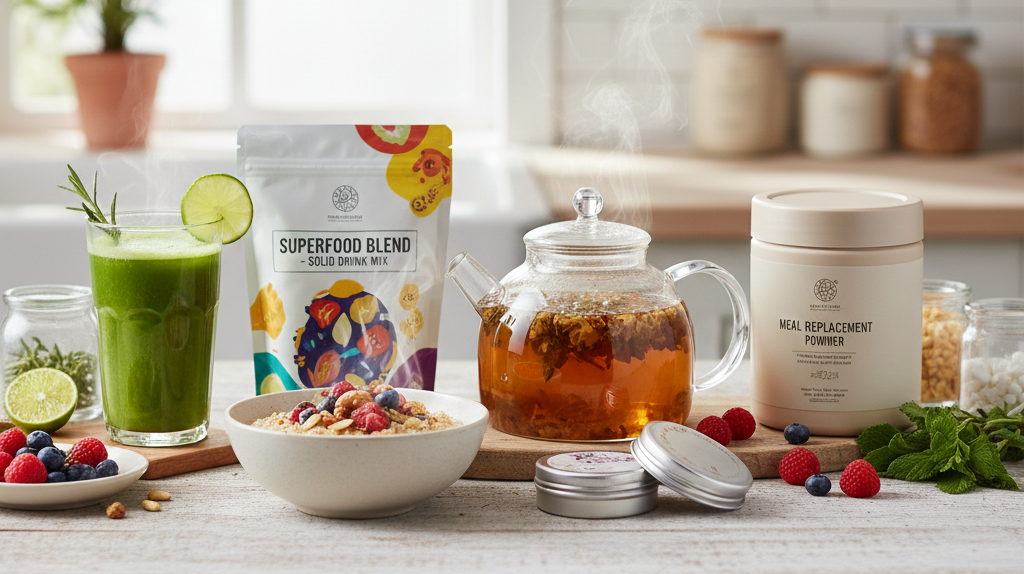
Breakfast Cereals
Blends into flake and granola recipes that want a seed lignan source without changing texture.
Sachet & Stick Packs
Works in single-serve dry mixes where a 40% extract would load the formula too heavily.
Alt-Milk & Yogurt Style
Carries a plant lignan component into dairy-free bases without disturbing the emulsion.
Meal-Replacement Blends
Fits multi-ingredient nutritional powders as one botanical component among several.