


Products

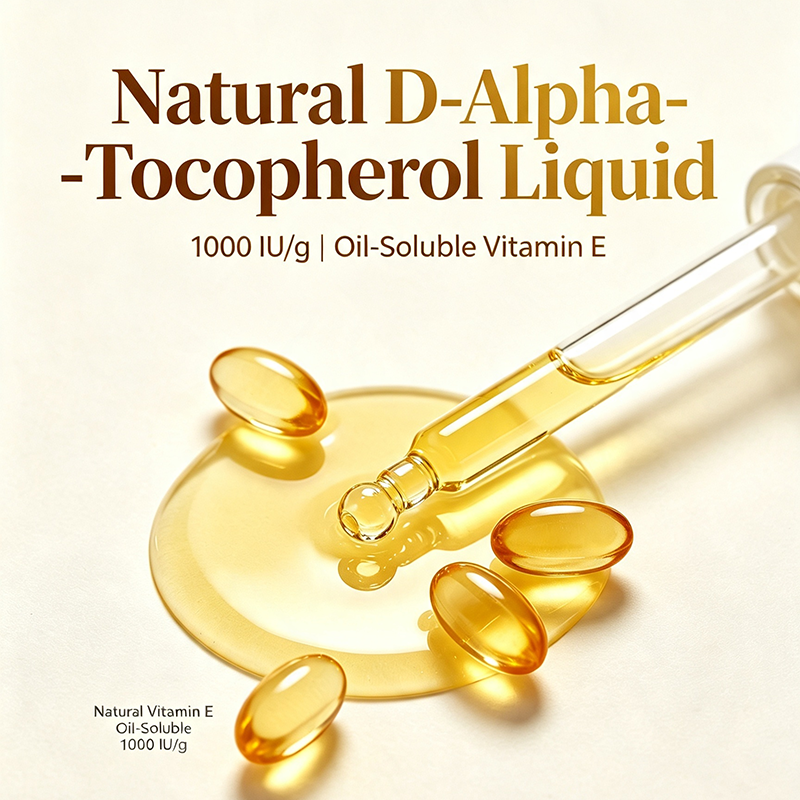
Natural Vitamin E Oil D-Alpha-Tocopherol Liquid 1000 IU/g CAS 59-02-9 Plant-Derived Food Grade
Natural Vitamin Ingredients
NATURAL D-ALPHA-TOCOPHEROL
LIQUID 1,000 IU/g
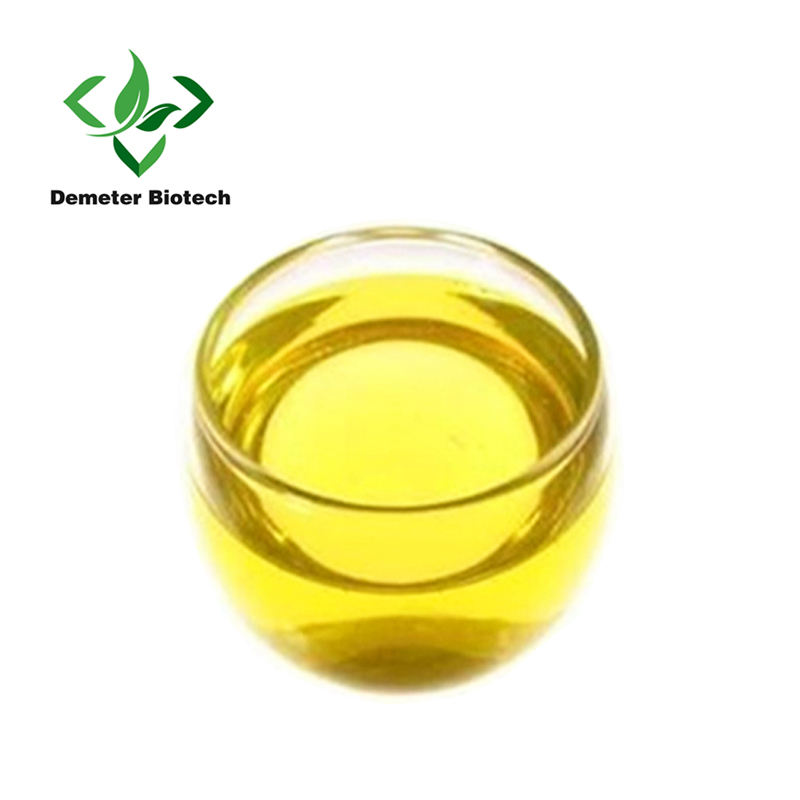
RRR-type D-Alpha-Tocopherol ranks top in biological activity among all vitamin E variants, existing solely as the natural single stereoisomer derived from plant metabolism. Unlike synthetic vitamin E which blends eight mixed stereoisomers, this natural variant owns exclusive RRR molecular configuration, matching the structure human bodies prefer to absorb and retain inside tissues. Refined from vegetable oil deodorizer distillate following standardized extraction protocols, this oily raw material is calibrated to 1000 IU per gram, corresponding to 67.1% pure D-α-tocopherol content. Presented as translucent, thick amber oil, it serves as versatile raw material for soft capsule nutritional supplements, fortified food formulas, skincare preparations and compound vitamin premixes. Owing to its superior bioavailability, this natural tocopherol is the primary raw material choice for high-end nutritional and cosmetic product formulations.
RRR Natural Isomer
Vegetable Oil Source
TECHNICAL SPECIFICATIONS
EVIDENCE & CERTIFICATES
1. HPLC Potency & RRR Isomer Verification
Each production batch undergoes high-performance liquid chromatography detection to confirm effective content reaches above 1000 IU/g, which converts to 67.1% D-α-tocopherol. Test reports attached to each COA can clearly distinguish the single RRR stereoisomer from synthetic mixed isomer combinations, guaranteeing raw material authenticity.
2. Optical Purity Confirmation (Specific Rotation ≥ +24°)
Optical rotation data exceeding +24° serves as an independent physical detection standard for verifying natural RRR configuration. Combined with chromatographic testing results, it double confirms the stereoisomer purity of our tocopherol liquid raw materials.
3. HALAL, KOSHER & ISO 22000 Certification
Our production workshops comply with international food safety management standards and hold complete Halal and Kosher qualification documents. All goods are sealed with nitrogen filling and light-shield packaging to maintain stable vitamin activity throughout transportation and storage cycles.
PRODUCT HIGHLIGHTS
Single RRR Isomer — The Biologically Preferred Form
Vitamin E contains eight different stereoisomeric structures in total, yet only RRR-α-tocopherol is naturally synthesized by plants and selectively absorbed and preserved by human bodies. Synthetic vitamin E is a uniform mixture of all eight isomers; after ingestion, the human liver only transports 2R-type isomers into blood circulation via specific transport protein. Thanks to its exclusive RRR structure, natural tocopherol delivers far superior biological activity per unit mass compared with synthetic counterparts.
1,000 IU/g — Industry-Standard Potency
The concentration of 1000 IU per gram (67.1% D-α-tocopherol) has become the globally recognized benchmark specification for natural vitamin E liquid raw materials used in soft capsule manufacturing. According to international measurement standards, 1mg natural RRR-α-tocopherol equals roughly 1.36 IU biological activity, meaning natural tocopherol boasts higher active efficiency per milligram than synthetic varieties.
Isolated from Vegetable Oil — Plant-Based Source
This natural tocopherol is extracted and purified from vegetable oil deodorizer distillate, a by-product generated during edible vegetable oil refining processes. Such plant-derived raw materials differ fundamentally from synthetic vitamin E produced via petrochemical routes, perfectly fitting clean label and plant-based product development demands for global brands.
Optical Purity Verified by Specific Rotation
Optical rotation value above +24° serves as physical proof confirming natural RRR stereochemical structure. This independent physical detection method works alongside HPLC chromatographic analysis, enabling brand formulators to obtain dual certification of raw material isomer purity for each batch of products.
FUNCTIONAL ROLES
1. Softgel & Dietary Supplement Feedstock
Standardized oily raw material specially formulated for soft capsule encapsulation and oil-based oral nutritional supplements, delivering the highest bioactive natural vitamin E inside each finished capsule product.
2. Oral Drop & Liquid Formulation Ingredient
Thick oily raw material applicable for liquid oral vitamin drops, allowing manufacturers to set accurate IU dosages to develop easy-to-administer liquid vitamin E consumer goods.
3. Lipid-Phase Food Fortification
Oil-soluble form perfectly compatible with fatty food systems, used for vitamin E nutritional enhancement while fully complying with food additive regulations across various regions worldwide.
4. Lipophilic Antioxidant Premix Component
Added into oil-soluble multi-vitamin compound premixes and skincare oil-phase formulas, functioning both as active vitamin E source and natural lipid antioxidant to extend the shelf life of oil-based formulations.
INDUSTRIAL APPLICATIONS
1. Dietary Supplements
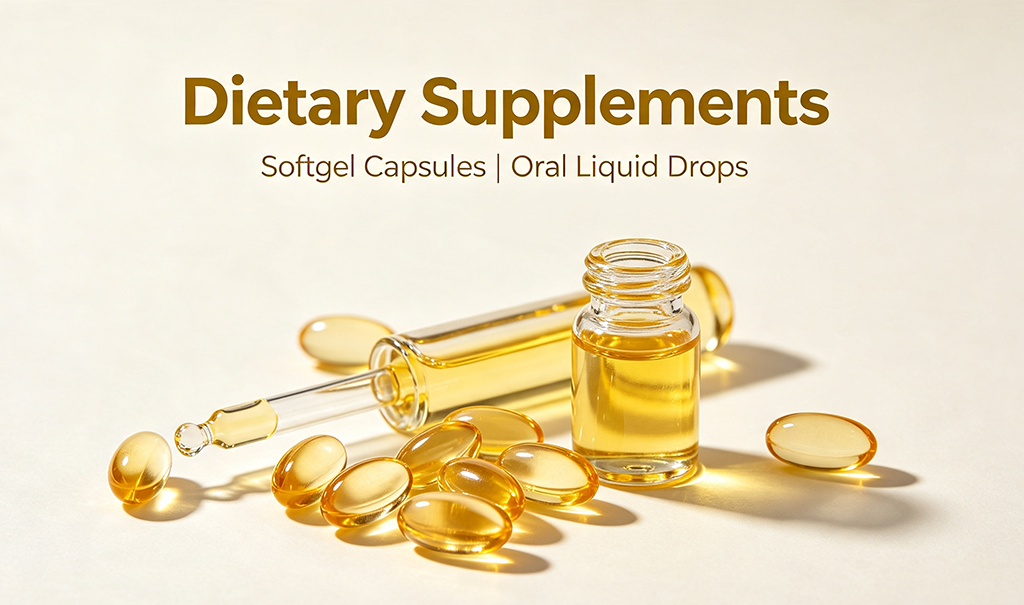
Soft capsules and oral liquid drops dominate the market layout of high-end natural vitamin E consumer nutritional products, with our raw materials widely adopted by global supplement manufacturers.
2. Food Fortification
Applied for nutritional enhancement of edible oil, dairy products, margarine and formulated nutritional meals that require vitamin E addition according to production standards.
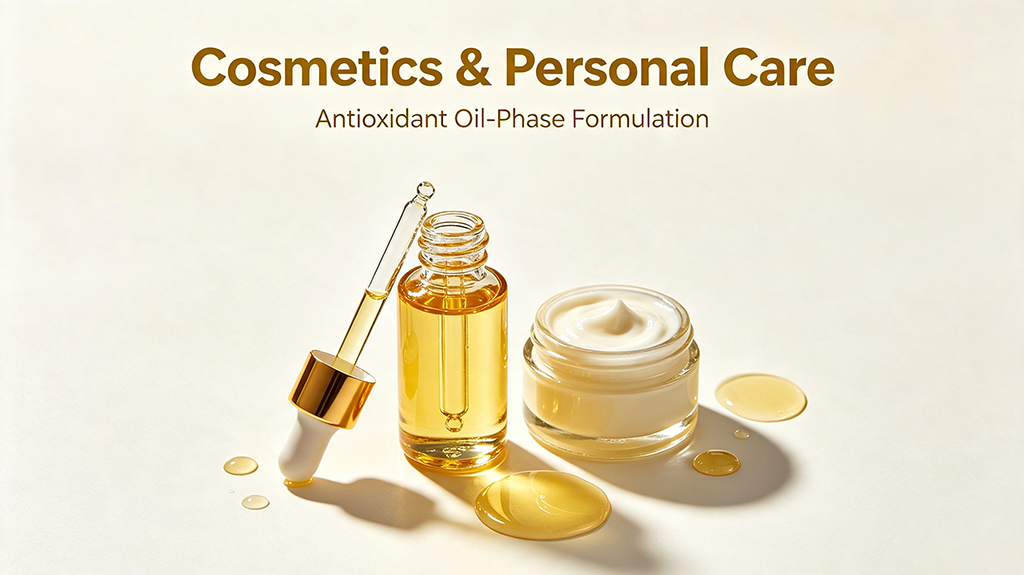
3. Cosmetics & Personal Care
Added into facial care oils, moisturizing creams, essence serums and lip care items, delivering antioxidant effects and skin nourishing benefits within the oil phase of cosmetic formulas.
4. Multi-Vitamin Premixes
Blended into oil-soluble compound vitamin premixes together with vitamin A, D and K, serving as core raw materials for food and nutritional supplement batch production.
TECHNICAL FAQ
Q1: What is the difference between Natural (RRR) and Synthetic (all-rac) Vitamin E?
A: Natural D-α-tocopherol solely consists of RRR single stereoisomer extracted from plants, while synthetic vitamin E is an equal-proportion blend of eight stereoisomers. After human ingestion, liver cells only capture 2R-series isomers including RRR and transport them to body tissues; other stereoisomers are mostly metabolized and discharged. Hence natural RRR vitamin E possesses roughly 1.36 times higher biological activity per unit weight than synthetic products.
Q2: What does 1,000 IU/g mean for this product?
A: It refers to 1000 international units of vitamin E activity contained in each gram of liquid, equivalent to 67.1% pure D-α-tocopherol content. Per international measurement rules, 1mg natural RRR-α-tocopherol equals 1.49 IU activity. One gram of this raw material can produce 10 standard 100 IU vitamin E soft capsules for end consumers.
Q3: Why is the liquid brownish in color — is this normal?
A: The natural golden amber tone is an inherent physical trait of highly concentrated plant-derived tocopherol liquid. Color depth varies slightly with concentration, which is completely normal and does not affect product quality. Storing the product in nitrogen-sealed, light-proof containers under low temperature can effectively retain its stability throughout the shelf life.