

Products

Natural Glycyrrhetinic Acid Powder 98% for Sensitive-Skin & Wellness Formulations
Glycyrrhetinic Acid 98%
Deep beneath the soils of northern China, the root of Glycyrrhiza uralensis quietly crafts its chemical legacy — triterpenoid compounds that have soothed human skin and supported human health for over four thousand years. But the true active form of licorice healing power is not the sweet glycoside most people know. It is glycyrrhetinic acid — the aglycone released when nature sugar cage falls away. Through gentle water-based hydrolysis that mirrors the body own enzymatic conversion, we unlock this concentrated active at 98% purity. Free of its sugar burden, glycyrrhetinic acid becomes 3 to 5 times more bioavailable — penetrating skin, calming inflammation at two enzymatic pathways simultaneously, and helping skin rebuild its own protective barrier from within.
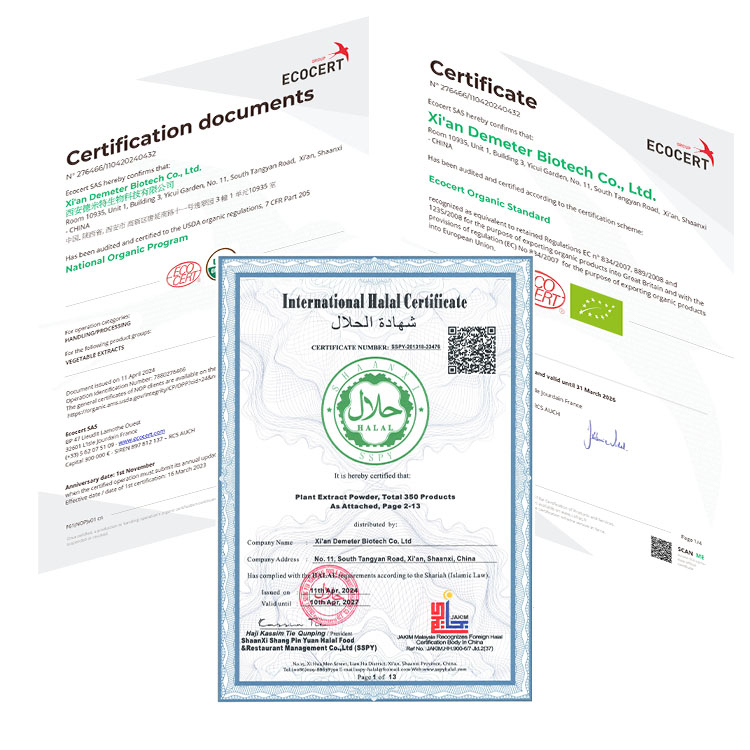
USDA NOP
Plant-Derived
Clean-Label
Specifications
| Item | Specification |
| Product Name | Glycyrrhetinic Acid Powder |
| Latin Name | Glycyrrhiza uralensis Fisch |
| CAS Number | 471-53-4 |
| Active Ingredient | 18 Beta-Glycyrrhetinic Acid |
| Active Loading | 98% (HPLC) |
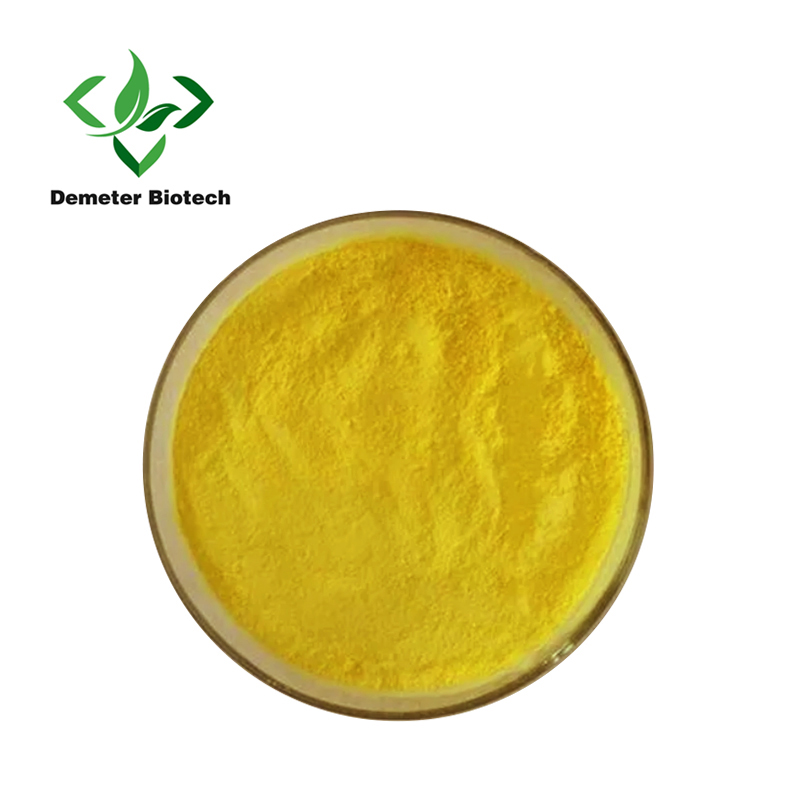
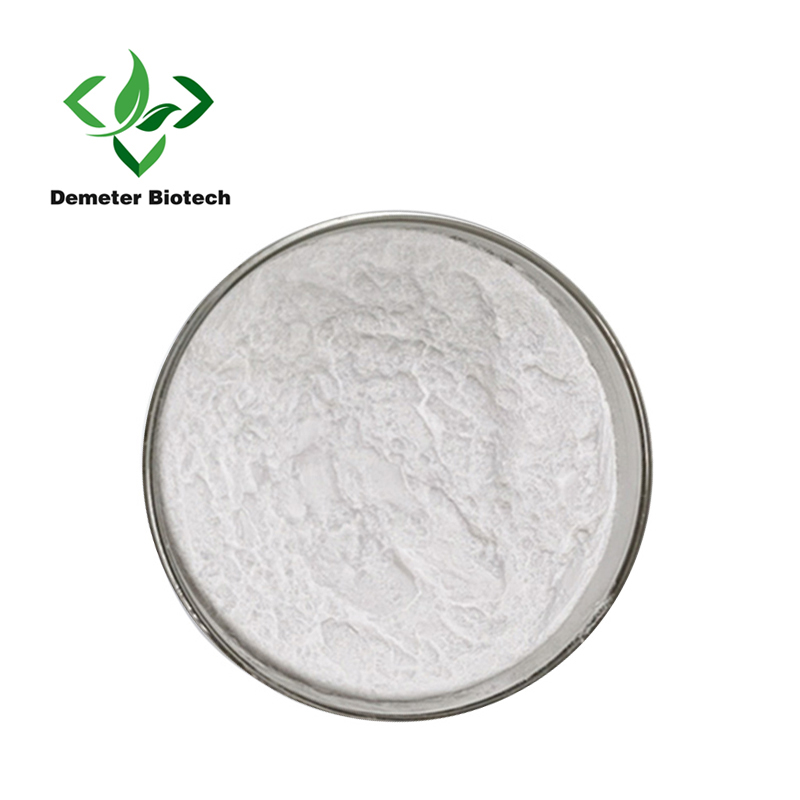
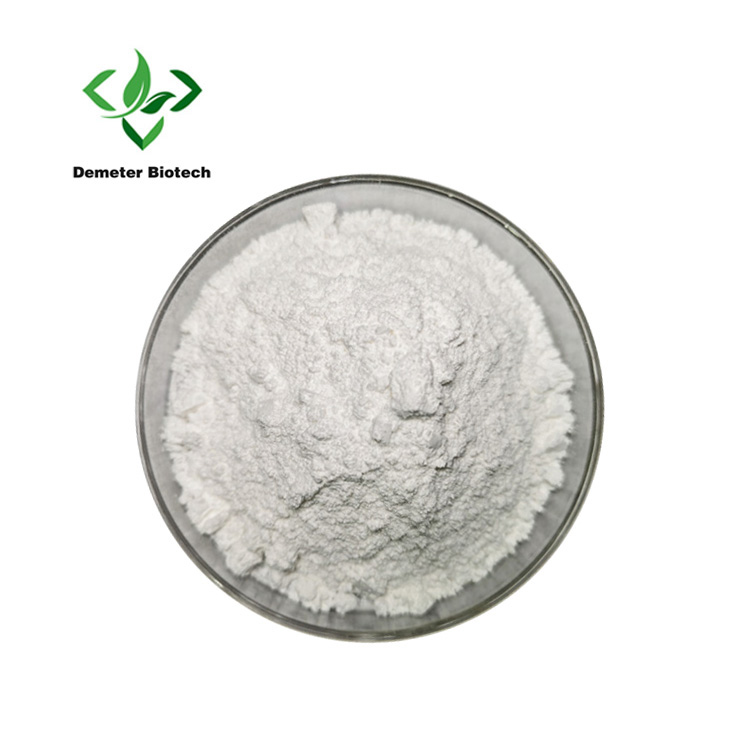
| Appearance | White to Off-White Crystalline Powder |
| Used Part | Root |
| Molecular Formula | C30H46O4 |
| Molecular Weight | 470.69 |
| Melting Point | 292-298 Deg C |
| Solubility | Soluble in ethanol, methanol; sparingly soluble in water |
| Organic Certification | EU Organic, USDA NOP |
| Shelf Life | Refer to batch COA |
Botanical Origin
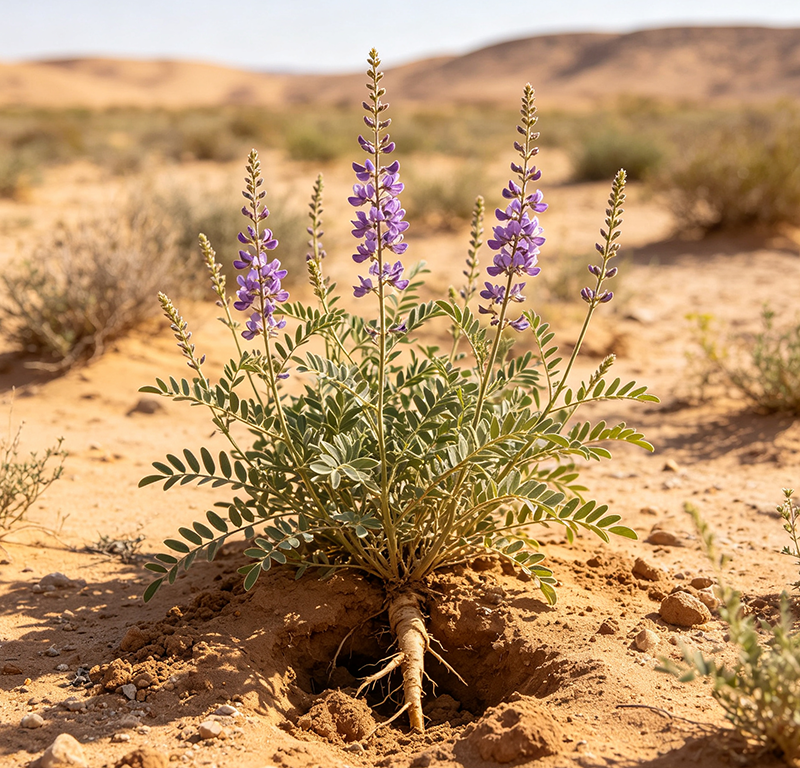
The Aglycone Story — Two Molecules, One Root
Every licorice root produces glycyrrhizic acid as its primary defense compound. But for the human body, this bulky sugar-laden molecule is only the beginning. When our gut bacteria use beta-glucuronidase enzymes to clip away the sugar groups, they reveal the active core — 18 Beta-glycyrrhetinic acid. Freed from its sugar cage, this aglycone becomes 3 to 5 times more bioavailable, readily crossing cell membranes to reach tissues throughout the body.
Our production honors this biochemical logic: water-based extraction first, then controlled hydrolysis that mirrors the body own conversion — but with precision and at scale. The result carries none of the sweetness, but all of the therapeutic potential.
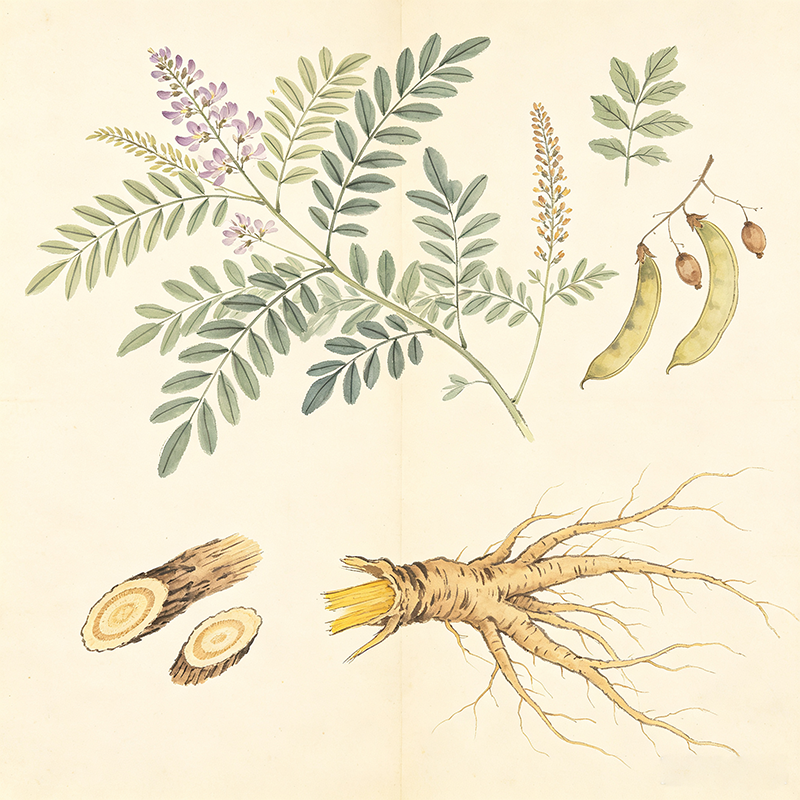
Where It Grows — The Licorice Lands
In the vast semi-arid regions spanning Inner Mongolia, Gansu, and Xinjiang, licorice roots thread deep into mineral-rich alkaline soils. Wide temperature swings and austere conditions create a natural stress environment that drives the plant to produce extraordinary concentrations of protective triterpenoids. It takes three to four full years for a single root to accumulate enough glycyrrhizic acid to justify harvest. No shortcuts — just the quiet patience of sun, soil, and seasons.
Our contracted cultivation bases operate under EU Organic and USDA NOP protocols — no synthetic pesticides, no chemical fertilizers. Every root lot is traceable to its specific growing plot, creating an unbroken chain of custody.
Gentle Chemistry — Water, Time, and Precision
Water-based extraction. Controlled acid hydrolysis. Membrane filtration. Recrystallization. No hexane. No acetone. No synthetic processing aids. No animal-derived materials throughout the entire chain. The result is a genuinely clean, genuinely organic botanical active that discerning formulators trust and conscious consumers feel good about.
USDA NOP
Kosher
Halal
ISO22000
HACCP
Product Highlights
Aglycone Advantage
Glycyrrhetinic acid is the active form — the molecule the body needs, without the sugar it must first remove. By delivering the aglycone directly, you get 3-5x higher bioavailability consistently — every person, every dose.
Dual Organic Certified
Every root grows under EU Organic cultivation protocols, and the finished powder carries USDA NOP certification. The certification chain is unbroken from the soil where the licorice grew to the powder in your formula.
Multi-Target Active
One molecule blocks inflammation at two pathways, stimulates ceramide production, neutralizes free radicals, stabilizes mast cells, and protects liver cells — anchoring five distinct consumer benefits from a single plant-derived ingredient.
Clean Chemistry
Water-based extraction, controlled hydrolysis, membrane filtration, recrystallization. No hexane, no acetone, no synthetic catalysts — only methods you can explain to your customers with confidence.
Certificate of Analysis (COA)
| Product Name | Glycyrrhetinic Acid Powder | Batch No. | DMT20260715 |
| CAS No. | 471-53-4 | Test Date | 2026-07-15 |
| MFG Date | 2026-07-10 | Expiry Date | 2028-07-09 |
| Items | Specification | Methods | Results |
| Assay (HPLC) | ≥ 98% | HPLC | 98.5% |
| Appearance | White to Off-White Crystalline Powder | Visual | Conforms |
| Loss on Drying | ≤ 1.0% | Gravimetric | 0.6% |
| Residue on Ignition | ≤ 0.5% | Gravimetric | 0.18% |
| Melting Point | 292-298 Deg C | Capillary | 295.2 Deg C |
| Heavy Metals | ≤ 10 ppm | ICP-MS | Conforms |
| Lead (Pb) | ≤ 2.0 mg/kg | ICP-MS | Conforms |
| Cadmium (Cd) | ≤ 2.0 mg/kg | ICP-MS | Conforms |
| Arsenic (As) | ≤ 1.0 mg/kg | ICP-MS | Conforms |
| Mercury (Hg) | ≤ 0.1 mg/kg | ICP-MS | Conforms |
| Total Plate Count | ≤ 1000 cfu/g | Plate Count | Conforms |
| Yeast & Mold | ≤ 100 cfu/g | Plate Count | Conforms |
| E. coli | Negative / 25g | USP <62> | Conforms |
| Salmonella | Negative / 25g | USP <62> | Conforms |
| Shelf Life | Please refer to the batch-specific COA and product labelling for the exact expiry date. | ||
| Storage | Store in a cool, dry, dark, and sealed container below 25 Deg C. | ||
Function & Wellness Benefits
Calms Inflammation at Its Source
When skin flares red, when eczema patches refuse to stop itching — glycyrrhetinic acid works at two levels simultaneously. It blocks phospholipase A2 (the first trigger of the inflammatory cascade) and inhibits COX-2 (the enzyme that produces inflammatory prostaglandins). Most anti-inflammatory actives target one pathway. Glycyrrhetinic acid blocks both — which is why licorice has soothed irritated skin for millennia.
Helps Skin Rebuild Its Own Barrier
Healthy skin is about what your skin can produce for itself. Glycyrrhetinic acid signals skin cells to manufacture more ceramides — the essential lipid mortar between the bricks of your skin protective wall. More ceramides mean less water escaping, fewer irritants getting in, and skin that feels calm and resilient rather than reactive and fragile.
Antioxidant Shield — Daily Defense
Every day, sunlight, pollution, and normal metabolism generate free radicals that chip away at collagen and accelerate aging. Glycyrrhetinic acid acts as a direct free radical scavenger — especially against UVB-induced reactive oxygen species — while also preserving the skin own antioxidant enzyme systems. A layered defense from the inside out.
Soothes Reactive, Allergy-Prone Skin
For people with reactive skin, the difference between calm and flare-up often comes down to mast cell stability. Glycyrrhetinic acid helps stabilize mast cells, reducing IgE-mediated histamine release at the source — calming the underlying trigger rather than just masking symptoms.
Applications
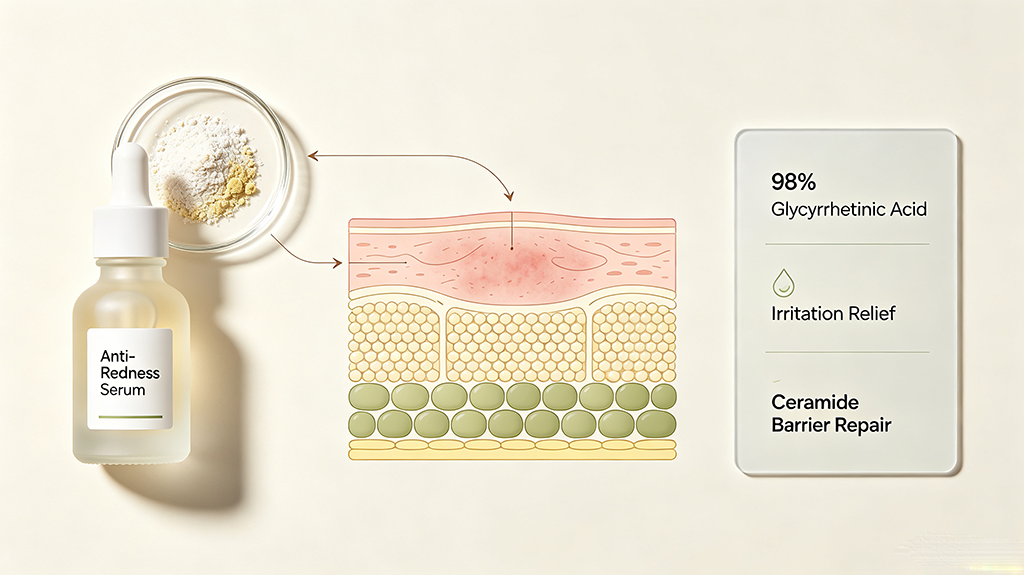
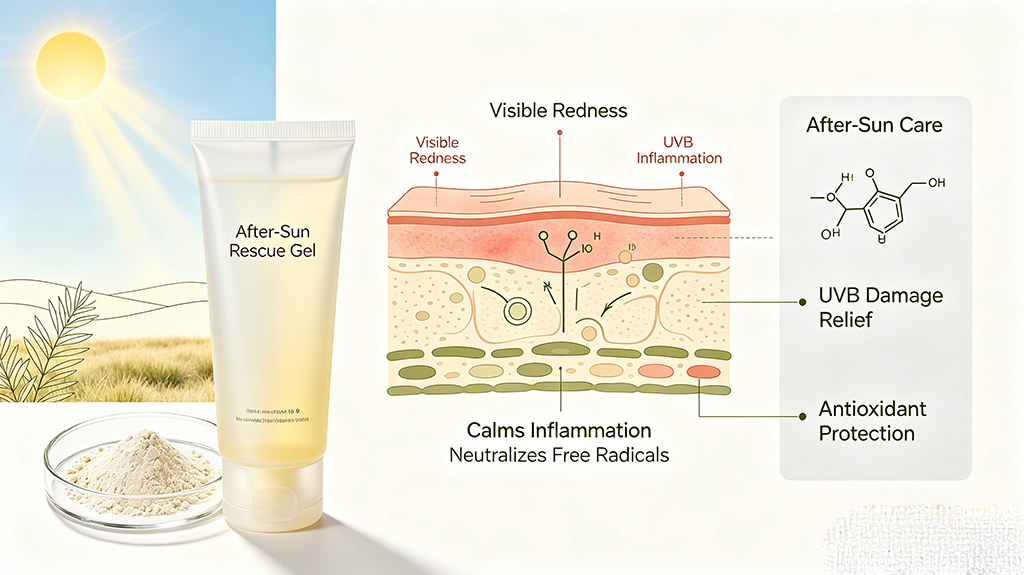
Sensitive-Skin Serums & Barrier-Repair Creams
For the consumer who has tried everything and still wakes up with red, reactive skin. A serum with 98% glycyrrhetinic acid works at the biochemical roots of irritation while helping skin rebuild its own ceramide shield — science-backed, plant-derived, genuinely effective.
After-Sun Rescue & Soothing Care
After a long day outdoors, skin needs active repair. Glycyrrhetinic acid calms UVB-triggered inflammation and neutralizes UVB-generated free radicals — addressing both the redness consumers can see and the oxidative damage they cannot.
Clean Beauty Anti-Redness Treatments
Organically cultivated, water-extracted, solvent-free — glycyrrhetinic acid fits the clean beauty ethos perfectly. In anti-redness serums, color-correcting creams, and calming toners, it delivers measurable results with a sourcing story conscious consumers can trust.
Natural Deodorants & Underarm Care
An emerging application: soothing properties make it an excellent addition to natural deodorant formulations where baking soda irritation is a common consumer complaint — a thoughtful solution for the clean deodorant category.
Wellness Supplements — Liver Support
For the supplement consumer seeking natural liver support, glycyrrhetinic acid offers a plant-derived alternative grounded in licorice millennia-long history — bridging traditional herbal wisdom with modern bioavailability science.