

Products


Food Grade Zinc Picolinate Powder 99% Purity Powder CAS 17949-65-4 Wholesale Zinc Supplement Raw Material
Food Grade Zinc Picolinate Powder 99% Purity | CAS 17949-65-4
Standardized Raw Material
FOOD GRADE
ZINC PICOLINATE
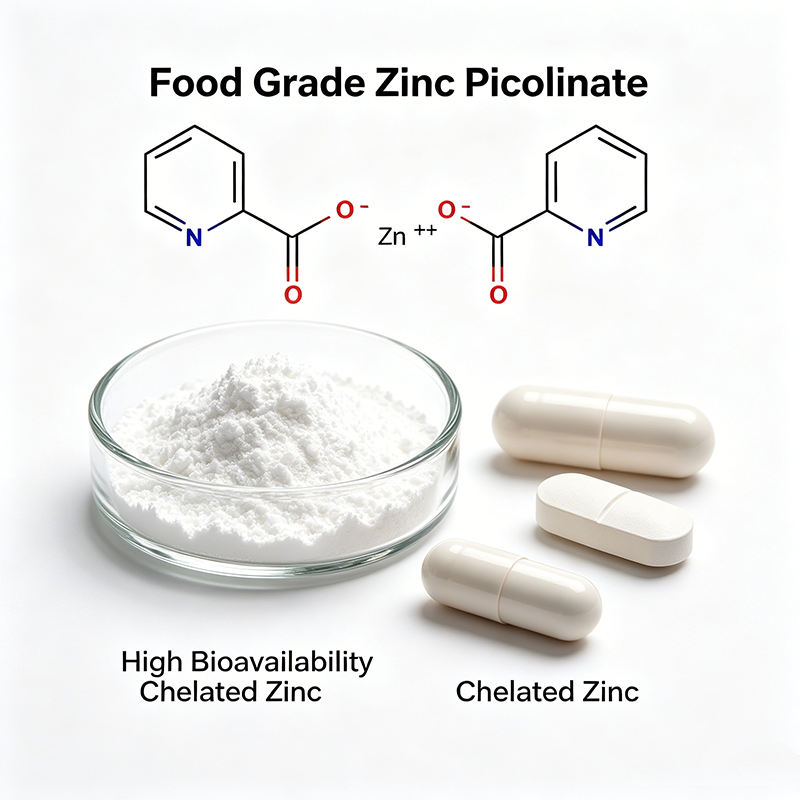
Our Food Grade Zinc Picolinate (CAS 17949-65-4) is a chelated zinc compound where zinc is bound to picolinic acid — a naturally occurring metabolite. This chelation structure provides enhanced bioavailability, making it a preferred mineral form for high-quality zinc supplementation in capsules, tablets, and functional food applications.
CAS: 17949-65-4
C₁₂H₈N₂O₄Zn
Food Grade
Technical Specifications
Reference Grade
Core Advantages
HPLC Precision
Analytical
Precision
Every batch is tested by HPLC to verify ≥99.0% purity with full traceability. We provide COAs including heavy metals, microbial limits, and loss on drying — ensuring consistent raw material quality for downstream manufacturing.
Bioavailability
Enhanced
Bioavailability
Zinc Picolinate uses picolinic acid as a chelating agent — a naturally occurring metabolite. This chelated form is recognized for its superior absorption profile compared to inorganic zinc salts, supporting efficient mineral uptake in supplement formulations.
Food Grade
Food-Grade
Quality
Produced under strict food-grade manufacturing protocols with verified heavy metal controls. Our production facilities comply with international quality standards, supporting seamless import clearance and regulatory documentation for global nutraceutical markets.
Professional Process
Sourcing
Reaction
Purification
Milling
Testing
Dispatch
| Test Item | Method | Specification | Result |
|---|---|---|---|
| Assay (HPLC) | HPLC | ≥ 99.0% | Pass |
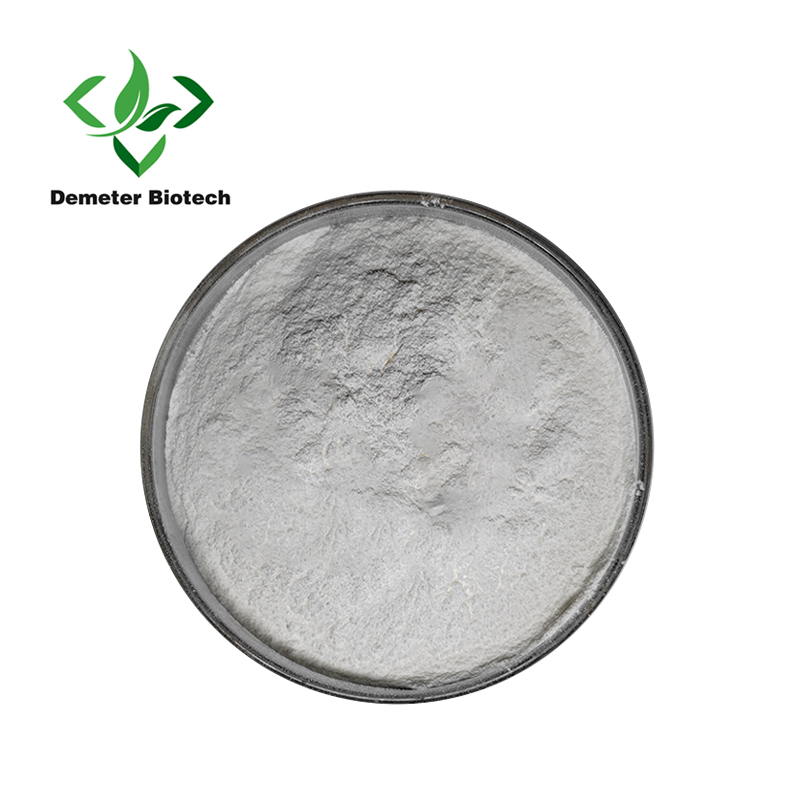
| Appearance | Visual | White Crystalline Powder | Pass |
| Loss on Drying | Gravimetric | ≤ 1.0% | Pass |
| Heavy Metals | ICP | ≤ 10 ppm | Pass |
| Lead (Pb) | ICP | ≤ 2 ppm | Pass |
| Arsenic (As) | ICP | ≤ 2 ppm | Pass |
| Cadmium (Cd) | ICP | ≤ 1 ppm | Pass |
| Microbial Limits | USP <61> | Complies | Pass |
Mechanism of Function
Bioavailability
Chelated Zinc Bioavailability
Zinc Picolinate provides zinc in a chelated form bound to picolinic acid. Picolinic acid is naturally produced in the intestinal mucosa during tryptophan metabolism. This chelation helps zinc bypass competitive absorption pathways common with inorganic zinc salts, potentially supporting enhanced mineral uptake in supplement formulations.
Enzymes
Essential Cofactor for Enzymes
Zinc serves as a structural component and catalytic cofactor for over 300 zinc-dependent enzymes in the human body, including superoxide dismutase (SOD), alcohol dehydrogenase, and carbonic anhydrase. Zinc Picolinate provides bioavailable zinc to support these enzymatic functions in nutritional applications.
Antioxidant
Antioxidant Defense Support
Zinc is a cofactor for Cu/Zn Superoxide Dismutase (SOD), a key antioxidant enzyme that neutralizes reactive oxygen species (ROS) in cells. Adequate zinc nutrition supports the body’s natural antioxidant defense systems and helps maintain cellular oxidative balance.
Applications & Industries
Advanced Nutraceuticals
- ▪
Zinc supplements (Capsules & Tablets) with enhanced absorption profile formulations. - ▪
Multi-mineral complexes for comprehensive mineral supplementation. - ▪
Effervescent tablets and functional beverage powders with bioavailable zinc.
Nutricosmetic Systems
- ▪
Anti-aging skincare products leveraging zinc’s sebum-regulating properties. - ▪
Hair growth and scalp health formulations targeting mineral nutrition. - ▪
Nail strengthening products for mineral deficiency support.
Functional Food & Beverage
- ▪
Fortified foods and dietary supplements with chelated zinc. - ▪
Sports nutrition products targeting mineral balance and recovery. - ▪
Gummy and chewable formulations using zinc picolinate’s high solubility.
Animal Nutrition
- ▪
Feed additives for livestock and poultry mineral supplementation. - ▪
Aquaculture nutrition formulations targeting growth and immune support. - ▪
Pet food fortification with highly bioavailable zinc sources.
Frequently Asked Questions
+
+
+
+