

Products


A-10A USDA & EU Organic Certified Matcha Powder Ceremonial Grade Matcha Matcha Green Tea Powder Wholesale
Basic Information
Matcha Quality Control System
We have established a comprehensive Matcha Quality Control System to provide a full range of products, from foundational grades to those meeting the most stringent global compliance standards. Our offerings are tailored to meet the specific import requirements of different countries and regions.
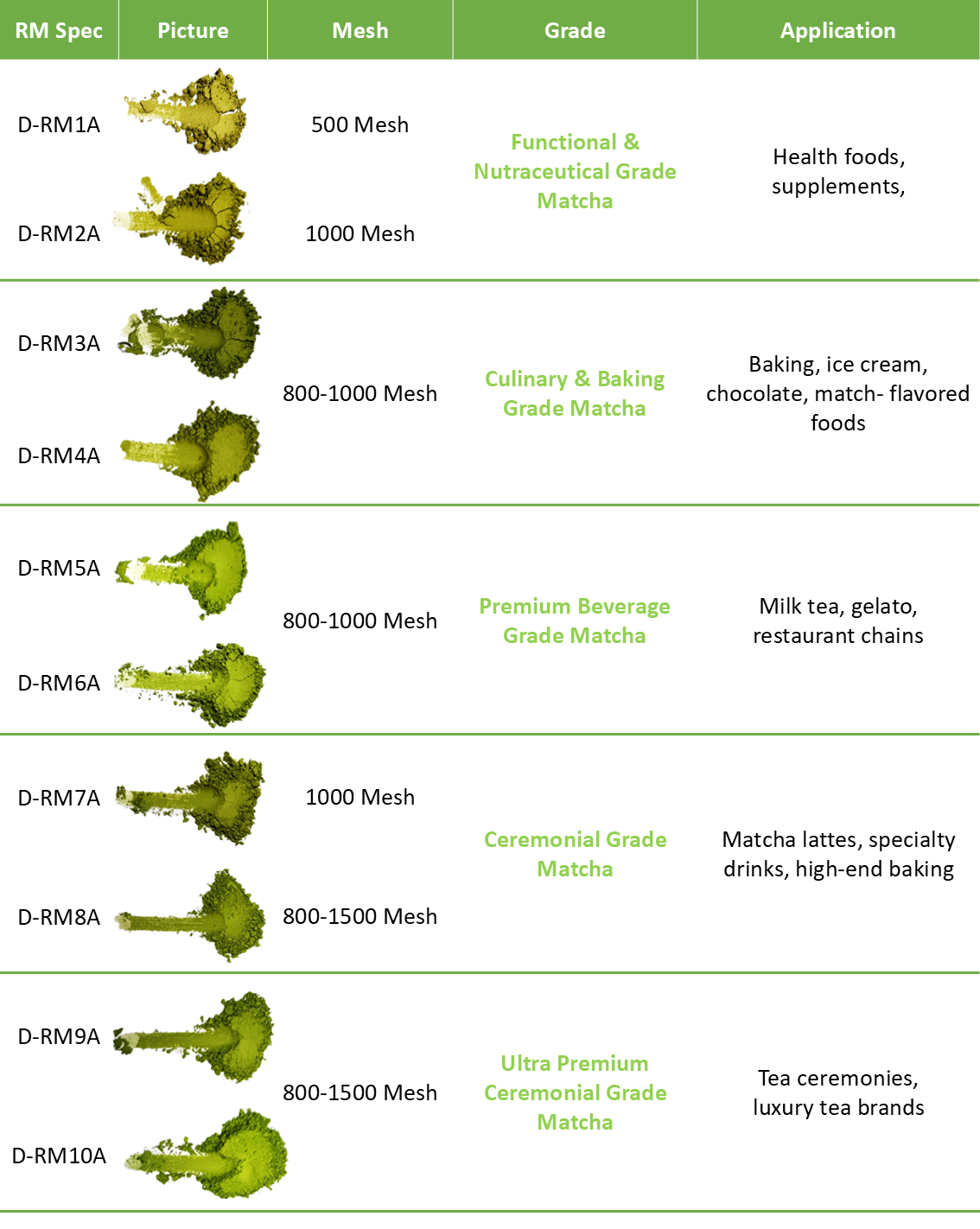
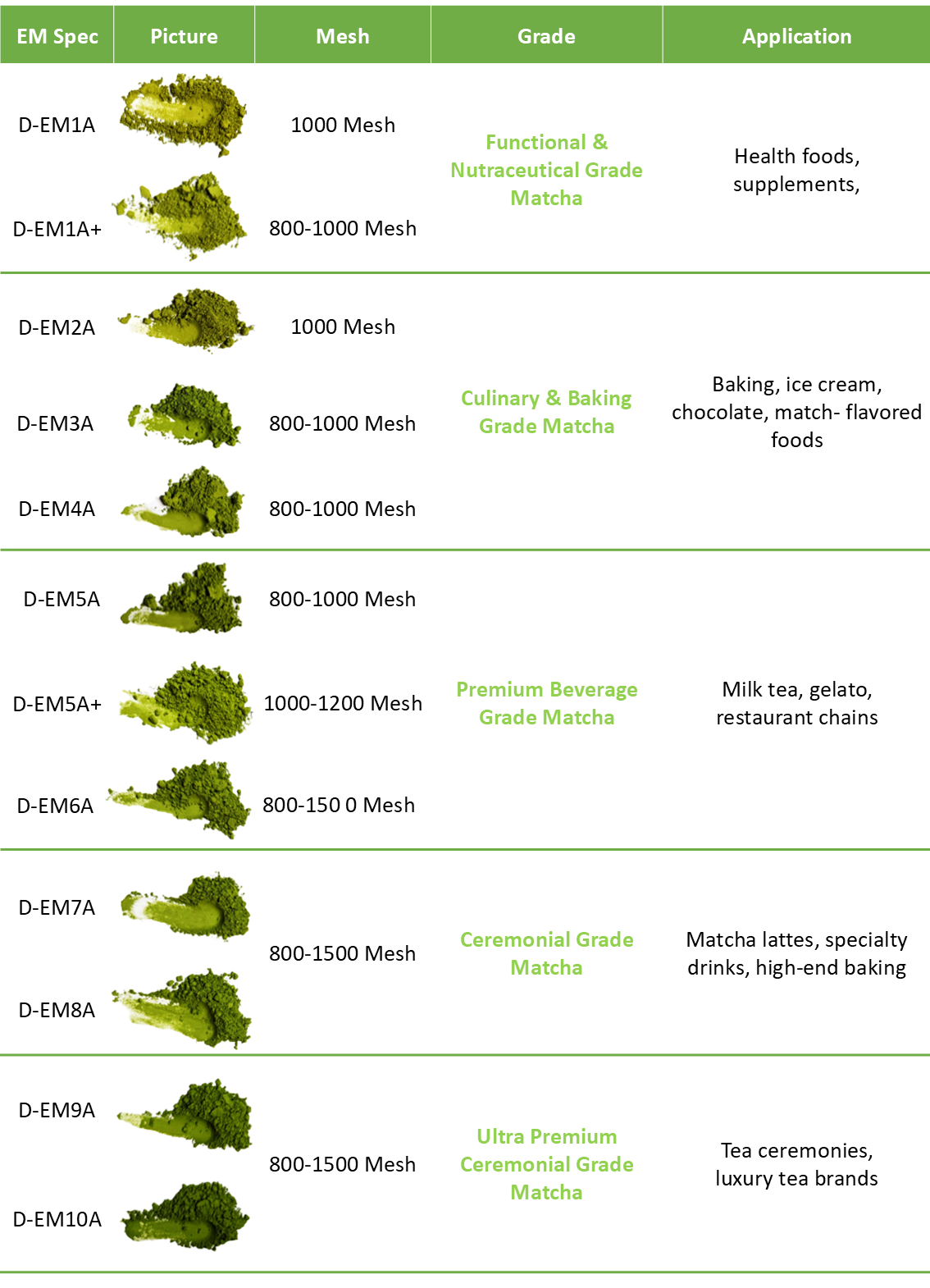
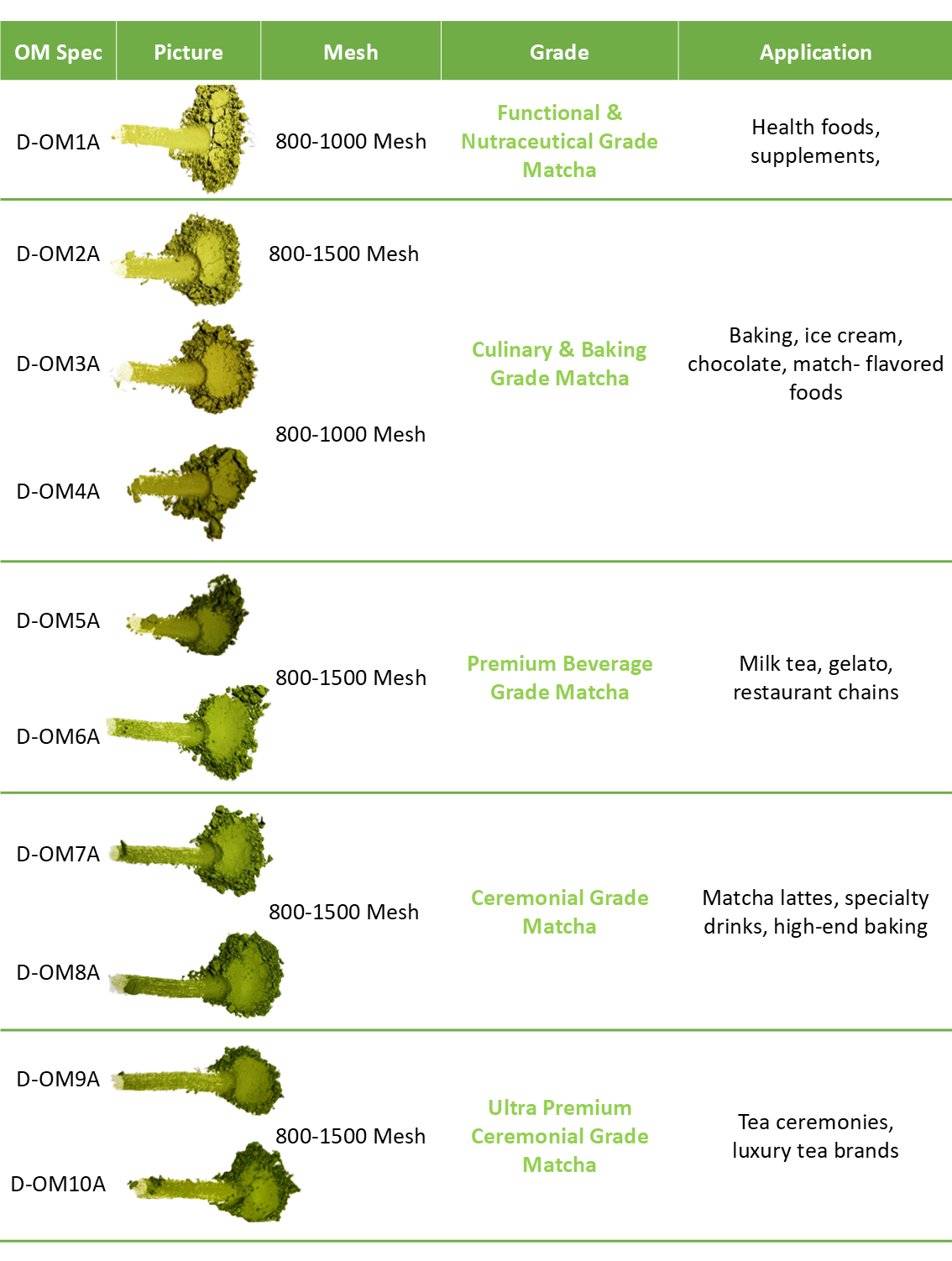
Each of our matcha categories is available in a full spectrum of grades, ranging from A to 10A, ensuring a precise match for everything from industrial food applications to ultra-premium beverage development.
| Category | Compliance & Standards | Grade Range | Best Applications |
|---|---|---|---|
| Regular Standard Matcha (RM Series) |
☑ National Food Safety Standards
☑ High Cost-Performance
☑ Consistent Supply Chain
|
A – 10A | Beverage R&D Industrial Baking Mass Catering |
EU Standard (EM Series) → |
☑ Strict EU MRLs Compliance
☑ 400+ Pesticide Residue Tests
☑ Global Market Access
|
A – 10A | Export Trade Premium Retail High-Safety Brands |
Organic Matcha (OM Series) → |
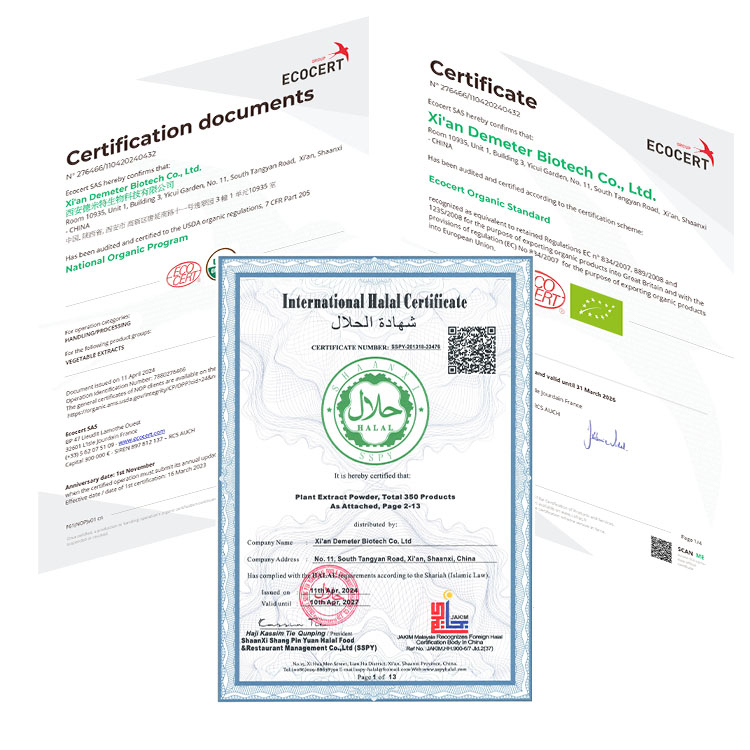
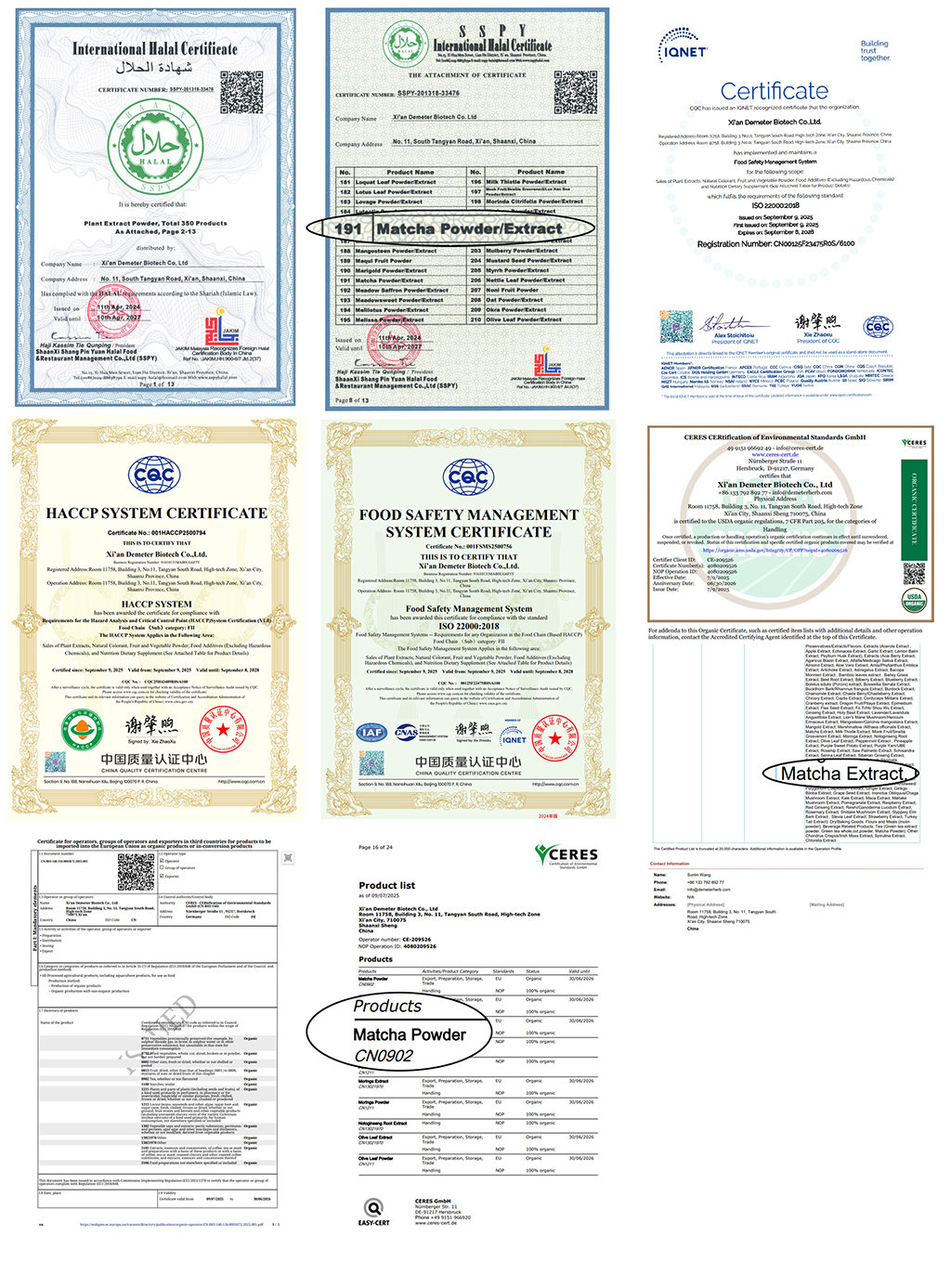
☑ EU / USDA Organic Certified
☑ Zero Synthetic Pesticides
☑ 100% Full Traceability
|
A – 10A | Health Supplements Eco-friendly Stores Ceremonial Tea |
Certificate of Analysis (COA)
| Product Name | Matcha Powder | Quantity | 1000 kg |
| Batch No. | DMTL260405 | Test Date | 2026-04-06 |
| Manufacturing Date | 2026-04-05 | Expiry Date | 2028-04-04 |
| Items | Specification | Methods | Results |
| Color | Green | GB1886.244-2016 | Conformity |
| Form | Powder | GB1886.244-2016 | Conformity |
| Assay | ≥98% | GB1886.244-2016 | 98.62% |
| Loss on Drying | ≤5.0 (g/100g) | GB1886.244-2016 | 1.94 |
| Ash content | ≤4.0 (%) | GB1886.244-2016 | 0.10 |
| Arsenic (as As) | ≤2.0 (mg/kg) | GB1886.244-2016 | Conformity |
| Lead (as Pb) | ≤5.0 (mg/kg) | GB1886.244-2016 | Conformity |
| Shelf Life | 24 months under standard storage, no antioxidant used. | ||
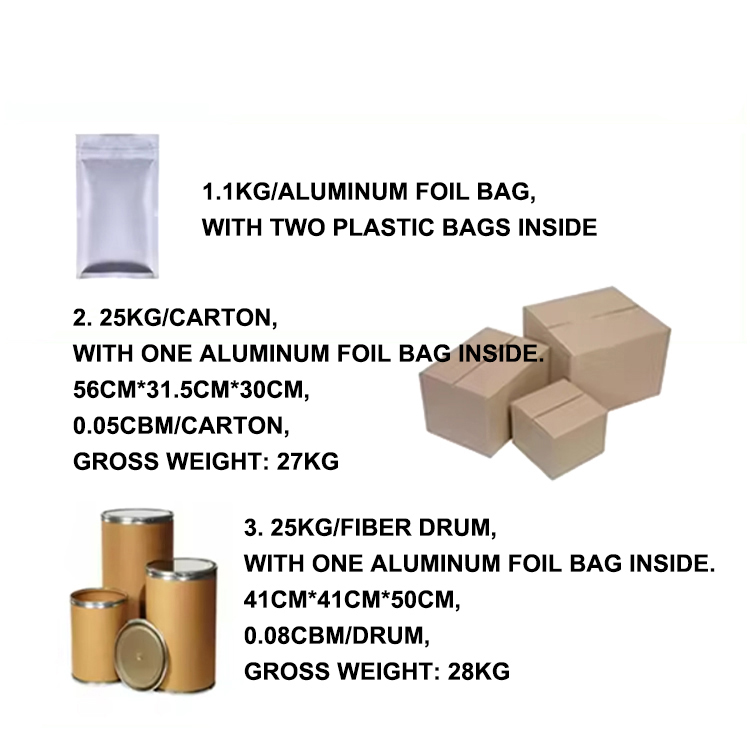
| Package | 25 kg/carton outside and double food plastic bags inside. | ||
| Storage | Store in a cool, dry place away from Moisture, Light, and Oxygen. | ||
Production Process & Quality Control
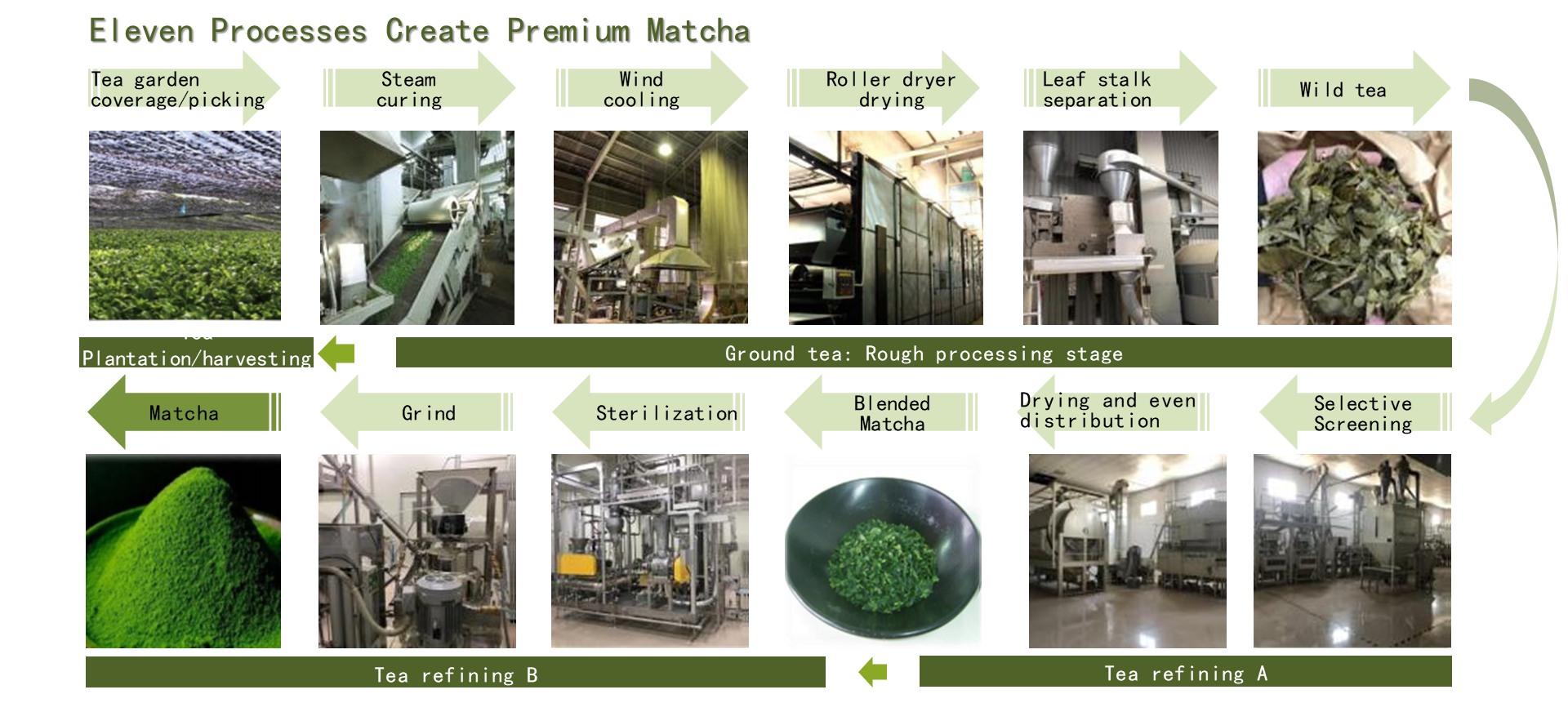
Stage I: Ground Tea & Rough Processing
- Tea garden coverage/picking: Shading at the source to promote L-theanine accumulation.
- Steam curing: Quickly deactivating enzymes to lock in the vibrant green color.
- Wind cooling: Rapidly lowering temperature to prevent browning.
- Roller dryer drying: Precisely controlling moisture for the base form.
- Leaf stalk separation: Removing stalks to retain only pure leaf tissue.
- Wild tea: Completing rough processing for high-quality refining.
Stage II: Tea Refining A
- Selective Screening: Ensuring uniformity of raw material specifications.
- Drying and even distribution: Balancing physical and chemical indicators through secondary drying.
Stage III: Tea Refining B
- Blended Matcha: Solving seasonal fluctuations to ensure batch consistency.
- Sterilization (Core Compliance):
Meeting global microbial standards, a mandatory requirement for B2B supply chains. - Grind:
Utilizing ultra-fine technology for superior dispersion in beverages or protein powders.
Versatile Applications
Direct Brewing
Matcha can be brewed directly with water. The ideal temperature is between 45℃ and 65℃. The tea-to-water ratio can be adjusted to personal preference.
Beverage Prep
Extensively used to create Matcha Lattes, Matcha Milk Tea, and innovative options like Matcha Beer for the beverage industry.
Artisanal Desserts
A key ingredient for Matcha Mooncakes, cookies, cakes, and ice cream, providing both natural color and rich umami flavor.
Skincare & Cosmetics
Powerful antioxidants help fight oxidation, reduce inflammation, control oil, and tighten pores while improving skin dullness.
Versatile Applications
Direct Brewing
Matcha can be brewed directly with water. The ideal temperature is between 45℃ and 65℃. The tea-to-water ratio can be adjusted to personal preference.
Beverage Prep
Extensively used to create Matcha Lattes, Matcha Milk Tea, and innovative options like Matcha Beer for the beverage industry.
Artisanal Desserts
A key ingredient for Matcha Mooncakes, cookies, cakes, and ice cream, providing both natural color and rich umami flavor.
Skincare & Cosmetics
Powerful antioxidants help fight oxidation, reduce inflammation, control oil, and tighten pores while improving skin dullness.
Frequently Asked Questions
Q1: Is Matcha made from Green Tea or Tencha?
+
Q2: Is Matcha sweet or bitter?
+
Q3: Do heavy metal levels (Lead, Arsenic, Cadmium) comply with import standards?
+
Q4: What tea cultivars are used for your Matcha?
+
- Standard Grade (e.g., D-EM3A): Fine texture with a yellowish-green hue; light body with floral notes.
- Intermediate Grade (e.g., D-EM5A+): Rich flavor; balances milk and baking aromas with toasted notes.
- Premium Grade (e.g., D-EM10): Vibrant green hue; exceptionally smooth and balanced mouthfeel.
Q5: Is this 100% First-Flush (Spring) tea?
+
- EU Standard Matcha (A-10A) & Organic Matcha (A-10A).
Regular Matcha (4A / 5A): Scientific blend of spring and autumn harvests for cost-effectiveness in mass catering.