



Product Supply Note
We supply cosmetic-grade Copper Tripeptide-1 raw material (CAS 89030-95-5) with high purity specifications for bulk procurement. Buyers developing skin repair, anti-aging, and extracellular matrix-focused formulations are welcome to contact us for samples and technical evaluation.
As clean beauty and sensitive-skin skincare continue to grow, Copper Tripeptide-1 (CAS 89030-95-5) is moving beyond its traditional position as an anti-aging active and into a broader technical discussion centered on system stability, compatibility, and raw material purity. For brands pursuing minimalist formulas, lower irritation potential, and greater ingredient transparency, the key question is no longer only what GHK-Cu does, but how well it performs in different formulation architectures, including stability, **color consistency validation**, and packaging compatibility.
From a formulation perspective, GHK-Cu is generally easier to incorporate in more complex systems, while cleaner and more minimal formulas place higher demands on pH control, ionic environment, thickening systems, and preservation strategy. For this reason, one of the key tasks in high-end product development is to use **formulation stratification architectures** to help high-purity GHK-Cu remain stable and functional within mild, simplified formulas designed for **sensitive skin care**.
1. Solution Behavior of GHK-Cu in Mild Water-Based and Hydroalcoholic Serums
The behavior of Copper Tripeptide-1 in aqueous systems is influenced by pH, ionic strength, and the overall composition of the formula. In clean beauty and sensitive-skin products, formulators often try to reduce complex salts, strong chelating agents, and other highly interactive ingredients in order to minimize disruption to the copper peptide’s complex state and appearance.
In practical development, milder buffer systems and more controllable water quality are generally more favorable for maintaining product consistency and visual stability. For GHK-Cu, the goal is not to pursue stability under extreme conditions, but rather to design a system that helps preserve its **complexed state stability** and overall performance in the finished product.
When it comes to thickening systems, compatibility with Copper Tripeptide-1 should be verified case by case. Some rheology modifiers with strong ionic dependence or stronger interaction potential may increase formulation complexity. By contrast, **naturally derived thickeners** with milder interactions and clearer structural behavior are often better suited to **clean beauty applications** involving GHK-Cu. For R&D teams, this means that small-scale screening and stability testing should guide the final choice rather than assumptions based on a single ingredient profile.
2. Green Preservation Alternatives: The Impact of Polyol Systems on GHK-Cu Stability
Sensitive-skin and clean beauty products often reduce reliance on conventional preservation systems and instead use polyols and similar mild ingredients to support product stability and sensory performance. For Copper Tripeptide-1, the main value of these systems is that they can help create a gentler formulation environment while also contributing moisturizing and preservation-support functions.
Pentylene Glycol, 1,2-Hexanediol, and Butylene Glycol are not generally regarded as ingredients that directly disrupt copper peptide complexation when used at appropriate levels. The more relevant factors are their effects on polarity, water activity, and overall compatibility. Used in moderation, polyols may help reduce the amount of free water in the system, which can support product stability and provide a more skin-friendly base for **minimalist skincare formulas**.
That said, more is not always better. Excessive polyol levels may alter skin feel, affect the solubilization environment, and indirectly influence the **color expression stability** or long-term storage of Copper Tripeptide-1. A more appropriate approach is to evaluate them through formulation goals, raw material specifications, and actual processing conditions rather than treating any single ingredient as absolutely harmless or completely neutral.
3. Visual Identity and Packaging Engineering
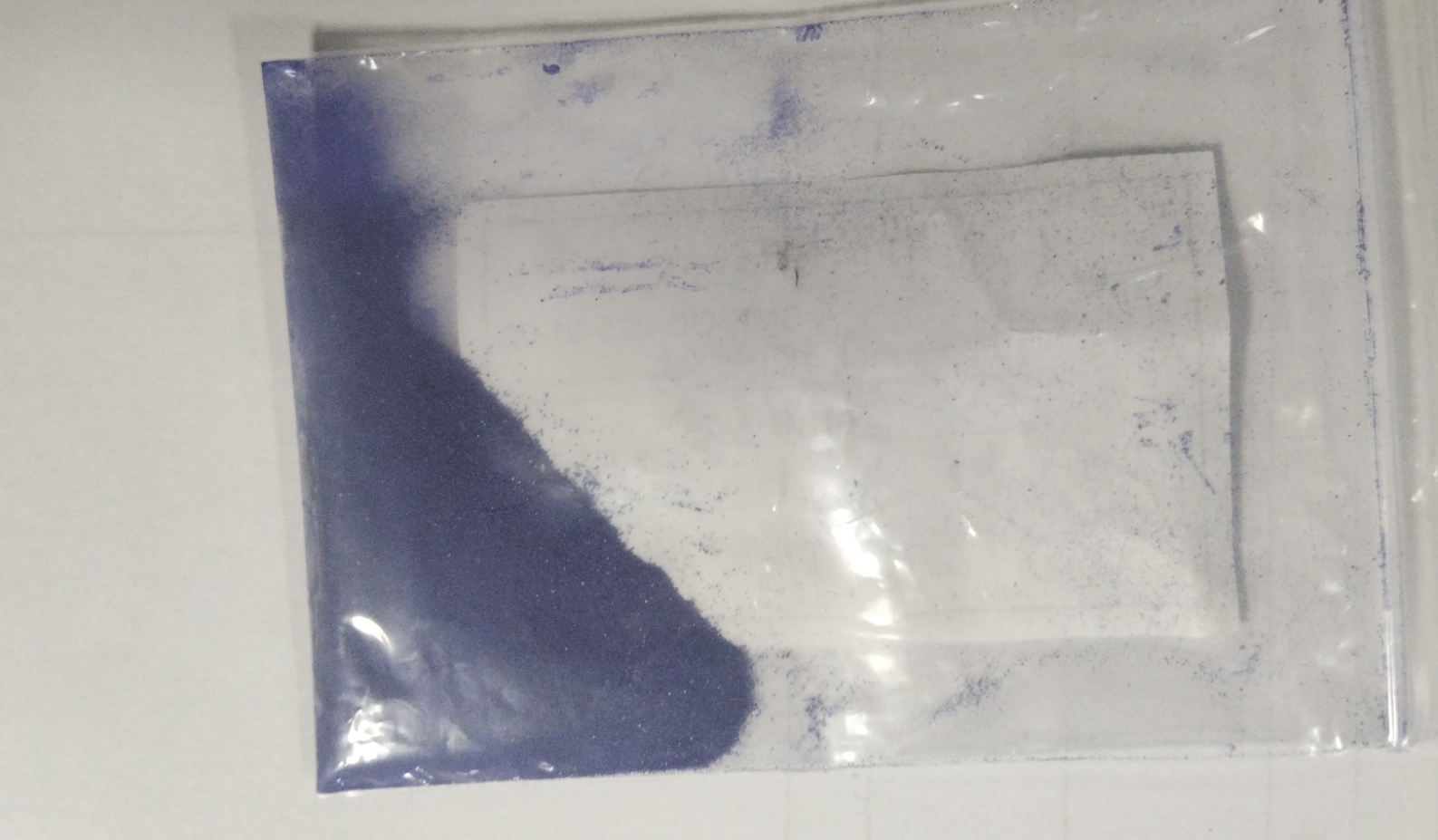
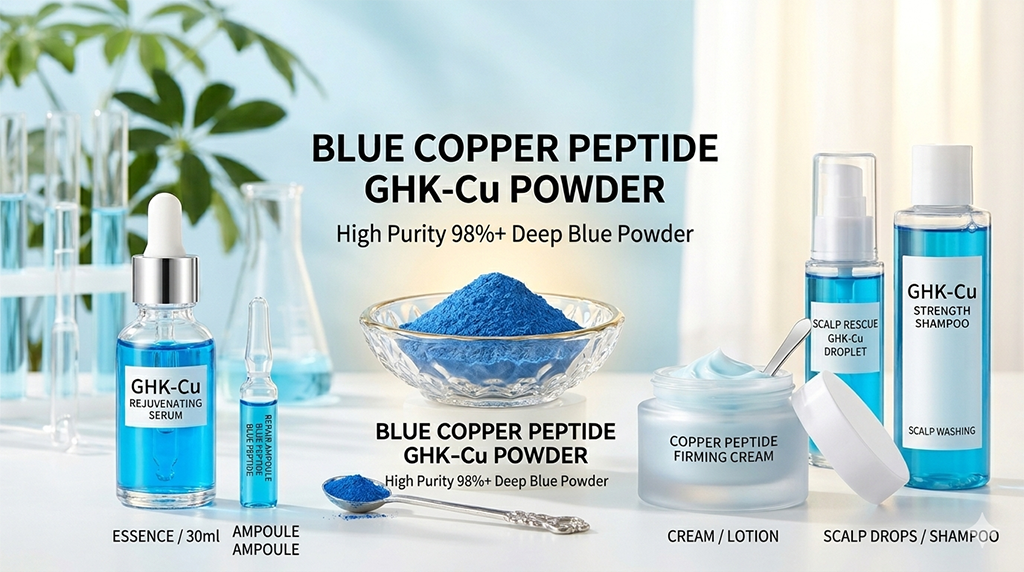
Copper Tripeptide-1 has a distinctive color, which is one of its most recognizable features in premium skincare raw materials. High-purity material typically shows a characteristic **blue powder visual identity**, and this aesthetic trait can help brands build stronger ingredient recognition and reinforce a technical, repair-oriented product story.
However, visible color does not mean stability can be ignored. Copper Tripeptide-1 can be sensitive to light and air exposure, so packaging design should be considered together with formula design from the start. For high-end sensitive-skin products, higher-barrier dark containers, **light-protective packaging systems**, or **airless pump barrier bottles** are often preferred because they can help reduce the impact of external conditions on the product.
From a compliance perspective, packaging should not be described as guaranteeing unchanged activity. A more accurate expression is that it can help reduce unfavorable effects from light and air. This precise technical wording is more appropriate for formal press materials and product descriptions.
4. Biocompatible Support in Sensitive-Skin Care
In sensitive-skin formulas, the main value of Copper Tripeptide-1 lies in its relatively high biocompatibility and the research basis associated with repair-oriented applications. Compared with harsher actives, GHK-Cu is better understood within a framework of mild support, structural maintenance, and long-term care rather than immediate or dramatic claims.
Synergistic Formula Design
Once strong fragrances, aggressive surfactants, and other high-irritation ingredients are reduced, the role of GHK-Cu becomes more clearly defined. It can work alongside ingredients such as **hyaluronic acid complexes** to create a complementary formula concept.
Functional Allocation
Hyaluronic acid mainly supports hydration and sensory comfort, while Copper Tripeptide-1 contributes more to the overall **repair-oriented formulation logic** of the formula. Any wording around improvement should still be grounded in actual product testing.
5. B2B Procurement and Brand Value
For brands and procurement teams, Copper Tripeptide-1 is not a raw material that should be judged by price alone. More important factors include consistent raw material specifications, clear quality data, and technical support for formulation development. **HPLC purity verification**, impurity control, **free copper management**, and batch consistency are all key considerations for upscale dermocosmetic programs.
From a branding perspective, the value of GHK-Cu is not simply that it sounds premium, but that it helps support a technical story that is explainable, communicable, and verifiable. In the clean beauty and sensitive-skin segments, the most competitive brands are usually not the ones making the boldest claims, but the ones that can connect raw material quality, formula stability, and product logic in a coherent way.
Conclusion
The application of Copper Tripeptide-1 in clean beauty and sensitive-skin formulas is defined less by a single active effect and more by its requirements for formula structure, system stability, packaging compatibility, and brand communication. As minimalist formulas and gentle repair concepts continue to evolve, the technical value of GHK-Cu lies increasingly in how stably it can be incorporated into products rather than in exaggerated claims about what it can do.
We supply cosmetic-grade Copper Tripeptide-1 raw material (CAS 89030-95-5) with support for **high-purity specifications validation**, bulk procurement, and formulation development dossier support, suitable for clean beauty, sensitive-skin repair, and premium anti-aging product programs.
References
- Influence of the Encapsulation Efficiency and Size of Liposome on the Oral Bioavailability of Griseofulvin. Molecules, 2016. https://pmc.ncbi.nlm.nih.gov/articles/PMC5039444/
- Liposomal formulation of vitamin A for the potential treatment of osteoporosis. Drug Design, Development and Therapy, 2018. https://pmc.ncbi.nlm.nih.gov/articles/PMC5863641/
- A study on zeta potential and dielectric constant of liposomes. Pharmazie, 1995. https://pubmed.ncbi.nlm.nih.gov/7884632/
TECHNICAL SEO INDEXING MATRIX:
GHK-Cu Clean Beauty Formulation, Bulk Copper Tripeptide-1 Sourcing, Sensitive Skin Blue Powder Supplier, Minimalist Skincare Peptide Stability, Cosmetic Grade GHK-Cu Purity 99%, Free Copper Ion Management, Polyol Preservation Compatibility.
Post time: Jun-10-2026


