

Products


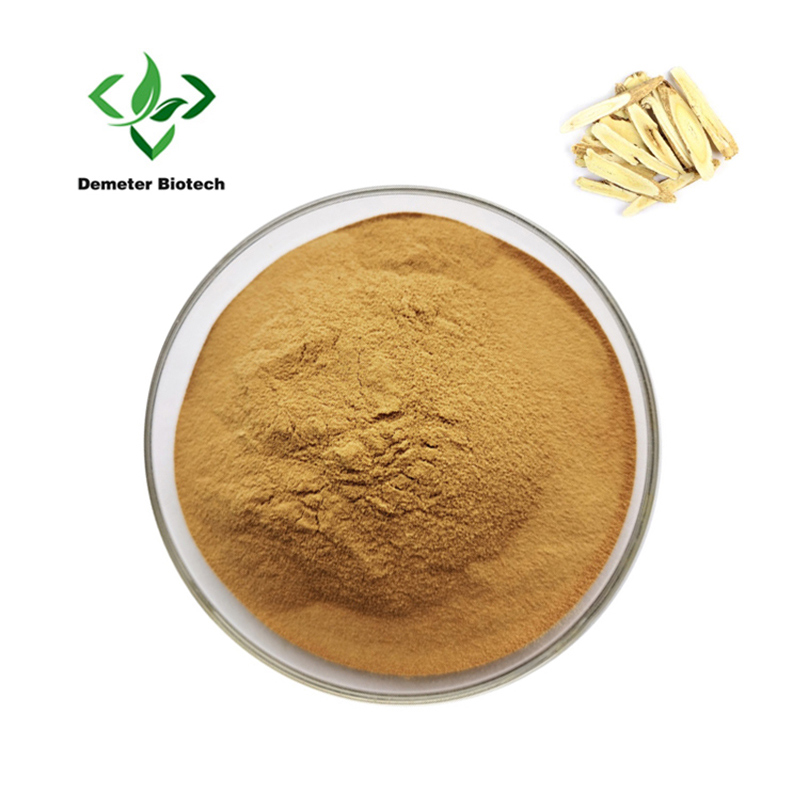
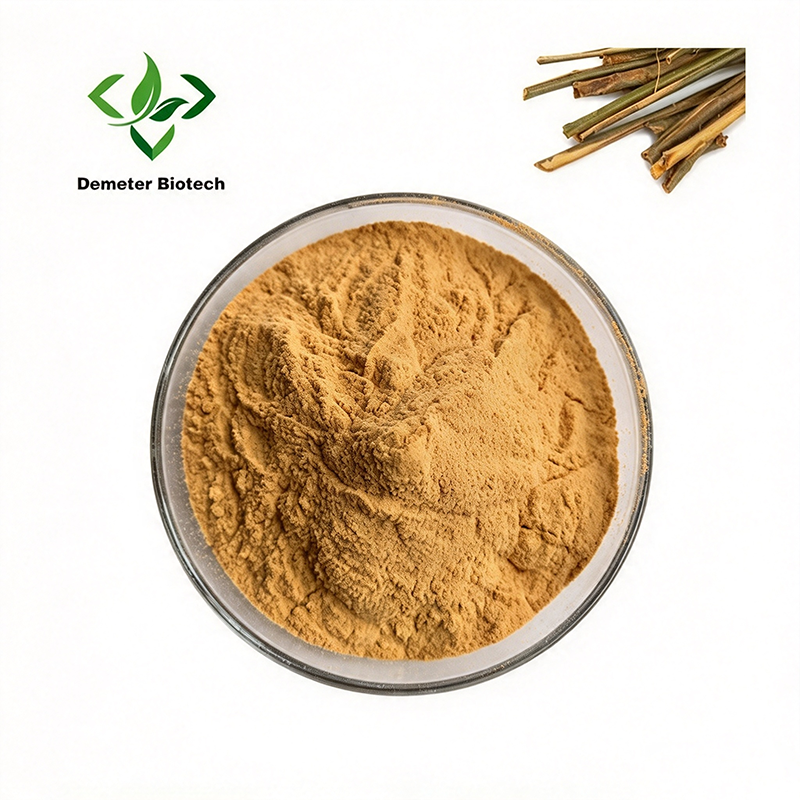
Factory Supply White Willow Bark Extract 10:1 Salix Alba Bark Extract Powder
Bark-Derived Botanical
White Willow Bark Extract 10:1
Only bark from Salix alba goes into this extract. It is concentrated ten to one, dried and ground until the powder wets out evenly in water and in water-ethanol blends. Salicin sits in the material as the named marker — CAS 138-52-3, C13H18O7 — and the drum leaves with an INCI name, a COSING reference and a lot COA, so a formulator can open a dossier without chasing paper.
Salix alba Bark
Free Sample
Product Specification
| Parameter | Detail |
|---|---|
| Product Name | White Willow Bark Extract 10:1 |
| Botanical Name | Salix alba L., family Salicaceae |
| Plant Part | Bark only |
| Extraction Ratio | 10:1 herb to extract; 5:1 and 20:1 booked on request |
| Extract CAS | 84082-82-6 |
| EC Number | 282-029-0 |
| Marker Compound | Salicin, CAS 138-52-3, C13H18O7, MW 286.27 — quoted as identity, not as a strength claim |
| Salicin Content | Quoted per batch when asked; a ratio grade has no fixed assay |
| Extraction Solvent | Aqueous ethanol |
| Appearance | Light brown to yellow-brown, finely milled |
| Solubility | Wets out in water and water-ethanol blends; not oil soluble |
| Loss on Drying | 5.0% max |
| Total Ash | 5.0% max |
| Particle Size | 98% minimum passing 80 mesh |
| Bulk Density | 45–60 g/100 mL |
| Heavy Metals | Pb 2.0 / As 1.0 / Cd 1.0 / Hg 0.1 ppm ceilings by ICP-MS, measured value printed for each batch |
| Microbiology | TPC 1,000 cfu/g max; Yeast & Mould 100 cfu/g max; Salmonella absent/25 g; Coliforms absent/g |
| Carrier | None — the drum is extract only |
| Packaging | 25 kg fibre drum with a double LDPE liner, or 1 kg foil bags for trials |
| Storage | Sealed below 25 °C, away from light and damp |
| Shelf Life | 24 months with the drum unopened |
| Certificates | ISO 9001 and HACCP held; Kosher / Halal arranged on request |
| INCI Name | Salix Alba Bark Extract, COSING ref. 80071 |
| Label Considerations | Keep out of products aimed at under-16s, pregnancy, breastfeeding, salicylate-sensitive users, or people taking anticoagulant medicines |
| Origin | Xi’an, Shaanxi, China |

Key Highlights
01
02
03
04
05
06
Certificate of Analysis
| Test Item | Specification | Result | Method |
|---|---|---|---|
| Appearance | Light brown to yellow-brown powder | Complies | Visual |
| Extraction Ratio | 10:1 herb to extract | Complies | Batch record |
| Salicin | Identity confirmed; content quoted on request | Reported per lot | HPLC |
| Loss on Drying | 5.0% max | Complies | USP<731> |
| Total Ash | 5.0% max | Complies | USP<281> |
| Particle Size | 98% min through 80 mesh | Complies | Sieve |
| Lead (Pb) | 2.0 ppm max | Complies | ICP-MS |
| Arsenic (As) | 1.0 ppm max | Complies | ICP-MS |
| Cadmium (Cd) | 1.0 ppm max — separate line, never pooled | Complies | ICP-MS |
| Mercury (Hg) | 0.1 ppm max | Complies | ICP-MS |
| Total Plate Count | 1,000 cfu/g max | Complies | USP<61> |
| Yeast & Mould | 100 cfu/g max | Complies | USP<62> |
| Coliforms | Absent per gram | Complies | USP<62> |
| Salmonella | Absent per 25 g | Complies | USP<62> |
Function & Formulation
Water-Phase Ready
Wets out in aqueous and hydroalcoholic phases, so no solubiliser is needed to load it.
Tannin Colour Value
The bark tannins bring a warm tint to aqueous systems, which formulators can plan around at bench stage.
Ratio Locked at Order
The herb-to-extract figure is agreed in writing, so the next drum matches the one you validated.
Declaration Support
INCI name, COSING reference and allergen statement come as a set for your product file.
Application Fields

Toners & Essences
Aqueous formats take the powder straight in, with no coupling agent on the batch sheet.
Shampoo & Scalp Tonic
Suits surfactant and hydroalcoholic bases used across scalp care ranges.
Creams & Lotions
Charged to the water phase before emulsification; nothing is required in the oil phase.
Gels, Scrubs & Soaps
Works in wash-off bases where a botanically declared extract has to be traceable to lot.
Contract & Private Label
Bulk powder for buyers filling and branding under their own name.