


I. The Complexity of Tea Polyphenols in Industrial Applications
In the global nutraceutical market, Green Tea Extract is far from a monolithic ingredient. For procurement secondary and R&D professionals, the challenge lies in navigating the vast spectrum of available specifications—ranging from 40% to 95% purity. Understanding the correlation between polyphenol concentration and final product performance is essential for creating stable, effective, and consumer-compliant formulations.
The primary bioactive constituents, Tea Polyphenols, comprise a group of catechins, with EGCG (Epigallocatechin Gallate) being the most scrutinized for its physiological impact. However, the industry often grapples with the “purity vs. utility” dilemma. Selecting the right specification requires a deep understanding of how these molecules interact with other ingredients in a matrix.
II. Decoding the Standards: 40% to 95% EGCG
The differentiation in specifications serves distinct functional purposes.
-
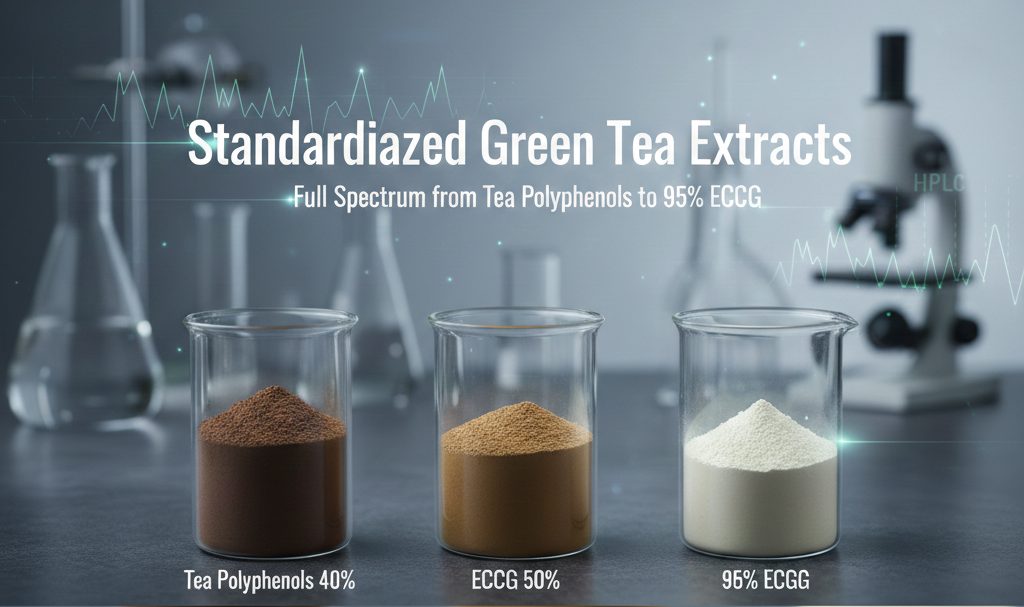
Broad-Spectrum Polyphenols (40% – 60%): These mid-range extracts often retain a more “natural” profile of the tea leaf, including a wider variety of catechins and minor flavonoids. They are ideal for products positioned as “whole-food” supplements or in applications where the synergistic effect of the entire polyphenol group is preferred over a single isolated monomer.
-
High-Purity Isolates (90% – 95% EGCG): At this level, the extract is refined to a nearly pure crystalline form of EGCG. This is the “gold standard” for clinical-strength metabolic support and healthy aging formulas. By isolating the EGCG monomer, formulators can ensure maximum antioxidant potency per milligram, which is crucial for high-performance capsules where capsule “real estate” is at a premium.
III. The Impact of Purity on Formulation Stability
One of the most overlooked aspects of Green Tea Extract procurement is the role of secondary components. In lower-purity extracts, the presence of residual caffeine, chlorophyll, and certain tannins can lead to oxidation and color shifts in the final product.
For liquid applications, such as functional beverages or shots, High-Purity 95% EGCG offers a significant advantage: Solubility and Clarity. Crude extracts often result in turbidity or sedimentation over time. By utilizing a highly refined extract, brands can achieve a clear, sediment-free liquid profile while maintaining the “clean label” status that modern consumers demand. Furthermore, the removal of bitter tannins allows for a more palatable flavor profile, reducing the need for heavy masking agents or artificial sweeteners.
IV. Analytical Integrity and Global Compliance
As regulatory bodies worldwide—including the FDA, EFSA, and others—tighten their scrutiny on botanical extracts, the importance of standardized testing cannot be overstated. High-quality sourcing is defined by HPLC (High-Performance Liquid Chromatography) verification.
Professional-grade Green Tea Extract must not only meet the percentage of active compounds but must also adhere to strict limits on:
-
Solvent Residues: Ensuring the use of food-grade ethanol or water-based extraction.
-
Pesticide Control: Meeting global standards for “Clean Label” and organic-compliant sourcing.
-
Heavy Metal Limits: Essential for long-term safety profiles in daily supplements.
V. Selecting the Right Partner for Strategic Sourcing
A reliable supply chain for Green Tea Extract is built on consistency. For an “Old Station” audience, the value lies in a partner who understands the nuance of these specifications. Whether the goal is a cost-effective broad-spectrum polyphenol for a mass-market tea blend or a 95% EGCG isolate for a cutting-edge longevity formula, the choice of specification dictates the product’s success.
By aligning the specific molecular profile of the extract with the intended delivery system (tablet, capsule, or liquid), manufacturers can optimize both cost-efficiency and therapeutic efficacy, ensuring a competitive edge in an increasingly crowded wellness market.
- Alice Wang
- Whatsapp: +86 133 7928 9277
- Email: info@demeterherb.com
Post time: Feb-12-2026


