



Natural Kombu Extract: The Core Role of Fucoxanthin in Non-Stimulant Thermogenic Metabolism
2026 Marine Biochemistry Trend: Energy Metabolic Support Centered on UCP1
In the field of marine functional ingredients, Natural Kombu Extract continues to garner significant attention due to its Fucoxanthin content. Unlike traditional weight-management ingredients that emphasize a “stimulant hit,” this component focuses on non-stimulant, gentle metabolic support and the “Clean Label” attributes of marine sourcing. For brands looking to develop products for daily-use scenarios, this raw material logic aligns perfectly with modern consumer trends.
Fucoxanthin is not a generic seaweed powder; it is a structurally defined marine carotenoid. It is primarily found in brown algae, with common sources including seaweeds like Kombu. For R&D teams, the true value lies not just in its “marine origin,” but in the integrity of its molecular structure, the gentleness of the extraction process, and the stability of its purity.
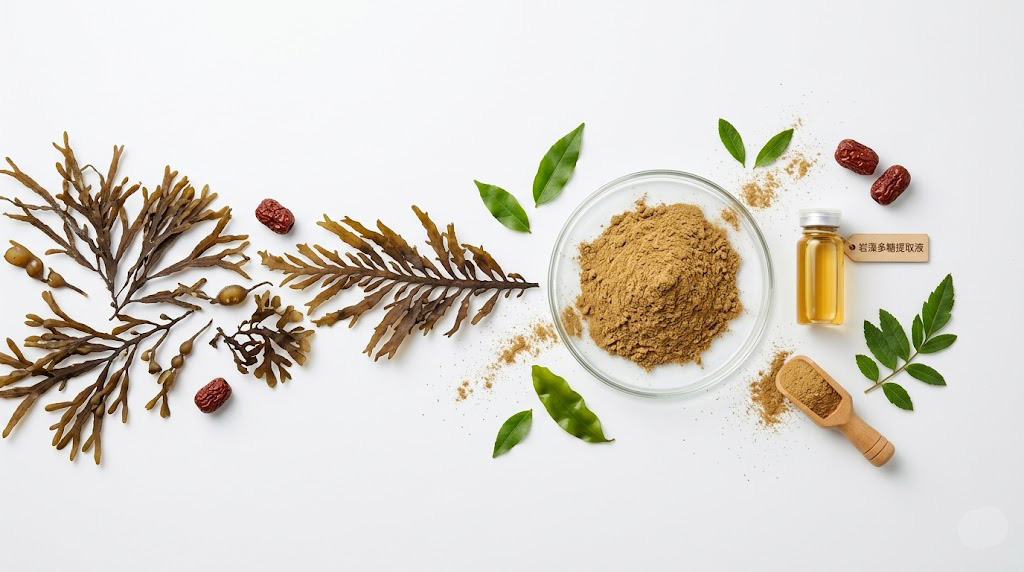
I. Defining the Lead: Metabolic Assets in Natural Kombu Extract
The core reason Natural Kombu Extract is highly valued is that Fucoxanthin possesses clear research pathways and functional positioning. Unlike common pigments or crude seaweed powders, the application value of Fucoxanthin is built upon its analyzable and standardizable structural basis.
Key Characteristics of Fucoxanthin
- Classified as a marine carotenoid.
- Primarily sourced from brown algae such as Kombu.
- Functional research focuses on energy metabolism and thermogenic mechanisms.
- Value is highly dependent on extraction technology and purity control.
From a B2B application standpoint, one of the greatest advantages of Fucoxanthin is its non-stimulant positioning. It does not rely on neuro-excitatory pathways like caffeine; instead, it leans toward metabolic regulation and thermogenic mechanisms for energy balance, making it highly attractive for gentle-action formulations.
II. Biochemical Mechanism: Thermogenic Pathways Related to UCP1
The scientific core behind Fucoxanthin’s importance is its research correlation with UCP1 (Uncoupling Protein 1). UCP1 is a key molecule in the mitochondrial thermogenic process, frequently used to discuss how adipose tissue converts stored chemical energy into heat rather than simply storing it as fat.
In various studies, Fucoxanthin is suggested to participate in the metabolic reprogramming of White Adipose Tissue (WAT) and is associated with the upregulation of UCP1 expression. In other words, it is considered a “metabolic marine ingredient” not because it provides a direct high-energy expenditure, but because it regulates the functional state of adipose tissue.
The mechanistic logic can be summarized in three steps:
- Adipose Tissue Metabolic Signal Changes
Research focuses on how adipocytes transition from a storage state to a more active metabolic state. - UCP1 Related Upregulation
UCP1 facilitates proton leakage in the inner mitochondrial membrane, releasing energy as heat. - Enhanced Thermogenic Metabolism
In this way, cells lean towards utilizing energy for heat production rather than accumulation.
UCP1 is a protein closely related to mitochondrial thermogenesis. It is commonly found in adipose tissue research regarding calorie expenditure and is a pivotal molecule in discussions of “non-stimulant thermogenic metabolism.”
Note: Such research should be understood as a metabolic support mechanism rather than a simplified “rapid fat loss” conclusion. For formal news, a more prudent statement is: Fucoxanthin holds significant research value in thermogenic metabolism and adipose tissue regulation.
III. Comprehensive Formulation Advantages: Beyond Fucoxanthin Itself
The value of Natural Kombu Extract does not depend solely on Fucoxanthin. Kombu itself contains polysaccharides like Alginates, providing a broader scope for functional application in formulations.
These formulation advantages are reflected in two main areas:
- Extensibility of Metabolic Support: Beyond thermogenesis, Kombu-derived materials can be linked to postprandial metabolic rhythms and nutrient absorption rates.
- Potential for Systemic Synergy: In actual formulas, Fucoxanthin and seaweed polysaccharides are not isolated; they may collectively influence the formulation experience and functional narrative.
| Fucoxanthin Focuses on thermogenic metabolism and adipose tissue regulation. |
Alginates Acts as a complementary addition for postprandial absorption rhythms. |
Synergistic Logic Emphasizes synergy rather than single-ingredient promises. |
For brand owners, this means Natural Kombu Extract is better understood within a “Full-Spectrum Metabolic Support” framework rather than being summarized by the term “weight loss” alone.
IV. Extraction Process and Stability: Determining Scalability
A practical challenge for Fucoxanthin is its sensitivity to light, heat, and oxygen. Consequently, extraction processes and packaging designs have a massive impact on quality. If mishandled, active molecular structures can degrade, affecting the stability and performance of the ingredient.
| Process Stage | Key Goal | Significance |
|---|---|---|
| Low-Oxygen Handling | Reduce Oxidation | Minimize activity loss |
| Low-Temperature Extraction | Minimize Thermal Degradation | Preserve structural integrity |
| Light-Shielding Process | Reduce Photosensitive Damage | Increase storage/transit stability |
| Standardized Testing | Uniform Assay Results | Facilitate batch management |
At the commercial level, standardized specifications ranging from 1% to 10% can correspond to different R&D stages and product positionings. Lower concentrations are suitable for sampling and initial assessments, while high-purity specs are ideal for scenarios requiring clear functional narratives and stricter formulation control.
B2B Sourcing Checklist
- Clear Assay Reports (COA).
- Specified extraction and purification conditions.
- Support for light-shielded, moisture-proof, and long-distance transport.
- Availability of industrial-scale packaging sizes.
25kg industrial-grade moisture-proof and light-shielding Drum packaging is especially suited for enterprises moving from R&D sampling to large-scale production. Its significance goes beyond “larger packaging”—it ensures that the raw material maintains stable quality during cross-regional transit and long-term storage.
V. Conclusion: From Ingredient Sourcing to Product Competitiveness
From an industry perspective, the market value of Natural Kombu Extract lies not just in its marine origin, but in its ability to satisfy three trends simultaneously: Clean Label, Scientific Evidence, and Ingredient Standardization. In the 2026 functional food and supplement market, this material is more easily integrated into rational, gentle, and explainable product development frameworks.
- For R&D Teams: The significance of Fucoxanthin lies in providing a metabolic research pathway distinct from stimulant-based ingredients.
- For Procurement Teams: The focus remains on stable purity, reliable processes, batch consistency, and traceable supply.
- For Brand Owners: The value of Natural Kombu Extract lies in the opportunity to combine “Marine Sourcing” with “Metabolic Support” to form a compelling modern market narrative.
It does not rely on a “stimulant hit” for short-term sensation. Instead, through the structural characteristics of marine carotenoids, extraction stability, and metabolic research foundations, it provides a gentler, more professional functional narrative for the product.
Post time: Apr-01-2026


