


Introduction: Not All Blueberries Are Created Equal
In the nutraceutical market, “blueberry” is almost shorthand for antioxidant power. Yet on a label, “blueberry extract” can mean very different things. For formulators and brand owners, the question is no longer “blueberry or not”, but which blueberry.
At Ceres Biotech, we are often asked why wild blueberry extracts are positioned differently from common cultivated blueberry ingredients. The answer lies in species, environment, and the way nature builds its own phytochemical defense systems in harsh northern habitats.
I. Species Matters: Wild vs. Cultivated
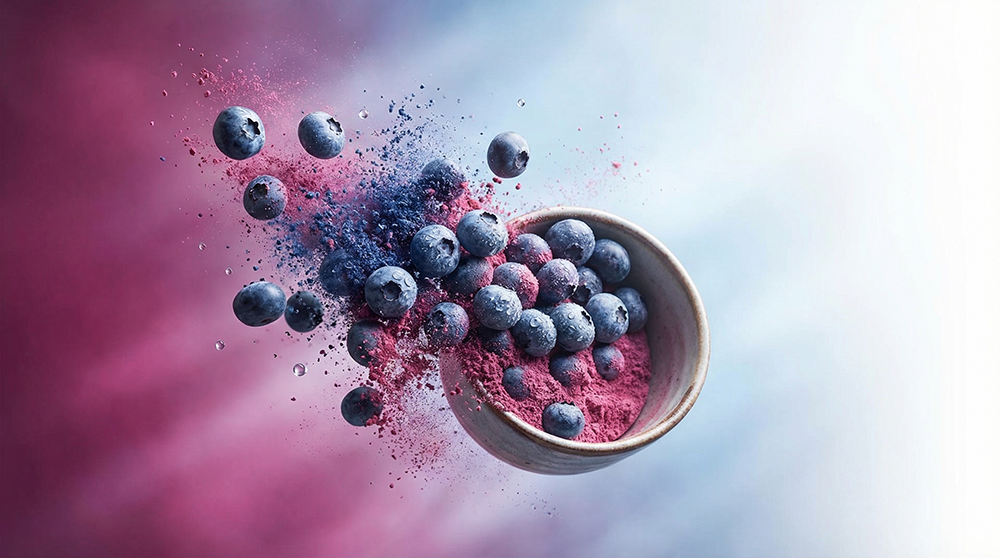
Wild blueberries (Vaccinium angustifolium) and common high‑bush blueberries (Vaccinium corymbosum) are related but distinct species, and this is reflected in both their structure and their chemistry.
Smaller berries, more skin Wild blueberries are typically much smaller than many cultivated varieties—often only a fraction of the size. Since anthocyanins are concentrated primarily in the skin, a smaller berry usually means a higher skin‑to‑pulp ratio and, per unit weight, a naturally denser pigment source.
Naturally evolved phytochemical profile Wild blueberries arise from long‑term natural selection rather than intensive breeding focused on sweetness, size or yield. This does not make cultivated varieties “bad,” but it does mean wild populations tend to maintain a characteristic, robust polyphenol spectrum that reflects their original ecosystems.
For high‑potency extracts, that natural starting point can make a meaningful difference in how much anthocyanin and polyphenol content you can pack into each serving.
II. The Power of Harsh Environments
Wild blueberries from Canada and Northern Europe grow in cool, often marginal conditions: acidic soils, cold winters, and periods of intense light. Plants exposed to such “metabolic stress” commonly respond by producing more protective secondary metabolites.
In wild blueberries, this can translate into:
-
Higher total anthocyanin levels compared with many cultivated counterparts grown under milder conditions.
-
A broader polyphenol matrix including pterostilbene, flavonols (such as quercetin derivatives), catechins and phenolic acids.
Rather than relying on a single hero compound, wild blueberries offer a naturally complex “chemical toolkit” that supports antioxidant capacity and fits well with full‑spectrum, plant‑based formulation strategies.
III. Synergy Beyond Anthocyanins
Anthocyanins may be the “headline” of any blueberry extract, but they are not working alone. Wild blueberries contain multiple compounds that can support stability and complementary activity.
Pterostilbene Pterostilbene is a methylated stilbene structurally related to resveratrol. Because of its lipophilic nature, it has attracted interest for its distinct absorption and distribution profile and has been studied in relation to metabolic and cognitive health. Wild blueberries include pterostilbene as part of their broader polyphenol profile.
Chlorogenic acids Chlorogenic acids act as co‑pigments, helping stabilize anthocyanins and influence color expression. In research settings, anthocyanin‑ and chlorogenic‑acid‑rich extracts have been explored for their potential roles in supporting antioxidant defenses, including in tissues exposed to light‑induced oxidative stress.
When these compounds appear together in their natural ratios—alongside a full spectrum of anthocyanins—they create a “matrix effect” many brands prefer over isolated, single‑molecule approaches.
IV. HPLC Fingerprinting: Seeing the Difference in the Lab
The distinction between wild and cultivated sources becomes especially clear under analytical testing.
Color throughout the berry Many cultivated blueberries have dark skins but pale or greenish flesh. Wild blueberries often show deep purple coloration extending into the pulp, indicating pigment distribution throughout the berry and reflecting high polyphenol saturation.
Anthocyanin patterns Using High‑Performance Liquid Chromatography (HPLC), it is possible to map the individual anthocyanin glycosides. Wild blueberries typically display a characteristic fingerprint rich in delphinidin, cyanidin, petunidin, malvidin and peonidin glycosides, with specific patterns that differ from many cultivated types.
At Ceres Biotech, we use HPLC both to standardize anthocyanin content and to verify that our wild blueberry extracts reflect the expected profile for this species, batch after batch.
V. Sourcing and Market Positioning
Wild blueberries are managed in natural “barrens” rather than conventional orchards. Harvest windows are short, yields are weather‑dependent, and rapid post‑harvest processing is essential to preserve quality. This adds complexity, but it also supports a sourcing story that resonates strongly with premium consumers.
As awareness grows, “wild” on a label is increasingly read as a signal of natural origin and high performance. Combined with transparent testing and clean‑label practices, wild‑sourced ingredients help brands:
-
Differentiate themselves in crowded antioxidant, eye‑health, cognitive, and beauty‑from‑within categories.
-
Justify a more premium price position with a clear scientific and sourcing narrative.
Conclusion: A Wild Foundation for High‑End Formulations
Choosing wild blueberry over generic cultivated sources is more than a marketing decision. It is a technical choice about species, environment and phytochemical density.
For brands aiming at the upper tier of the health and wellness market, wild blueberry extracts—especially when paired with gentle processes like vacuum freeze‑drying—offer a compelling foundation: a naturally dense anthocyanin profile and a complex matrix of synergistic polyphenols.
References:
2.Zhang Y. et al. Blueberry (Vaccinium spp.) anthocyanins and their functions in human health. 2024.
3.Khan M. et al. Known and potential health benefits and mechanisms of blueberry anthocyanins. 2023.
5.Wang S. et al. Recent perspectives on the role of anthocyanins in blueberries. 2025.
- Alice Wang
- Whatsapp: +86 133 7928 9277
- Email: info@demeterherb.com
Post time: Jan-30-2026


