


Decoding Dong Quai Extract: A Technical Procurement Guide to Specification Selection
Understanding the Interplay Between Ferulic Acid Concentrations and Matrix Compatibility
I. The Ratio vs. Standardization Dilemma: Deciphering “10:1″
For many procurement managers, the most common pitfall in sourcing Natural Dong Quai Extract is relying solely on “Ratio” specifications like 5:1 or 10:1. In botanical extraction, a ratio merely indicates the mass of raw Angelica sinensis root used to produce a unit of extract; it does not guarantee the concentration of active phytoconstituents.
Unlike standardized extracts, ratio-based Angelica sinensis extract powder can exhibit significant batch-to-batch variance depending on the harvest season and extraction solvent (water vs. ethanol). For high-precision formulations—such as functional capsules or Food Grade supplements—transitioning to a standardized 1% Ferulic Acid specification is essential to ensure that the biological efficacy remains consistent across the product’s lifecycle.
II. Comparison of Commercial Specifications: Which to Procure?
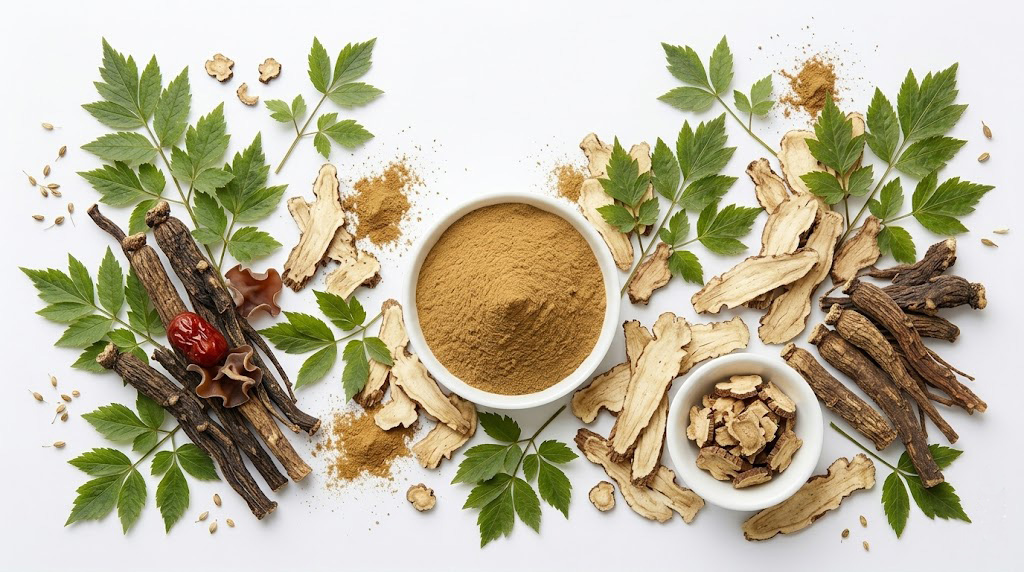
The choice of Astaxanthin-like potency in Dong Quai formulations depends on the “Marker Compound” requirement. Below is a technical breakdown of how different specifications impact the finished product’s profile:
| Extract Type | Active Marker | Best Application Case | Formulation Challenge |
|---|---|---|---|
| Standardized 1% | Ferulic Acid (HPLC) | Pharmaceutical & OTC | Higher cost per kg |
| Ratio 10:1 | Full Spectrum | Traditional Capsules | Potency variance |
| Water Soluble | Polysaccharides | Beverages & Syrups | Hygroscopicity (Clumping) |
| Cosmetics Grade | Essential Oils/FA | Skin Brightening Creams | Intense herbal odor |
III. The Ferulic Acid Stability Challenge in Formulations
A major procurement pain point is the chemical degradation of Ferulic Acid, the primary active in Dong Quai Extract. This phenolic acid is highly sensitive to pH shifts and light exposure. In aqueous cosmetic systems, if the pH exceeds 6.0, the Ferulic Acid can undergo rapid decarboxylation, leading to a loss of antioxidant activity and a darkening of the formula’s color.
To mitigate this, formulators often require Astaxanthin-level protection or the addition of stabilizing chelating agents. For oral delivery, the Ferulic Acid must be protected from gastric acid if systemic absorption is the goal. Understanding whether your supplier uses an aqueous extraction or an ethanolic one is vital, as alcohol-based extracts typically yield higher levels of Z-ligustilide, a compound essential for the extract’s “warm” circulatory properties but prone to rapid evaporation.
IV. Aroma and Organoleptic Management: The “Celery” Problem
High-quality Natural Dong Quai Extract possesses a distinct, persistent celery-like aroma due to its phthalide content. For Cosmetics Grade applications or modern functional gummies, this intense odor can be a significant barrier to consumer acceptance. Procurement teams must distinguish between “Deodorized” extracts and “Low-Odor” versions.
Deodorization often involves aggressive thermal processing, which can inadvertently degrade the sensitive Ferulic Acid and essential oils. Selecting a 10% Astaxanthin-compatible encapsulation or a low-temperature refined Dong Quai is the preferred technical route for “Clean Label” products that require a neutral sensory profile without sacrificing biological potency.
V. Solubility and Particle Engineering for Modern Dosage
A technical hurdle often overlooked is the hygroscopicity of Angelica sinensis extract powder. Due to the high sugar and polysaccharide content of the root, the powder tends to absorb moisture rapidly, leading to “caking” in high-speed capsule filling machines. Procuring an extract with a customized carrier (e.g., Maltodextrin vs. Microcrystalline Cellulose) can significantly alter the flowability and production efficiency.
For liquid shots or functional “beauty beverages,” the Dong Quai Extract must be 100% cold-water soluble. Standard ratio extracts often leave a fine “cloudiness” or bitter sediment. By utilizing membrane filtration during the manufacturing process, suppliers can provide a “Clear-Soluble” grade that ensures the final drink remains transparent and palatable, meeting the aesthetic demands of the 2026 nutricosmetic market.
Scientific References & Technical Literature:
- Wei, W. L., et al. (2016). “Angelica sinensis: A review of its traditional uses, phytochemistry and pharmacology.” Journal of Ethnopharmacology. Link to Source
- Li, X., et al. (2021). “Stability and bioaccessibility of ferulic acid in different plant-based matrices.” Food Chemistry. Link to Source
- USP Monographs. “Angelica sinensis Root Powder.” United States Pharmacopeia-National Formulary.
- Shao, P., et al. (2019). “Impact of extraction methods on the chemical profile and flowability of Angelica sinensis extract.” Powder Technology.
CONTACT US
Post time: Mar-24-2026


