


Rosmarinic Acid (CAS No.: 20283-92-5) is a natural phenolic acid compound widely found in plants of the Lamiaceae family, such as rosemary, perilla, and mint. It is highly water-soluble and exhibits excellent thermal stability. As the core active component of rosemary extract, Rosmarinic Acid has shown immense potential in food preservation, pharmaceutical development, and high-end skincare due to its outstanding antioxidant, antibacterial, and anti-inflammatory properties.
Biochemical Characteristics: Why is Rosmarinic Acid so Stable and Efficient?
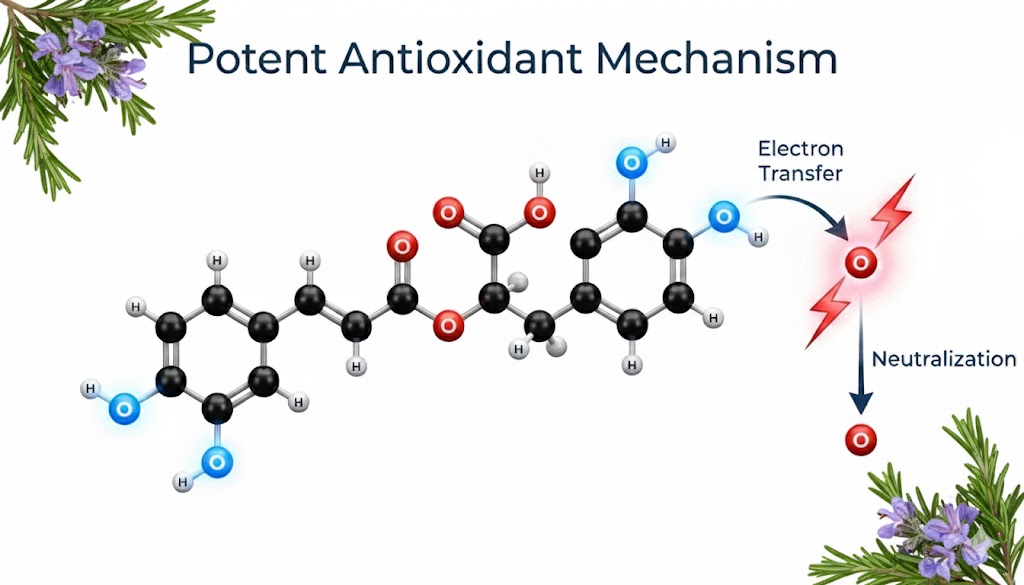
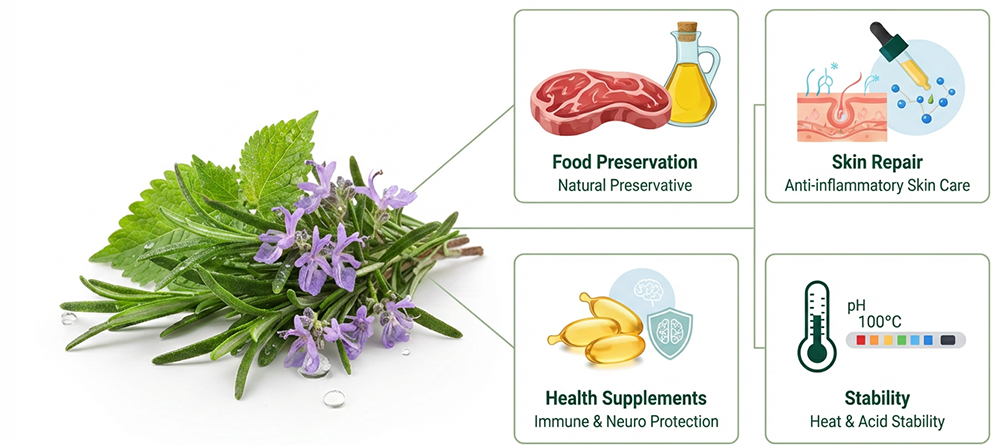
From a molecular perspective, Rosmarinic Acid contains multiple phenolic hydroxyl groups, which grant it potent free-radical scavenging abilities and antioxidant activity superior to that of Vitamin E. Unlike many unstable natural extracts, Rosmarinic Acid can withstand high-temperature processing and remain active under acidic conditions. This physical-chemical profile makes Rosmarinic Acid a highly attractive natural additive for modern industrial formulations.
Can Rosmarinic Acid Effectively Inhibit Pathogenic Bacteria and Extend Shelf Life?
In food science, the broad-spectrum antibacterial properties of Rosmarinic Acid are a major research focus. Studies have shown that Rosmarinic Acid significantly inhibits common foodborne pathogens such as Staphylococcus aureus and Escherichia coli. By disrupting the integrity of bacterial cell membranes, Rosmarinic Acid effectively delays lipid oxidation and meat browning. Consequently, under the “Clean Label” trend, Rosmarinic Acid serves as an ideal substitute for synthetic preservatives, providing natural security for food safety.
What Role Can Rosmarinic Acid Play in Human Health and Skin Repair?
In the biomedical and cosmetic sectors, the physiological activities of Rosmarinic Acid are highly regarded:
-
1.Anti-inflammation & Desensitization: Rosmarinic Acid inhibits the release of inflammatory factors, showing significant effects in relieving allergic rhinitis and skin redness.
-
2.Anti-photoaging: It absorbs ultraviolet rays and reduces light damage. Integrating Rosmarinic Acid into sunscreens or repair essences enhances the skin’s antioxidant defense system.
-
3.Neuroprotection: Experimental data suggest that Rosmarinic Acid possesses potential neuroprotective functions, helping to counteract nerve damage caused by oxidative stress.
Application Fields: Which Industries Can Rosmarinic Acid Cover?
Due to its multifunctional biological properties, the application boundaries of Rosmarinic Acid are constantly expanding:
-
1.Food Industry: Used as a natural antioxidant in vegetable oils, meat products, baked goods, and functional beverages.
-
2.Personal Care Industry: Applied in anti-aging creams, shampoos, and toothpastes for its barrier-repairing, antibacterial, and anti-inflammatory effects.
-
3.Pharmaceutical Supplements: Used as a core raw material for dietary supplements targeting allergy relief, cognitive improvement, and cardiovascular health
Conclusion: Can Rosmarinic Acid Lead the Future of the Green Health Industry?
In summary, Rosmarinic Acid successfully bridges traditional herbal wisdom with modern biotechnology through its natural, safe, and multi-effective advantages. Although there is still room for optimization in extraction costs and purification processes, Rosmarinic Acid is undoubtedly poised to provide superior scientific solutions for consumers seeking natural quality in the future health industry ecosystem.
- Alice Wang
- Whatsapp: +86 133 7928 9277
- Email: info@demeterherb.com
Post time: Dec-29-2025


