

In the competitive landscape of botanical ingredients, Lemon Balm Extract (known scientifically as Melissa officinalis) remains a staple for global wellness brands. However, for procurement managers and formulators, a robust challenge persists: Why do different batches of the same herb yield such inconsistent results in finished products?
The answer lies in the “chemical fingerprint” of the plant—specifically, the concentration of Rosmarinic Acid, a potent polyphenol that serves as the benchmark for quality and efficacy.
Ⅰ. The Science of Standardization: Moving Beyond Ratios
While many suppliers offer generic 10:1 or 20:1 ratios, these numbers can often be misleading as they describe the volume of raw material used, not the potency of the final powder. At our facility, we advocate for standardization. By focusing on the exact percentage of Rosmarinic Acid (typically 3% to 5% by HPLC), we ensure that every batch of Lemon Balm Extract delivers a consistent level of bioactive compounds.
This precision is crucial for brands that promise functional results. Whether it’s for supporting a balanced mood or promoting a restful night’s sleep, standardized extracts provide the reliability that research-backed formulations require.
Ⅱ. The Organic Advantage in Bioavailability
Purity is not just a marketing label; it is a critical performance factor. Our Organic Melissa officinalis is cultivated in nutrient-rich soil free from synthetic pesticides and heavy metals. This controlled environment allows the plant to naturally develop higher concentrations of secondary metabolites—the very antioxidants that make Lemon Balm Extract so sought after.
Furthermore, our advanced low-temperature extraction process ensures that the delicate molecular structure of the herb remains intact. By avoiding excessive heat, we prevent the degradation of volatile oils and polyphenols, resulting in a powder that maintains its natural bioactivity and excellent water solubility.
Ⅲ. Analytical Precision: The Role of HPLC Testing
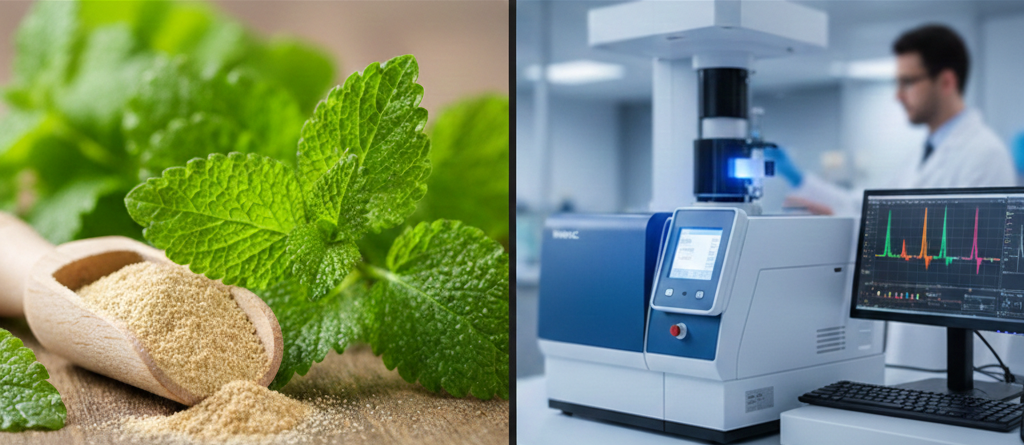
To guarantee the integrity of our Lemon Balm Extract, we utilize High-Performance Liquid Chromatography (HPLC) testing for every batch. This analytical method allows us to “see” the molecular makeup of the extract, confirming that the Rosmarinic Acid levels meet our strict specifications. For B2B buyers, this level of transparency is essential for global compliance and ensuring that the final product meets the high expectations of health-conscious consumers.
Ⅳ. Strategic Formulation for Modern Industries
Today’s consumers are looking for “Clean Label” solutions across diverse categories. High-purity Lemon Balm Extract is no longer confined to traditional capsules; its versatility is driving innovation in several sectors:
-
Functional Beverages: Its natural solubility and mild flavor profile make it ideal for relaxation shots, “mood-boosting” sparkling waters, and nighttime teas.
-
Topical Skincare: Emerging research highlights its antioxidant potential in protecting the skin barrier and soothing the appearance of environmental stress.
-
Dietary Supplements: It serves as a cornerstone for “Emotional Wellness” stacks, frequently paired with other premium botanicals like Valerian root or L-Theanine to create synergistic effects.
Ⅴ. Conclusion: Sourcing a Competitive Edge
Choosing the right Lemon Balm Extract supplier means looking beyond the price per kilogram. It requires a partner who understands the importance of COA (Certificate of Analysis) transparency and sustainable sourcing. As the global market for Melissa officinalis continues to expand, prioritizing standardized quality is the most effective way to ensure long-term brand loyalty and consumer trust.
- Alice Wang
- Whatsapp: +86 133 7928 9277
- Email: info@demeterherb.com
Post time: Feb-06-2026


